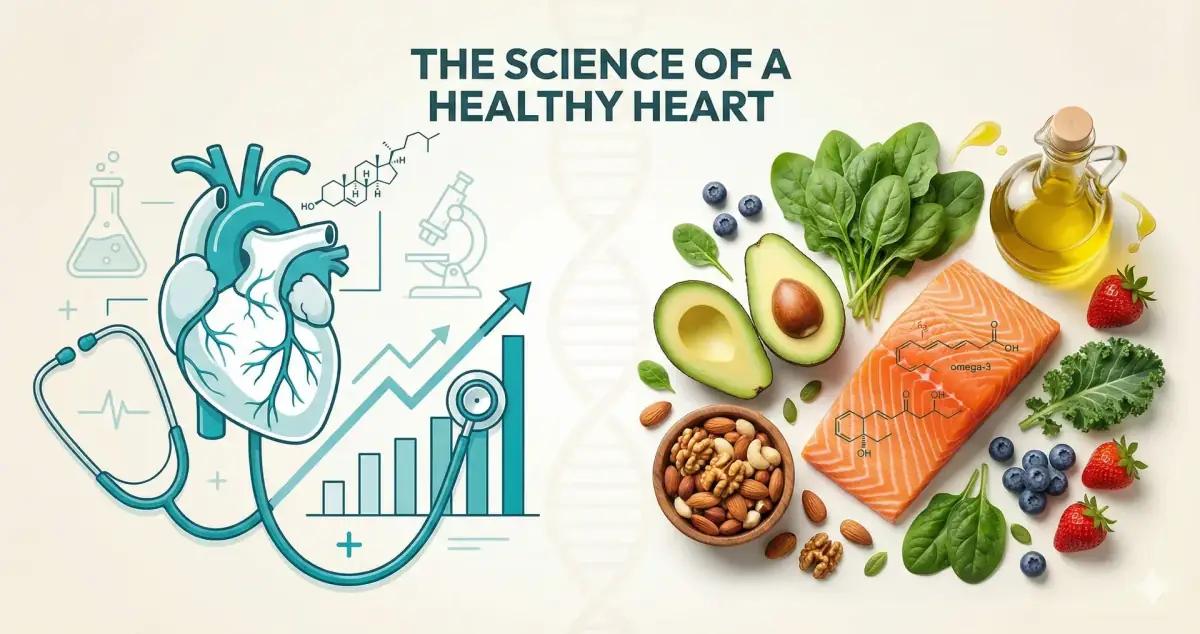

Atherosclerotic cardiovascular disease (ASCVD) remains the leading cause of death globally, and elevated cholesterol is the primary modifiable driver. Cholesterol occupies a paradoxical space in human health: it is simultaneously essential for life and a principal contributor to mortality when present in excess. Understanding the biochemistry, metabolism, and nutritional management of cholesterol is critical for both prevention and treatment.
This comprehensive reference guide synthesizes current scientific evidence on cholesterol: its molecular structure, lipoprotein transport systems, specialized risk factors, the nuanced role of dietary cholesterol and fats, functional foods, lifestyle interventions, and clinical management strategies.
1. Introduction: The Molecule of Life and the Pathology of Excess
Cholesterol is an organic molecule that occupies a paradoxical space in human health: it is at once a prerequisite for mammalian existence and a primary driver of the leading cause of death globally, atherosclerotic cardiovascular disease (ASCVD).
1.1 Chemical Structure and Biological Necessity
Biochemically, cholesterol (C27H46O) is a steroid alcohol or sterol, characterized by a rigid four-ring core structure (three cyclohexane rings and one cyclopentane ring) with a hydroxyl group at position 3 and a branched hydrocarbon tail.
Its physiological imperatives are non-negotiable:
- Membrane Dynamics: Cholesterol is an obligate structural component of cell membranes, where it modulates fluidity, permeability, and the function of membrane proteins. Without cholesterol, mammalian cell membranes would be too fluid to maintain integrity.
- Steroidogenesis: Cholesterol is the universal precursor for all steroid hormones—cortisol, aldosterone, testosterone, estradiol, and progesterone. Without cholesterol, hormonal signaling collapses.
- Bile Acid Synthesis: Cholesterol is catabolized in the liver into bile acids, which are essential for dietary fat emulsification and absorption in the small intestine.
- Vitamin D Production: Cholesterol in the skin (7-dehydrocholesterol) is the precursor for vitamin D3 (cholecalciferol) upon UVB exposure.
1.2 The Balance of Homeostasis
The body tightly regulates cholesterol through a sophisticated feedback system:
- Endogenous Synthesis: The liver produces approximately 700-900 mg of cholesterol daily via the mevalonate pathway, with HMG-CoA reductase as the rate-limiting enzyme.
- Exogenous Absorption: Dietary intake contributes 300-500 mg/day, though absorption efficiency varies widely between individuals (20-80%).
- Feedback Regulation: When cellular cholesterol is adequate, SREBP-2 (sterol regulatory element-binding protein-2) remains inactive, suppressing cholesterol synthesis genes. When depleted, SREBP-2 migrates to the nucleus and upregulates HMG-CoA reductase and the LDL receptor.
The pathology arises not from cholesterol itself, but from dysregulation of its transport, oxidation, and deposition in arterial walls—the hallmark of atherosclerosis.
2. Lipoprotein Metabolism: The Transport System
Cholesterol is hydrophobic and cannot travel freely in aqueous blood. It is transported in lipoproteins—spherical particles with a hydrophobic core (cholesteryl esters and triglycerides) and a hydrophilic shell (phospholipids, free cholesterol, and apolipoproteins).
2.1 The Lipoprotein Classes
| Lipoprotein | Size (nm) | Primary Apo | Function | Atherogenic? |
|---|---|---|---|---|
| Chylomicrons | 75-1200 | ApoB-48 | Transport dietary lipids from intestine to tissues | Remnants: Yes |
| VLDL | 30-80 | ApoB-100 | Transport endogenous triglycerides from liver | Yes |
| IDL | 25-35 | ApoB-100 | Intermediate between VLDL and LDL | Yes |
| LDL | 18-25 | ApoB-100 | Deliver cholesterol to peripheral tissues | Yes |
| HDL | 5-12 | ApoA-I | Reverse cholesterol transport from tissues to liver | No |
2.2 Exogenous Pathway (Dietary Lipids)
- Dietary cholesterol and triglycerides are absorbed in the small intestine via NPC1L1 transporter and packaged into chylomicrons.
- Chylomicrons enter the lymphatic system, then bloodstream.
- Lipoprotein lipase (LPL) on capillary endothelium hydrolyzes triglycerides, releasing fatty acids to tissues.
- Chylomicron remnants (now cholesterol-rich) are taken up by the liver via LDL receptor-related protein (LRP).
2.3 Endogenous Pathway (Hepatic Lipids)
- The liver packages triglycerides and cholesterol into VLDL.
- VLDL triglycerides are hydrolyzed by LPL, converting VLDL → IDL → LDL.
- LDL particles deliver cholesterol to peripheral tissues via LDL receptors (LDLR).
- HDL particles pick up excess cholesterol from tissues via ABCA1 and ABCG1 transporters and return it to the liver (reverse cholesterol transport).
2.4 The ApoB vs LDL-C Discordance Debate
Standard lipid panels measure LDL-C (cholesterol content), but atherogenicity is driven by particle number, not cholesterol mass.
- ApoB (apolipoprotein B) is a structural protein present on every atherogenic particle (VLDL, IDL, LDL, Lp(a)). One ApoB = one particle.
- In individuals with small, dense LDL particles (e.g., metabolic syndrome, diabetes), LDL-C may appear normal while ApoB is elevated—discordance.
- ESC/EAS 2024 guidelines now recommend ApoB as a superior marker for cardiovascular risk, particularly in metabolic disease [1].
Key Insight: LDL-C measures cargo; ApoB counts trucks. For risk assessment, the number of trucks matters more than the total cargo they carry.
3. Specialized Risk Factors: Beyond LDL-C
3.1 Lipoprotein(a): The Genetic Wild Card
Lipoprotein(a), or Lp(a), is an LDL-like particle with an additional apolipoprotein(a) covalently bound to ApoB-100. It is the most genetically determined lipid parameter—90% heritable, with plasma levels determined by the LPA gene.
Triple Pathogenicity
- Atherogenicity: Lp(a) infiltrates arterial walls like LDL.
- Pro-inflammatory: Oxidized phospholipids on Lp(a) trigger inflammation.
- Pro-thrombotic: Apo(a) structurally mimics plasminogen, inhibiting fibrinolysis and promoting clot formation.
Elevated Lp(a) (>50 mg/dL or >125 nmol/L) is present in 20-25% of the population and confers cardiovascular risk equivalent to familial hypercholesterolemia [2].
Clinical Implications:
- Diet and lifestyle have minimal effect on Lp(a).
- Statins may paradoxically increase Lp(a) by 10-20%.
- Emerging therapies: PCSK9 inhibitors (modest reduction), antisense oligonucleotides (pelacarsen, in trials).
- ESC recommends measuring Lp(a) once in a lifetime for risk stratification.
3.2 Triglycerides and Remnant Cholesterol
Elevated triglycerides (>150 mg/dL) often reflect accumulation of remnant lipoproteins—partially degraded VLDL and chylomicron remnants that are highly atherogenic.
- Remnant cholesterol = Total cholesterol - LDL-C - HDL-C
- Mendelian randomization studies confirm remnant cholesterol is causally associated with ASCVD, independent of LDL-C [3].
- High triglycerides are common in metabolic syndrome, insulin resistance, and type 2 diabetes.
4. Dietary Cholesterol: The Egg Debate Resolved
For decades, dietary cholesterol (particularly from eggs) was vilified. The 2015-2020 U.S. Dietary Guidelines removed the 300 mg/day cholesterol limit, acknowledging that dietary cholesterol has a modest, variable effect on blood cholesterol.
4.1 Homeostatic Compensation
In approximately 75% of the population, increased dietary cholesterol triggers compensatory mechanisms:
- Downregulation of HMG-CoA reductase (reduced endogenous synthesis)
- Downregulation of NPC1L1 (reduced intestinal absorption)
- Upregulation of bile acid synthesis (increased excretion)
Result: Minimal change in serum cholesterol despite high intake.
4.2 The Hyper-Responder Phenotype
Approximately 25% of individuals are "hyper-responders" who experience significant LDL-C increases (10-25%) with dietary cholesterol. This phenotype is linked to:
- ApoE4 allele (impaired lipoprotein clearance)
- ABCG5/ABCG8 variants (increased cholesterol absorption)
- Baseline low cholesterol synthesis
4.3 The Egg Paradox
Recent meta-analyses show:
- No significant association between egg consumption and ASCVD risk in the general population [4].
- Possible increased risk in diabetic patients (HR 1.19 per additional egg/day) [5].
- Eggs are nutrient-dense (choline, lutein, zeaxanthin, high-quality protein) and part of healthy dietary patterns (Mediterranean diet).
Clinical Recommendations
| Population | Recommendation |
|---|---|
| General healthy adults | 1 egg/day acceptable as part of a healthy diet |
| Type 2 diabetes | Limit to 3-4 eggs/week; prioritize egg whites |
| Familial hypercholesterolemia | Minimize dietary cholesterol; limit to 2-3 eggs/week |
| Known hyper-responders | Test individual response; adjust accordingly |
Bottom Line: For most people, dietary cholesterol from whole foods (eggs, shellfish) has minimal impact on cardiovascular risk. The focus should be on overall dietary pattern—not individual nutrients.
5. Dietary Fats: Saturated, Trans, and Unsaturated
5.1 Saturated Fatty Acids (SFA): The Nuanced Villain
Saturated fats (no double bonds) are solid at room temperature and found primarily in animal products (meat, butter, cheese) and tropical oils (coconut, palm).
Mechanism of LDL-C Elevation
- SFA increases hepatic cholesterol content.
- This suppresses SREBP-2, reducing LDL receptor expression.
- Fewer LDL receptors → impaired LDL clearance → elevated LDL-C.
The Evidence
- Meta-analyses confirm: replacing SFA with polyunsaturated fats (PUFA) reduces LDL-C by approximately 10-15% and cardiovascular events by 17-30% [6].
- However, replacement matters: Replacing SFA with refined carbohydrates shows no benefit and may worsen metabolic health (increased triglycerides, reduced HDL-C).
- Not all SFA are equal: Stearic acid (18:0, found in dark chocolate) is neutral; palmitic acid (16:0) and myristic acid (14:0) are most LDL-raising.
Clinical Recommendations
- ESC/EAS 2024: Limit SFA to < 10% of total energy (7% for high-risk individuals).
- AHA: Replace SFA with unsaturated fats (not refined carbs).
- Prioritize lean proteins, low-fat dairy, and plant-based fats.
5.2 Trans Fatty Acids: The Unequivocal Enemy
Trans fats (unsaturated fats with trans double bonds) are formed through industrial hydrogenation of vegetable oils or naturally in ruminant animals (small amounts).
Dual Harm
- Increase LDL-C (similar to SFA)
- Decrease HDL-C (unlike any other fat)
Result: Trans fats have the worst lipid profile impact of any dietary fat.
- Every 2% increase in energy from trans fats → 23% increase in cardiovascular disease risk [7].
- WHO has called for global elimination of industrial trans fats by 2023.
- Many countries have banned or restricted trans fats in food supply.
Sources to avoid: Partially hydrogenated oils, deep-fried fast food, margarine (older formulations), packaged baked goods, microwave popcorn.
5.3 Unsaturated Fats: The Cardioprotective Allies
Polyunsaturated Fatty Acids (PUFA)
- Omega-6 (linoleic acid): Found in vegetable oils (soybean, corn, sunflower). Lowers LDL-C when replacing SFA.
- Omega-3 (EPA, DHA): Found in fatty fish (salmon, mackerel, sardines). Reduces triglycerides, inflammation, and cardiovascular events. AHA recommends 2 servings/week of fatty fish.
- Alpha-linolenic acid (ALA): Found in flaxseed, chia, walnuts. Plant-based omega-3 with modest cardiovascular benefits.
Monounsaturated Fatty Acids (MUFA)
- Oleic acid: Found in olive oil, avocados, nuts.
- Lowers LDL-C when replacing SFA.
- Central to the Mediterranean diet's cardiovascular benefits.
- PREDIMED trial: Extra-virgin olive oil reduced major cardiovascular events by 30% [8].
Optimal Fat Distribution
| Fat Type | Recommended % of Total Energy |
|---|---|
| Total Fat | 25-35% |
| Saturated (SFA) | < 10% (< 7% high-risk) |
| Polyunsaturated (PUFA) | 6-11% |
| Monounsaturated (MUFA) | By difference (15-20%) |
| Trans Fats | < 1% (ideally 0%) |
6. The Coffee-Cholesterol Connection
Coffee contains diterpenes—cafestol and kahweol—which are potent stimulators of cholesterol synthesis and can significantly raise LDL-C.
6.1 Mechanism
Diterpenes inhibit bile acid synthesis in the liver, leading to:
- Increased hepatic cholesterol content
- Suppression of LDL receptors
- Elevated LDL-C (up to 8-10% increase with unfiltered coffee) [9]
6.2 The Filter Effect
Paper filters trap diterpenes; metal filters do not.
| Brewing Method | Diterpene Content (mg/150 mL) | LDL-C Impact |
|---|---|---|
| Boiled/Turkish | 6-12 mg | High |
| French Press | 3-6 mg | Moderate |
| Espresso | 1-4 mg | Low-Moderate |
| Filtered (drip) | 0.2-0.6 mg | Negligible |
| Instant | 0.3-0.8 mg | Negligible |
6.3 Clinical Implications
- For individuals with elevated LDL-C, switching from unfiltered to filtered coffee can reduce LDL-C by 5-8%.
- Coffee itself (caffeine, polyphenols) has cardiovascular benefits—antioxidant, anti-inflammatory effects.
- The net effect depends on brewing method: filtered coffee is cardioprotective; unfiltered is neutral or slightly harmful.
7. Functional Foods and the Portfolio Diet
Functional foods are those with bioactive components that confer health benefits beyond basic nutrition. Several have strong evidence for LDL-C reduction.
7.1 Plant Sterols and Stanols
Plant sterols/stanols are structurally similar to cholesterol and competitively inhibit cholesterol absorption in the intestine via the NPC1L1 transporter.
- Dose: 2 g/day (found in fortified margarine, yogurt, orange juice)
- Effect: Reduces LDL-C by 8-10% [10]
- Mechanism: Decreased cholesterol absorption → increased hepatic LDL receptor expression → enhanced LDL clearance
- Safety: Well-tolerated; may slightly reduce beta-carotene absorption (compensated by diet)
7.2 Viscous Soluble Fiber
Viscous fibers (beta-glucan in oats/barley, psyllium, pectin) form a gel in the gut, binding bile acids and cholesterol for excretion.
- Dose: 10-25 g/day soluble fiber
- Effect: Reduces LDL-C by 5-10% [11]
- Sources: Oats (3 g beta-glucan/day), barley, psyllium (10 g/day), legumes, apples, citrus fruits
- Additional Benefits: Improved glycemic control, increased satiety, gut health
7.3 Soy Protein
Soy protein (from tofu, tempeh, soy milk, edamame) modestly reduces LDL-C, likely through increased LDL receptor activity and bile acid excretion.
- Dose: 25 g/day soy protein
- Effect: Reduces LDL-C by 3-5% [12]
- FDA-approved health claim: "25 grams of soy protein a day may reduce the risk of heart disease"
7.4 Nuts (Almonds, Walnuts)
Nuts are rich in MUFA, PUFA (especially omega-3 ALA in walnuts), fiber, and phytosterols.
- Dose: 30-60 g/day (1-2 oz, about a handful)
- Effect: Reduces LDL-C by 5-7% [13]
- Caution: Calorie-dense (160-200 kcal/oz)—substitute for other foods, don't add on top
7.5 The Portfolio Diet: Additive Effects
The Portfolio Diet, developed by Dr. David Jenkins, combines multiple cholesterol-lowering foods in a single dietary pattern:
- Plant sterols/stanols (2 g/day)
- Viscous fiber (>10 g/day soluble fiber from oats, barley, psyllium, eggplant, okra)
- Soy protein (25 g/day)
- Nuts (30-45 g/day)
Combined with a plant-based, low-SFA diet.
Clinical Efficacy
- Original trial (2003): 29% LDL-C reduction in 4 weeks—comparable to first-generation statins [14].
- Subsequent trials: 13-30% LDL-C reduction (adherence-dependent)
- Real-world effectiveness: ~10-15% reduction with moderate adherence
- Additional benefits: Reduced ApoB, non-HDL-C, triglycerides, CRP (inflammation)
Key Message: The Portfolio Diet demonstrates that nutrition alone can achieve statin-like LDL-C reductions without medication. It is a powerful tool for individuals who cannot or prefer not to take statins, or as an adjunct to medication.
8. Lifestyle Factors: Exercise and Sleep
8.1 Exercise Physiology and Lipids
Physical activity improves the lipid profile through multiple mechanisms: increased LPL activity, enhanced LCAT (cholesterol esterification), improved insulin sensitivity, and reduced hepatic triglyceride production.
Aerobic Exercise
- Effect: Modest LDL-C reduction (3-6%), significant HDL-C increase (5-10%), triglyceride reduction (20-30%)
- Dose-response: Benefits plateau at ~60 min/day of moderate activity
- Intensity: Moderate (brisk walking, cycling) and vigorous (running, swimming) both effective
Resistance Exercise
- Effect: Minimal direct LDL-C impact, but improves body composition, insulin sensitivity, and metabolic health
- Recommendation: 2-3 sessions/week, major muscle groups
Combined Exercise
- Synergy: Aerobic + resistance training produces superior metabolic benefits compared to either alone [15]
- Optimal dose: 150-300 min/week moderate aerobic + 2-3x/week resistance
8.2 Sleep and the Circadian Lipidome
Emerging research reveals that sleep duration and quality profoundly affect lipid metabolism.
- Short sleep (< 6 hours): Associated with elevated LDL-C, triglycerides, and reduced HDL-C [16]
- Mechanism: Sleep deprivation increases cortisol, insulin resistance, and inflammation—all dysregulating lipid metabolism
- Circadian disruption: Shift work and irregular sleep patterns disrupt the hepatic circadian clock, impairing lipid clearance
- Optimal sleep: 7-9 hours/night for adults, consistent sleep-wake schedule
9. Clinical Management and Risk Stratification
9.1 ESC/EAS 2024 Risk Stratification
The European Society of Cardiology (ESC) and European Atherosclerosis Society (EAS) guidelines stratify cardiovascular risk into four categories, with tailored LDL-C targets [1].
| Risk Category | Definition | LDL-C Target | Non-HDL-C Target | ApoB Target |
|---|---|---|---|---|
| Very High Risk | Documented ASCVD, diabetes with target organ damage, severe CKD, FH with ASCVD, SCORE2 ≥10% | < 55 mg/dL (< 1.4 mmol/L) AND ≥50% reduction | < 85 mg/dL (< 2.2 mmol/L) | < 65 mg/dL (< 0.65 g/L) |
| High Risk | Markedly elevated single risk factor (LDL-C > 190 mg/dL), FH without ASCVD, diabetes without target organ damage, moderate CKD, SCORE2 5-9.9% | < 70 mg/dL (< 1.8 mmol/L) AND ≥50% reduction | < 100 mg/dL (< 2.6 mmol/L) | < 80 mg/dL (< 0.80 g/L) |
| Moderate Risk | SCORE2 2.5-4.9% | < 100 mg/dL (< 2.6 mmol/L) | < 130 mg/dL (< 3.4 mmol/L) | < 100 mg/dL (< 1.0 g/L) |
| Low Risk | SCORE2 < 2.5% | < 116 mg/dL (< 3.0 mmol/L) | < 145 mg/dL (< 3.8 mmol/L) | — |
9.2 Pharmacotherapy Landscape
Statins: First-Line Gold Standard
- Mechanism: Inhibit HMG-CoA reductase → reduced hepatic cholesterol synthesis → upregulated LDL receptors → enhanced LDL clearance
- Efficacy: 20-60% LDL-C reduction (dose and statin-dependent)
- Cardiovascular benefit: ~20% reduction in major cardiovascular events per 40 mg/dL (1 mmol/L) LDL-C reduction [17]
- Safety: Generally well-tolerated; myalgia in 5-10% (often nocebo effect); rare serious adverse events
Ezetimibe: Intestinal Absorption Inhibitor
- Mechanism: Inhibits NPC1L1 transporter → blocks cholesterol absorption
- Efficacy: 15-20% additional LDL-C reduction when added to statin
- IMPROVE-IT trial: Ezetimibe + statin reduced cardiovascular events by 6.4% vs statin alone [18]
PCSK9 Inhibitors: Revolutionary Monoclonal Antibodies
- Mechanism: Inhibit PCSK9 (which degrades LDL receptors) → increased LDL receptor availability → enhanced LDL clearance
- Agents: Evolocumab, alirocumab (injectable, every 2 weeks)
- Efficacy: 50-70% LDL-C reduction
- FOURIER trial: Evolocumab reduced major cardiovascular events by 15% [19]
- Limitation: Cost (~$5,000-6,000/year); reserved for very high-risk or statin-intolerant patients
Bempedoic Acid: Oral Non-Statin
- Mechanism: Inhibits ATP citrate lyase (upstream of HMG-CoA reductase) in liver only (not muscles → no myalgia)
- Efficacy: 15-25% LDL-C reduction
- CLEAR Outcomes trial (2023): 13% reduction in major cardiovascular events [20]
- Use case: Statin-intolerant patients
9.3 Treatment Algorithm
- Lifestyle First: Mediterranean diet, exercise, weight loss (if needed), smoking cessation
- Assess Risk: Calculate SCORE2 or equivalent; measure Lp(a) once
- Determine LDL-C Target: Based on risk category
- Initiate Statin: Moderate- to high-intensity statin (e.g., atorvastatin 20-40 mg, rosuvastatin 10-20 mg)
- Reassess at 6-8 weeks: If not at target, intensify statin or add ezetimibe
- Consider PCSK9i: If very high risk and still not at target, or statin-intolerant
- Monitor Adherence: Non-adherence is the most common cause of treatment failure
10. Addressing Common Myths
Myth 1: "The brain needs dietary cholesterol"
False. The brain is cholesterol-rich (25% of body's total cholesterol), but it synthesizes all its own cholesterol locally. The blood-brain barrier prevents cholesterol entry from circulation. Dietary cholesterol does not reach the brain.
Myth 2: "The French Paradox proves saturated fat is harmless"
The "French Paradox" (low cardiovascular disease despite high saturated fat intake) is overstated:
- France has high wine consumption (polyphenols, resveratrol)
- Smaller portion sizes, less snacking, more walking
- Underreporting of cardiovascular deaths (administrative artifact)
- More recent data show France's advantage is narrowing as dietary patterns Westernize
Myth 3: "Statins cause more harm than good in the elderly"
False. The STAREE trial (2023) confirmed that statins reduce cardiovascular events in healthy adults ≥70 years without increasing serious adverse events [21]. Benefit persists even in those with limited life expectancy (≥5 years).
Myth 4: "HDL cholesterol is protective—the higher, the better"
Nuanced. Epidemiologically, high HDL-C correlates with lower cardiovascular risk. However:
- Genetic studies (Mendelian randomization) show that raising HDL-C does not causally reduce cardiovascular events.
- HDL function (reverse cholesterol transport, anti-inflammatory capacity) matters more than HDL-C level.
- Extremely high HDL-C (> 100 mg/dL) may paradoxically increase mortality (U-shaped curve).
Conclusion and Key Takeaways
Cholesterol management sits at the intersection of biochemistry, genetics, nutrition, and pharmacology. The science is clear, nuanced, and empowering.
Core Principles for Evidence-Based Management
- LDL-C and ApoB are causally linked to ASCVD—lower is better, with no lower threshold for benefit.
- Dietary cholesterol has minimal impact for most people; focus on overall dietary pattern, not individual nutrients.
- Saturated fats raise LDL-C—replace with unsaturated fats (not refined carbs) for cardiovascular benefit.
- Trans fats are unequivocally harmful—eliminate from diet.
- Functional foods work—plant sterols, viscous fiber, soy, nuts can achieve significant LDL-C reductions.
- The Portfolio Diet demonstrates statin-like efficacy (20-30% LDL-C reduction) through nutrition alone.
- Lifestyle is foundational—Mediterranean diet, regular exercise, adequate sleep, smoking cessation.
- Personalization matters—genetic variability (ApoE, Lp(a), hyper-responders) necessitates individualized approaches.
- Statins remain the gold standard—safe, effective, and evidence-based for high-risk individuals.
- Emerging therapies expand options—PCSK9 inhibitors, bempedoic acid, and future antisense therapies for Lp(a).
Our Philosophy at Diaeta
At Diaeta, we reject the false dichotomy between cardiovascular health and culinary pleasure. Our approach is rooted in scientific evidence and culinary joy:
- No hunger: Nutritional strategies that satisfy, not deprive.
- Foods you love: Personalized plans that respect your taste preferences and cultural background.
- Evidence-based: Every recommendation grounded in peer-reviewed research.
- Sustainable: Long-term lifestyle changes, not short-term fixes.
- Holistic: Nutrition is one pillar—we integrate exercise, sleep, stress management, and medication when indicated.
Cholesterol management is not about restriction—it's about intelligent choice. It's about understanding that a handful of walnuts, a bowl of oatmeal, and a drizzle of olive oil are not sacrifices, but delicious, heart-protecting foods that can lower LDL-C as effectively as some medications.
If you're navigating elevated cholesterol, we're here to guide you with science, compassion, and a commitment to keeping food one of life's great pleasures.
Scientific References
This article is based on the following sources from peer-reviewed scientific literature and international clinical guidelines:
- Mach F, Baigent C, Catapano AL, et al. 2019 ESC/EAS Guidelines for the management of dyslipidaemias: lipid modification to reduce cardiovascular risk. Eur Heart J. 2020;41(1):111-188. (Updated 2024)
- Nordestgaard BG, Langsted A. Lipoprotein (a) as a cause of cardiovascular disease: insights from epidemiology, genetics, and biology. J Lipid Res. 2016;57(11):1953-1975.
- Varbo A, Benn M, Tybjærg-Hansen A, et al. Remnant cholesterol as a causal risk factor for ischemic heart disease. J Am Coll Cardiol. 2013;61(4):427-436.
- Drouin-Chartier JP, Chen S, Li Y, et al. Egg consumption and risk of cardiovascular disease: three large prospective US cohort studies, systematic review, and updated meta-analysis. BMJ. 2020;368:m513.
- Shin JY, Xun P, Nakamura Y, He K. Egg consumption in relation to risk of cardiovascular disease and diabetes: a systematic review and meta-analysis. Am J Clin Nutr. 2013;98(1):146-159.
- Hooper L, Martin N, Jimoh OF, Kirk C, Foster E, Abdelhamid AS. Reduction in saturated fat intake for cardiovascular disease. Cochrane Database Syst Rev. 2020;8(8):CD011737.
- de Souza RJ, Mente A, Maroleanu A, et al. Intake of saturated and trans unsaturated fatty acids and risk of all cause mortality, cardiovascular disease, and type 2 diabetes: systematic review and meta-analysis of observational studies. BMJ. 2015;351:h3978.
- Estruch R, Ros E, Salas-Salvadó J, et al. Primary Prevention of Cardiovascular Disease with a Mediterranean Diet Supplemented with Extra-Virgin Olive Oil or Nuts. N Engl J Med. 2018;378(25):e34.
- Cai L, Ma D, Zhang Y, Liu Z, Wang P. The effect of coffee consumption on serum lipids: a meta-analysis of randomized controlled trials. Eur J Clin Nutr. 2012;66(8):872-877.
- Ras RT, Geleijnse JM, Trautwein EA. LDL-cholesterol-lowering effect of plant sterols and stanols across different dose ranges: a meta-analysis of randomised controlled studies. Br J Nutr. 2014;112(2):214-219.
- Brown L, Rosner B, Willett WW, Sacks FM. Cholesterol-lowering effects of dietary fiber: a meta-analysis. Am J Clin Nutr. 1999;69(1):30-42.
- Jenkins DJA, Mirrahimi A, Srichaikul K, et al. Soy protein reduces serum cholesterol by both intrinsic and food displacement mechanisms. J Nutr. 2010;140(12):2302S-2311S.
- Sabatรฉ J, Oda K, Ros E. Nut consumption and blood lipid levels: a pooled analysis of 25 intervention trials. Arch Intern Med. 2010;170(9):821-827.
- Jenkins DJ, Kendall CW, Marchie A, et al. Effects of a dietary portfolio of cholesterol-lowering foods vs lovastatin on serum lipids and C-reactive protein. JAMA. 2003;290(4):502-510.
- Mann S, Beedie C, Jimenez A. Differential effects of aerobic exercise, resistance training and combined exercise modalities on cholesterol and the lipid profile: review, synthesis and recommendations. Sports Med. 2014;44(2):211-221.
- Covassin N, Singh P. Sleep Duration and Cardiovascular Disease Risk: Epidemiologic and Experimental Evidence. Sleep Med Clin. 2016;11(1):81-89.
- Cholesterol Treatment Trialists' (CTT) Collaboration. Efficacy and safety of statin therapy in older people: a meta-analysis of individual participant data from 28 randomised controlled trials. Lancet. 2019;393(10170):407-415.
- Cannon CP, Blazing MA, Giugliano RP, et al. Ezetimibe Added to Statin Therapy after Acute Coronary Syndromes. N Engl J Med. 2015;372(25):2387-2397.
- Sabatine MS, Giugliano RP, Keech AC, et al. Evolocumab and Clinical Outcomes in Patients with Cardiovascular Disease. N Engl J Med. 2017;376(18):1713-1722.
- Nissen SE, Lincoff AM, Brennan D, et al. Bempedoic Acid and Cardiovascular Outcomes in Statin-Intolerant Patients. N Engl J Med. 2023;388(15):1353-1364.
- STAREE Investigators. Statins for primary prevention in older adults: uncertain benefits, clearer harms. Med J Aust. 2023;218(7):314-318.
This article was written for educational and informational purposes and does not replace professional medical consultation. If you have elevated cholesterol, cardiovascular risk factors, or questions about lipid management, please consult your physician or a qualified healthcare provider.
Last updated: December 2025 | Author: Pierre Abou-Zeid, INAMI Registered Dietitian | Evidence-based nutritional counseling in Brussels