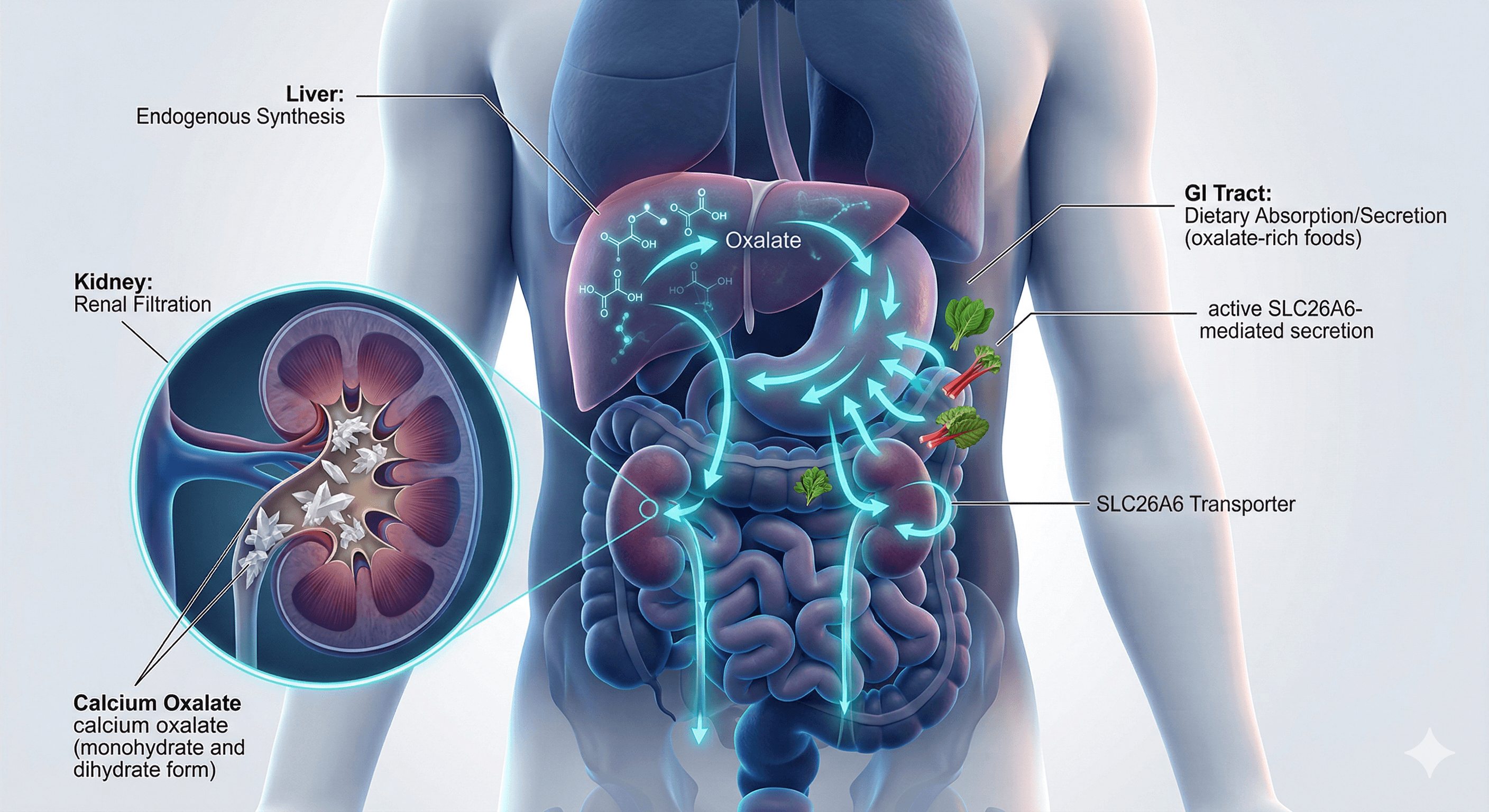

Oxalate, the simplest dicarboxylic acid (HOOC-COOH or C2H2O4), operates as a ubiquitous and highly insoluble terminal metabolic byproduct within human physiology. Because mammalian cellular architecture fundamentally lacks the specific enzymatic machinery required to degrade or catabolize oxalate, systemic accumulation is prevented exclusively through coordinated renal and intestinal excretion pathways. Under homeostatic physiological conditions, a delicate balance of glomerular filtration and active tubular net secretion maintains a tightly controlled urinary oxalate excretion rate, typically ranging from 10 to 40 mg per day (0.1–0.45 mmol/day). When the intricate balance among endogenous hepatic production, intestinal epithelial absorption, and renal clearance is perturbed, the supersaturation of oxalate in the presence of ionized calcium (Ca2+) rapidly precipitates the biomineralization of calcium oxalate (CaOx) crystals.
The primary clinical manifestation of this biochemical imbalance is nephrolithiasis, characterized by the formation of calcium oxalate kidney stones — the most prevalent form of renal calculi globally. Persistent hyperoxaluria progressively triggers chronic renal tubulointerstitial injury, nephrocalcinosis, and in its most severe congenital manifestations, systemic oxalosis resulting in multi-organ failure. The overarching physiological burden of urinary oxalate derives from a dynamic interplay between exogenous dietary intake — accounting for approximately 30% to 40% of the total systemic burden — and continuous endogenous hepatic synthesis. Developing a comprehensive understanding of oxalate handling requires exhaustive investigation into hepatocyte enzymatic cascades, the biophysics of epithelial transport kinetics within the gastrointestinal tract, the thermodynamic parameters governing urinary crystallization, and the profound modulatory effects of the host microbiome and dietary variables.
Biochemical Mechanisms of Endogenous Oxalate Synthesis
The endogenous synthesis of oxalate occurs almost entirely within the liver, serving as a continuous and critical contributor to the systemic oxalate pool. The biochemical pathways governing this synthesis involve a highly compartmentalized, complex network of precursor molecules — most notably glyoxylate, glycolate, and hydroxyproline — acting across the peroxisomes, mitochondria, and cytosol of hepatocytes. The catastrophic dysregulation of these metabolic pathways results in the Primary Hyperoxalurias (PH), a group of severe, autosomal recessive inborn errors of metabolism characterized by massive, unrelenting overproduction of endogenous oxalate, frequently pushing daily excretion rates well beyond 45 mg per day.
The first and clinically most severe form, Primary Hyperoxaluria Type 1 (PH1), is driven by biallelic pathogenic variants in the AGXT gene. This gene encodes the liver-specific peroxisomal enzyme alanine:glyoxylate aminotransferase (AGT). Under normal physiological parameters, AGT relies heavily on the cofactor pyridoxine (vitamin B6) to catalyze the transamination of glyoxylate into glycine, thereby preventing the intra-peroxisomal accumulation of glyoxylate. When AGT is deficient, misfolded, or aberrantly localized — a common consequence of specific missense variants — glyoxylate is forced out of the peroxisome and into the cytosol. Within the cytosolic compartment, glyoxylate is inevitably and rapidly oxidized to oxalate by the enzyme lactate dehydrogenase (LDH). Advanced stable isotope infusion protocols utilizing continuous intravenous administration of [1-13C]glycolate and [U-13C2]oxalate have unequivocally confirmed that the failure to convert glyoxylate to glycine radically accelerates the endogenous oxalate synthesis rate in PH1 patients, directly proportional to the loss of AGT activity.
Primary Hyperoxaluria Type 2 (PH2) arises from deleterious mutations within the GRHPR gene, which encodes the enzyme glyoxylate reductase/hydroxypyruvate reductase. Unlike AGT, GRHPR functions primarily in the cytosol to reduce escaping glyoxylate back into glycolate, effectively acting as a secondary metabolic safety valve to prevent immediate LDH-mediated oxidation. The loss of GRHPR function creates a metabolic bottleneck, trapping glyoxylate in the cytosol and forcing its direct conversion to oxalate.
Primary Hyperoxaluria Type 3 (PH3) introduces a fundamentally different biochemical paradigm, resulting from mutations in the HOGA1 gene, which encodes the mitochondrial enzyme 4-hydroxy-2-oxoglutarate aldolase. This enzyme is integral to the degradation and metabolism of hydroxyproline, an abundant non-essential amino acid released during continuous collagen turnover. HOGA1 normally cleaves 4-hydroxy-2-oxoglutarate directly into pyruvate and glyoxylate within the mitochondria. Paradoxically, a deficiency in HOGA1 leads to the rapid accumulation of 4-hydroxy-2-oxoglutarate, which eventually escapes the mitochondria into the cytosol. There, it is metabolized into glyoxylate and subsequently oxalate through alternative, though currently only partially mapped, cytosolic enzymatic routes.
Key insight: The identification and mapping of these highly specific genetic lesions reveal the profound degree to which endogenous oxalate production dictates ultimate renal outcomes. A deficit or structural variant anywhere within the glyoxylate detoxification network guarantees systemic hyperoxaluria regardless of the strictness of dietary oxalate restriction.
Intestinal Oxalate Transport Dynamics and Epithelial Permeability
While endogenous hepatic synthesis dictates the baseline systemic oxalate load, the gastrointestinal tract operates as the primary interface for dynamic oxalate homeostasis, facilitating both the absorption of exogenous dietary oxalate and the adaptive excretion of endogenous oxalate. The absorption of oxalate is uniquely devoid of direct hormonal regulation by classic mineralocorticoids such as aldosterone, distinguishing it from standard electrolyte transport. Instead, the movement of oxalate across the intestinal epithelium is mediated through highly specific transcellular pathways involving specialized apical and basolateral anion exchangers, as well as via passive paracellular "leak" pathways dictated by complex tight junction architecture. Overall gastrointestinal absorption typically accounts for less than 15% of the total ingested mass under normal conditions, though this figure can spike dramatically during states of gastrointestinal disease.
Transcellular Transport Mechanisms and the SLC26 Protein Family
The active transcellular flux of oxalate is primarily driven by members of the Solute Carrier 26 (SLC26) family of versatile, electroneutral anion exchangers. The anatomical distribution and expression density of these transporters along the longitudinal axis of the gastrointestinal tract dictate the net directionality of oxalate flux, establishing a complex interplay between small intestinal net secretion and colonic net absorption.
The predominant secretory transporter is SLC26A6 (also known as Putative Anion Transporter 1, or PAT1), which is localized heavily on the apical brush border membranes of enterocytes within the duodenum and ileum, and to a much lesser extent in the colon. SLC26A6 is a highly versatile carrier capable of several exchange modes, but it operates primarily as a Cl-/Ox2- and Cl-/HCO3- exchanger, utilizing the prevailing inward chloride gradients to actively drive intracellular oxalate out of the enterocyte and into the intestinal lumen. In foundational electrophysiological studies utilizing Slc26a6-null (knockout) mice, the transepithelial secretory flux of oxalate was completely abrogated in the isolated duodenum. In these knockout models, daily urinary oxalate excretion significantly increased, resulting in a state of severe absorptive hyperoxaluria that rapidly precipitated calcium oxalate nephrolithiasis. This data reveals a profound evolutionary adaptation: SLC26A6 continuously and actively pumps oxalate back into the gut lumen to directly counteract the passive, paracellular absorption of ingested dietary oxalate, acting as a critical systemic shield against dietary lithogenic loads.
Conversely, SLC26A3 (commonly known as Down-Regulated in Adenoma, or DRA) acts as the principal mediator of transcellular oxalate absorption. Highly expressed on the apical membrane of colonocytes, and to a moderate extent in the distal ileum, SLC26A3 facilitates the uptake of luminal oxalate in direct exchange for intracellular chloride or bicarbonate. Using isolated, short-circuited intestinal segments from wild-type and Slc26a3-knockout mice, researchers have demonstrated that the genetic deletion of DRA results in the total collapse of net transcellular oxalate absorption across the cecum and distal colon. Remarkably, DRA knockout models exhibit an extraordinary 66% to 70% reduction in daily urinary oxalate excretion compared to wild-type littermates, confirming that SLC26A3 is responsible for the vast majority of regulated dietary oxalate absorption. The immense reliance on SLC26A3 highlights its potential as a prime pharmacological target for managing hyperoxaluria. Furthermore, loss-of-function mutations in the human SLC26A3 gene (such as the p.V318del founder mutation in the Finnish population) are known to cause Congenital Chloride Diarrhea (CCD), effectively linking chloride, sulfate, and oxalate handling in the lower intestine.
Other SLC26 family members possess subsidiary but notable roles. SLC26A1 mediates basolateral SO42-/oxalate exchange in both the proximal renal tubule and the intestine, participating in intracellular recycling, while SLC26A2 actively participates in the secretion of intestinal oxalate in tandem with trans-sulfate (SO42-) or chloride. Additionally, the Anion Exchanger 1 (AE1) has been detected in the apical membranes of the ileum and the surface cells of the distal colon, providing supplemental absorptive capacity.
The Paracellular Pathway and Tight Junction Remodeling
Parallel to the transcellular route mediated by SLC26 proteins, oxalate crosses the intestinal epithelium via paracellular transport. The paracellular pathway is rigorously regulated by the Apical Junctional Complex (AJC), which includes the adherens junction and the tight junctions (TJs) comprised of claudins, occludins, and scaffolding proteins such as Zonula Occludens-1 (ZO-1).
Transepithelial flux studies comparing the absorption of radiolabeled [14C]oxalate alongside the paracellular marker [3H]mannitol across mouse duodena have provided critical mechanistic insights. The absorptive flux of oxalate is functionally insensitive to the broad-spectrum anion transport inhibitor DIDS (4,4'-diisothiocyano-2,2'-stilbenedisulfonic acid), is strictly nonsaturable, and perfectly mimics the passive flux kinetics of mannitol. This behavior confirms that the baseline absorption of oxalate in the upper intestine is predominantly a passive, paracellular process driven purely by the luminal-to-serosal concentration gradients.
The precise structural biology of this movement indicates that oxalate does not utilize specific, charge-selective claudin pores. For example, claudin-2 and claudin-15 form specific paracellular channels that selectively facilitate the recycling of Na+ and water (solvent drag) to aid in nutrient absorption. Oxalate, however, bypasses these specialized pores and traverses via the low-capacity, non-selective "leak" pathway capable of accommodating larger polyatomic solutes. Experimental knockdown of the tight junction protein ZO-1 significantly enhances general epithelial permeability to both mannitol and oxalate in parallel. Conversely, experiments utilizing MDCK II cell lines to induce the expression of claudin-10a — which drastically alters the paracellular barrier's cation preference and decreases the lumen-positive dilution potential — yielded absolutely no effect on oxalate permeability.
Key insight: The net intestinal absorption of dietary oxalate relies fundamentally on the relative magnitude of passive paracellular absorption overpowering the active transcellular secretion mediated by SLC26A6. Any condition that increases intestinal permeability or reduces SLC26A6 activity will amplify dietary oxalate uptake.
Cellular Network and Microbiome Regulation of Transport
The regulatory landscape of intestinal oxalate transport requires the intricate coupling of auxiliary ion channels and the localized biochemical microenvironment. The Cystic Fibrosis Transmembrane Conductance Regulator (CFTR) acts as an absolute functional prerequisite for SLC26-mediated anion secretion. In native murine duodena, the application of the specific CFTR inhibitor CFTR(inh)-172, or the genetic ablation of CFTR, completely halts SLC26A6-driven bicarbonate and oxalate secretion. The mechanistic synergy demands that chloride continuously exit the enterocyte via the CFTR channel to recycle the luminal substrate necessary for continuous SLC26A6 Cl-/Ox2- exchange. Furthermore, coupling with the apical Na+/H+ exchanger NHE3 (and to some extent NHE2) is required to maintain the intracellular proton gradients that drive secondary active transport; inhibition of NHE3 with S1611 significantly impairs normal fluid absorptive rates while paradoxically unmasking underlying SLC26A6-mediated exchange activity.
Additionally, the gut microbiome exhibits direct epigenetic and transcriptional regulation over host epithelial transporters. Short-chain fatty acids (SCFAs) — such as butyrate and acetate — produced exclusively by the microbial fermentation of dietary complex fibers, have been identified as potent upregulators of SLC26A6 expression. In experimental models, the pharmacological depletion of the gut microbiota sharply increased the renal burden of calcium oxalate crystals. This pathological state was fully reversed by exogenous SCFA supplementation, which directly targeted the intestinal epithelium and significantly enhanced SLC26A6-mediated intestinal oxalate secretion, driving down urinary oxalate levels.
Pathophysiology of Enteric Hyperoxaluria
Enteric hyperoxaluria represents a severe, acquired form of systemic oxalate overload precipitated by underlying gastrointestinal pathologies. The condition frequently arises following massive surgical alterations to the gastrointestinal tract, such as malabsorptive bariatric surgeries (e.g., Roux-en-Y gastric bypass) and extensive ileal resections, as well as in patients suffering from chronic biliary diseases, irritable bowel syndrome, pancreatic insufficiency, and cystic fibrosis. Clinical data indicates that up to 74% of patients undergoing malabsorptive gastric bypass and up to 60% of individuals with cystic fibrosis rapidly develop enteric hyperoxaluria, resulting in a three-fold increased incidence of nephrolithiasis compared to the general population.
The defining pathophysiological mechanism of enteric hyperoxaluria is rooted in the thermodynamics of fat malabsorption. Under normal digestive parameters, dietary calcium acts as a powerful luminal sink, spontaneously binding to free dietary oxalate to form highly insoluble calcium oxalate complexes within the gut lumen. Because these complexes are insoluble, they precipitate out of solution and are safely eliminated in the feces, rendering the bound oxalate entirely biologically unavailable for paracellular absorption.
In the event of severe fat malabsorption, large volumes of unabsorbed, long-chain free fatty acids progress deep into the distal small intestine and colon. These unabsorbed fatty acids possess an exceptionally high thermodynamic affinity for ionized calcium and readily bind to it — a chemical process known as saponification (the formation of calcium soaps). This aggressive competitive chelation physically strips calcium away from the oxalate molecules, abruptly and massively increasing the thermodynamic solubility of oxalate in the intestinal lumen. The resulting spike in the concentration of unbound, free oxalate creates an immense electrochemical and concentration gradient that forcefully drives passive paracellular oxalate absorption across the epithelial leak pathway.
Compounding this biochemical cascade, the unabsorbed fatty acids and excess luminal bile salts induce localized, chronic colonic inflammation. This inflammatory state inherently alters the apical junctional complex, increasing the permeability of tight junctions and further aggravating the massive paracellular influx of oxalate. Additionally, in conditions like cystic fibrosis, the underlying genetic defect in the CFTR channel directly incapacitates SLC26A6-mediated active oxalate secretion. Studies in mouse models of cystic fibrosis have demonstrated that defective SLC26A6-mediated intestinal oxalate secretion is associated with a 2.5-fold increase in both plasma oxalate concentration and total urine oxalate excretion, effectively disabling the body's primary defense against the passive absorptive surge.
Microbiome-Mediated Oxalate Degradation
Beyond the physical barrier of the intestinal epithelium, the microbiome provides an essential secondary metabolic defense against dietary oxalate. The obligate anaerobic bacterium Oxalobacter formigenes is a highly specialized gut commensal that relies exclusively on oxalate as its sole carbon and energy source. The critical role of this bacterium was first conceptualized in the 1940s and 1950s, following the mass mortality of agricultural sheep that had grazed on Halogeton glomeratus, an extremely oxalate-rich forage plant. It was discovered that the ruminal adaptation to degrade massive quantities of oxalate was mediated entirely by specific microbes.
Through the robust expression of two highly specific enzymes — formyl-CoA transferase (frc) and oxalyl-CoA decarboxylase (oxc) — O. formigenes catalyzes the intraluminal degradation of oxalate into formate and carbon dioxide. By relentlessly degrading luminal oxalate, O. formigenes lowers the concentration gradient required for paracellular absorption, effectively neutralizing the lithogenic threat of high-oxalate diets. The efficiency of this microbial defense is best demonstrated in the white-throated woodrat (Neotoma albigula), an animal capable of consuming extraordinarily high dietary oxalate levels without renal consequence, entirely due to its highly adapted, oxalate-degrading gut microbiota. Conversely, in humans, the prolonged use of broad-spectrum antibiotics often permanently eradicates O. formigenes colonies, leaving the host perpetually vulnerable to dietary hyperoxaluria.
Despite its vast therapeutic promise, the transition of O. formigenes into a viable clinical bacteriotherapy (Next-Generation Probiotic, or NGP) has been hindered by complex microbial ecologies and manufacturing hurdles. Because the bacterium is strictly anaerobic and exquisitely oxygen-sensitive, commercial cultivation, stabilization, and stable delivery present immense logistical challenges. Furthermore, clinical trials administering exogenous O. formigenes to healthy volunteers and PH1 patients have historically yielded highly inconsistent results.
Recent advanced metagenomic analyses have successfully unraveled the cause of this clinical variance by defining the concept of metabolic redundancy. The administration of O. formigenes successfully lowers urinary oxalate only when introduced into a host possessing a strictly "poor oxalate-degrading microbiota background". In these subjects, baseline measurements demonstrate strong negative correlations between baseline oxalate-degrading gene abundance and the response to O. formigenes administration (R = –0.36 for frc, –0.42 for oxc). If the recipient's native microbiome already harbors a high baseline abundance of diverse oxalate-degrading genes from other bacterial species, the co-administration of O. formigenes fails to engraft or yield any additive clinical benefit. Thus, the future of live biotherapeutic interventions for hyperoxaluria relies strictly on precision microbiome profiling and targeted patient stratification rather than universal administration.
Thermodynamics of Crystallization and Endogenous Macromolecular Inhibitors
The biomineralization of calcium oxalate monohydrate (COM, also known as whewellite) and calcium oxalate dihydrate (COD, also known as weddellite) in the renal tubules is a thermodynamically driven phase transition initiated when urinary supersaturation breaches the critical formation product. However, urine is not merely an aqueous inorganic salt solution; it is a highly complex biological fluid saturated with both elemental ions and macromolecular proteins designed specifically to thwart crystal nucleation, epitaxial growth, and cellular adhesion.
Elemental Destabilization via Magnesium, Citrate, and Phytate
Magnesium (Mg2+) operates as a formidable elemental inhibitor of calcium oxalate crystallization. Utilizing complex molecular dynamics simulations governed by the CHARMM27 force field and NAMD, theoretical models demonstrate that physiological concentrations of Mg2+ actively destabilize the electrostatic ion pairing between solvated Ca2+ and Ox2- ions. By physically interceding and shortening the contact time between the interacting ions, magnesium fundamentally reduces the average thermodynamic volume and mass of precipitating calcium oxalate aggregates. Clinical urine analysis confirms this effect; whereas control urines precipitate large, highly pathogenic whewellite (COM) crystals, urines from subjects administered magnesium precipitate much smaller, benign weddellite (COD) crystals at significantly reduced frequencies.
Crucially, the anti-lithogenic potency of magnesium is highly synergistic with citrate and phytate, both potent organic chelators, and this multi-elemental inhibitory mechanism retains its efficacy even within highly acidic urinary pH environments. Scanning electron microscopy images reveal that the combination of magnesium, citrate, and phytate totally prevents the formation of calcium oxalate monohydrate and trihydrate by both inhibiting crystal growth rates and severely decreasing overall thermodynamic supersaturation.
Furthermore, magnesium exhibits a potent inhibitory effect within the gastrointestinal tract prior to renal filtration. Clinical metabolic studies utilizing highly precise [13C2]oxalate absorption tests reveal that the co-administration of 10-mmol magnesium oxide or magnesium carbonate directly with dietary oxalate limits the intestinal absorption efficiency of the oxalate to approximately 5.1% to 7.6%, compared to 13.5% in unsupplemented controls. This indicates that magnesium effectively intercepts oxalate within the gut lumen, forming an insoluble magnesium-oxalate complex that is excreted in the feces.
Key insight: The pharmacokinetic timing of magnesium intervention is critical. If magnesium ingestion is separated from oxalate consumption by a 12-hour interval, the inhibitory effect on intestinal absorption is entirely nullified. Co-administration with meals is mandatory for clinical efficacy.
Macromolecular Defense: Tamm-Horsfall Protein and Osteopontin
At the macromolecular scale, specific urinary proteins such as Tamm-Horsfall Protein (THP), also known as uromodulin, osteopontin (OPN), and nephrocalcin provide the final defensive perimeter against crystal aggregation and tissue adhesion. THP, a roughly 90 kDa glycoprotein, is by far the most abundant protein excreted in normal mammalian urine and functions as an exceptionally potent inhibitor of crystal aggregation in vitro. Through intricate post-translational modifications, including extensive glycosylation and sialylation, THP envelops nascent crystals, establishing a steric and electrostatic barrier that prevents circulating micro-crystals from coalescing into clinically obstructing stones.
The absolute biological necessity of THP has been proven in comprehensive longitudinal in vivo studies utilizing THP-null mice. Without exception, THP-null models spontaneously develop severe, progressive intrarenal calcium calcification that is highly age and gene-dosage dependent. By 15 months of age, over 85% of THP-null mice exhibit massive interstitial deposits of hydroxyapatite and calcium oxalate deep within the renal papillae, accompanied by severely reduced urinary citrate excretion and subsequent hydronephrosis.
Similarly, osteopontin (OPN, approximately 50 kDa), an acidic aspartic acid-rich protein containing highly negatively charged sulfonic acid groups, directly modulates the very first stages of crystal nucleation. OPN possesses a peptide sequence identical to that found in human bone matrix, and binds aggressively to the rapidly growing crystal faces of COM. By coating the crystal lattice, the sulfonic acid groups of OPN effectively poison the structure, arresting further epitaxial growth.
However, the structural integrity of these proteins is paramount. In chronic idiopathic stone formers, structural abnormalities or the enzymatic desialylation of THP and nephrocalcin severely impair their inhibitory capacity. In high calcium environments, structurally degraded THP can paradoxically reverse its function, inadvertently acting as a promoter of crystal aggregation.
Dietary Oxalate: Analytical Quantification, Variability, and Clinical Categorization
Given the profound and immediate impact of exogenous oxalate on the total urinary burden, precise dietary modification remains a critical cornerstone of preventative nephrology. However, translating biochemical necessity into actionable, accurate dietary science has historically been plagued by massive variability in the analytical measurement of food oxalate content.
Analytical Instability and Measurement Methodologies
Historically, online resources and clinical databases have provided drastically conflicting oxalate values for identical foods, primarily due to the inaccuracies of early extraction methodologies that failed to properly isolate soluble versus insoluble oxalate fractions. The modern gold-standard quantification of plant oxalate relies entirely on advanced high-performance liquid chromatography (HPLC) paired with highly sensitive ion exchange columns. To achieve the broad linear range required for accurate quantification, modern laboratories utilize specific mobile phases, including carbonate and sodium bicarbonate solutions paired with conductivity detectors, or aqueous EDTA solutions paired with amperometric detection. Other robust mobile phases utilized in the literature include 0.15 M NaH2PO4 buffered to a pH of 4.2.
Biological Variance and Culinary Processing
Beyond strictly analytical discrepancies, extreme biological variation dictates the final endogenous oxalate concentration within a living plant tissue. Because photosynthetic organisms — ranging from small algae to giant gymnosperms — synthesize oxalic acid endogenously for high-capacity calcium regulation and defense against herbivory, the resting concentration is intimately tied to the specific plant cultivar, seasonal growing conditions, soil mineralogy, and the specific developmental stage of the plant at the time of harvest.
Furthermore, the final bioavailability of the oxalate is heavily modified by culinary processing techniques prior to human consumption. Boiling plant tissue results in the rapid thermal degradation and aqueous leaching of soluble oxalate salts into the cooking water, reducing the absolute oxalate mass per dry weight of the remaining vegetable. Drying methodologies (desiccation) also reduce oxalic acid levels via enzymatic breakdown, while traditional fermentation methods (such as saltwater fermentation of water spinach) leverage microbial decarboxylation to obliterate up to 83% to 91% of the anti-nutritional oxalic acid present in the fresh tissue.
Establishing Clinical Dietary Thresholds
To properly guide dietary therapy for hyperoxaluric and nephrolithiasis patients, clinical nutritionists categorize food items into standardized tiers based on the absolute mass of oxalate per established serving size. The general therapeutic goal for a high-risk patient is to restrict total daily oxalate intake to between 40 mg and 50 mg, and absolutely no more than 100 mg.
The broadly accepted clinical thresholds across dietary guidelines are defined as:
- Low Oxalate: Less than 2 mg per serving. These foods are considered universally safe and can be consumed freely.
- Moderate Oxalate: 2 mg to 6 mg (or up to 10 mg) per serving. Consumption should be monitored and limited to 2–3 servings per day.
- High and Extremely High Oxalate: Greater than 7 mg to 10 mg per serving. These foods represent extreme lithogenic risks and are strictly contraindicated for active stone formers.
Comprehensive Clinical Database of Dietary Oxalate Content
The following data has been synthesized from the 2023/2024 Harvard University Oxalate Food List and nephrology clinic databases.
Cereals, Grains, and Breakfast Foods
| Food Item | Serving Size | Oxalate (mg) | Category |
|---|---|---|---|
| Oats, Regular Quick Instant Unenriched | 1 cup | 0.0 | Low |
| Oatmeal, Quaker Instant Sweetened | 2/3 cup | 0.0 | Low |
| Corn Pops | 1 1/3 cup | 0.5 | Low |
| Corn Flakes | 1 1/2 cup | 0.8 | Low |
| Frosted Flakes | 1 cup | 1.0 | Low |
| Cap'n Crunch | 1 cup | 1.6 | Low |
| Puffed Rice | 1 cup | 1.8 | Low |
| Crispix | 1 1/3 cup | 2.3 | Low |
| Rice Krispies | 1 1/2 cup | 3.1 | Moderate |
| Rice Chex | 1 1/3 cup | 3.5 | Moderate |
| Honey Bunches of Oats, Honey Roasted | 1 cup | 4.0 | Moderate |
| Oat Life | 1 cup | 4.0 | Moderate |
| Froot Loops | 1 1/3 cup | 4.1 | Moderate |
| Corn Chex | 1 1/4 cup | 4.9 | Moderate |
| Cheerios Multigrain | 1 1/3 cup | 5.1 | Moderate |
| Lucky Charms | 1 cup | 5.5 | Moderate |
| Cocoa Puffs | 1 cup | 6.4 | Moderate |
| Cheerios Honey Nut | 1 cup | 6.6 | High |
| Kashi Heart to Heart | 1 cup | 6.7 | High |
| Honey Bunches of Oats with Almonds | 1 cup | 7.1 | High |
| Cinnamon Toast Crunch | 1 cup | 7.2 | High |
| Special K | 1 1/4 cup | 7.3 | High |
| Cheerios | 1 1/2 cup | 7.4 | High |
| Special K Red Berries | 1 cup | 8.2 | High |
| Cocoa Pebbles | 1 cup | 8.8 | High |
| Puffed Wheat | 1 cup | 9.2 | High |
| Wheaties | 1 cup | 9.4 | High |
| Total Whole Grain | 1 cup | 10.4 | High |
| Reese's Puffs | 1 cup | 10.6 | High |
| Kashi Go | 3/4 cup | 10.7 | High |
| Basic 4 | 1 cup | 11.2 | High |
| Cracklin Oat Bran | 3/4 cup | 11.6 | High |
| Oatmeal Squares | 1 cup | 12.0 | High |
| Fiber One Honey Clusters | 1 cup | 12.6 | High |
| Fiber One | 2/3 cup | 12.8 | High |
| 100% Natural Granola, Oats, Wheat & Honey | 2/3 cup | 13.0 | High |
| Grape-Nuts | 1/2 cup | 13.7 | High |
| Krave, Chocolate | 1 cup | 14.7 | High |
| Smart Start | 1 1/4 cup | 14.9 | High |
| Wheat Chex | 1 cup | 15.3 | High |
| Cream of Wheat, Quick | 1 cup | 17.7 | High |
| Great Grains, Raisin, Date & Pecan | 3/4 cup | 18.6 | High |
| Oatmeal, Quaker Multigrain | 1 cup | 21.7 | High |
| Great Grains Crunchy Pecan | 3/4 cup | 23.1 | High |
| Weetabix | 3 biscuits | 24.8 | High |
| Oatmeal Crisp Crunchy Almonds | 1 cup | 26.1 | High |
| Great Grains Cranberry Almond Crunch | 1 cup | 28.2 | High |
| Frosted Miniwheats | 25 biscuits | 32.9 | High |
| Kashi Autumn Wheat | 32 biscuits | 32.9 | High |
| All Bran Kellogg's | 2/3 cup | 34.6 | High |
| Uncle Sam | 3/4 cup | 41.7 | High |
| Shredded Wheat | 1 1/3 cup | 41.8 | High |
| 40% Bran Flakes | 1 cup | 42.7 | High |
| Raisin Nut Bran | 1 cup | 44.8 | High |
| Corn Grits, Regular Quick Enriched | 1 cup | 45.2 | High |
| Raisin Bran | 1 cup | 46.1 | High |
Beverages, Spirits, and Artificial Sweeteners
| Food Item | Serving Size | Oxalate (mg) | Category |
|---|---|---|---|
| Water, Tap | 8 oz | 0.0 | Low |
| Cola, Caffeinated | 12 oz | 0.0 | Low |
| Energy Drink (Red Bull / Sugar Free) | 8.3 oz | 0.0 | Low |
| Gatorade (Fruit Flavored) / Powerade Zero | 12 oz | 0.0 | Low |
| Vitamin Water (Sugared / Sugar-Free) | 8 oz | 0.0 | Low |
| White & Dark Spirits, Hard Seltzer | 1.5 oz | 0.0 | Low |
| Aspartame / Saccharin / Stevia / Sucralose | 1 packet | 0.0 | Low |
| Juice, Apricot | 8 oz | 0.2 | Low |
| Wine, White | 5 oz | 0.3 | Low |
| Carbonated Beverage with sugar (No Caffeine) | 12 oz | 0.4 | Low |
| Diet Soda (No Caffeine / With Caffeine) | 12 oz | 0.4 | Low |
| Tea, Instant Lemon Flavored (Powder) | 4.5 tsp dry | 0.5 | Low |
| Papaya, Canned Nectar | 1 cup | 0.8 | Low |
| Juice, Lemon (Raw) | 1 tbsp | 0.9 | Low |
| Juice, Mango | 1 cup | 1.0 | Low |
| Juice, Orange (Frozen / Added Calcium) | 6 oz | 1.1 | Low |
| Wine, Red | 5 oz | 1.2 | Low |
| Juice, Pomegranate | 6 oz | 1.3 | Low |
| Lemonade, Low Calorie | 12 oz | 1.4 | Low |
| Juice, Apple (Unsweetened) | 7 oz | 1.5 | Low |
| Coffee, Brewed | 8 oz | 1.7 | Low |
| Juice, Cranberry Cocktail (Bottled) | 6 oz | 1.7 | Low |
| Juice, Pineapple (Canned, Unsweetened) | 6 oz | 1.9 | Low |
| Ensure Nutritional Supplement | 8 oz | 2.0 | Moderate |
| Coffee, Prepared Instant Decaf | 8 oz | 2.2 | Moderate |
| Juice, Grapefruit | 6 oz | 2.2 | Moderate |
| Juice, Grape (Canned/Bottled) | 6 oz | 2.4 | Moderate |
| Beer (Regular, Light, Hard Cider) | 12 oz | 3.9 | Moderate |
| Juice, Citrus Fruit (From frozen concentrate) | 12 oz | 4.5 | Moderate |
| Tea, Unsweetened Green | 1 cup | 6.4 | High |
| Tea, Brewed | 8 oz | 6.4 | High |
| Carnation Instant Breakfast (Prepared) | 8 oz | 7.3 | High |
| Fruit Smoothie | 16 oz | 9.3 | High |
| Tea, Diet Iced Ready to Drink | 12 oz | 9.6 | High |
| Juice, Tomato (Canned, Salted) | 6 oz | 10.7 | High |
| Ensure Plus Nutrition Shake | 8 oz | 12.3 | High |
| Coffee Drinks (Cappuccino, Latte, Mocha) | 12 oz | 13.0 | High |
| Juice, Vegetable (Canned) | 6 oz | 13.7 | High |
| Boost | 8 oz | 21.1 | High |
| Lemonade, Frozen White | 12 oz | 22.3 | High |
| Juice, Carrot (Canned) | 1 cup | 28.3 | High |
| Slim Fast | 11 oz | 36.7 | High |
Breads, Bakery Items, Snacks, and Condiments
| Food Item | Serving Size | Oxalate (mg) | Category |
|---|---|---|---|
| Sugar, Granulated | 1 tsp | 0.0 | Low |
| Candies, Non-Chocolate | 1 oz | 0.0 | Low |
| Mustard, Yellow | 1 tsp | 0.6 | Low |
| Jams and Preserves | 1 tbsp | 0.5 | Low |
| Syrup, Pancake | 1 tbsp | 0.5 | Low |
| Catsup (Ketchup) | 1 tbsp | 1.5 | Low |
| Sauce, Barbecue | 2 tbsp | 2.3 | Moderate |
| Danish (Cinnamon Roll or Fruit) | 1 danish | 2.6 | Moderate |
| Sauce, Soy | 1 tbsp | 2.9 | Moderate |
| Bread, Wheat | 1 slice | 3.2 | Moderate |
| Snack Cakes (Creme-filled) | 1 cake | 3.6 | Moderate |
| Cornbread or Corn Muffin | 1 piece | 3.7 | Moderate |
| Bread, White | 1 slice | 4.4 | Moderate |
| Donut (Cake & Yeast) | 1 donut | 4.4 | Moderate |
| Pie, Apple (Commercial) | 1 slice | 4.6 | Moderate |
| Burger, Vegetable | 1 patty | 5.0 | Moderate |
| Cracker, Regular Refined Grain | 5-6 crackers | 5.1 | Moderate |
| Cracker, Multigrain | 5-6 crackers | 5.5 | Moderate |
| Cookie, Chocolate Chip (Prepared/Dough) | 1 cookie | 6.0 | Moderate |
| Snack Bar (Granola, Nutrigrain) | 1 bar | 6.1 | Moderate |
| Bread, Rye | 1 slice | 6.3 | High |
| Bread, Oat, Whole | 1 slice | 6.4 | High |
| Pretzels, Plain Hard | 1.5 oz | 6.9 | High |
| Cookie, Commercial | 1 cookie | 7.0 | High |
| Muffin, Blueberry | 1 muffin | 7.0 | High |
| Candies, Milk Chocolate | 1.5 oz | 7.0 | High |
| Corn Chips, Tortilla | 1 oz | 7.1 | High |
| Buns, Cinnamon, Frosted | 1 roll | 7.2 | High |
| Muffin, English (Plain, Enriched) | 1 muffin | 7.3 | High |
| Croissants | 1 croissant | 7.6 | High |
| Muffin, English (Wheat) | 1 muffin | 8.7 | High |
| Tortillas, Flour | 2 tortillas | 9.0 | High |
| Muffin, Bran | 1 muffin | 9.0 | High |
| Pancake & Waffles | 2 small | 9.7 | High |
| Tortillas, Corn | 2 tortillas | 10.0 | High |
| Bars, Energy | 1 bar | 10.6 | High |
| Muffin, English (Mixed Grain) | 1 muffin | 11.2 | High |
| French Toast, Homemade | 2 slices | 11.6 | High |
| Cake, Home-Baked and Commercial | 1 slice | 11.9 | High |
| Potato Chips | 1 oz | 12.1 | High |
| Biscuit | 1 biscuit | 13.5 | High |
| Roll, Reduced Fat, Sweet | 1 roll | 13.5 | High |
| Bread, Whole Wheat | 1 slice | 13.6 | High |
| Jell-O Chocolate Pudding | 1 cup | 13.6 | High |
| Crackers, Whole Wheat | 5-6 crackers | 15.0 | High |
| Bread, Multigrain Whole Grain | 1 slice | 18.0 | High |
| Potato Chips, Baked | 1 oz | 19.3 | High |
| Cake, Commercial Yellow w/ Chocolate Frosting | 1 slice | 19.3 | High |
| Bars, High Protein | 1 bar | 20.1 | High |
| Muffin, English (Whole Wheat) | 1 muffin | 28.1 | High |
| Brownie, Home-Made | 1 brownie | 31.0 | High |
| Brownie, Ready-to-Eat | 1 brownie | 33.9 | High |
| Candy Bar | 2 oz | 35.4 | High |
| Chocolate, Dark Bar | 1.5 oz | 67.7 | Extremely High |
Dairy, Fish, and Meats
| Food Item | Serving Size | Oxalate (mg) | Category |
|---|---|---|---|
| Eggs, Fresh / Omega 3 Supplemented | 1 egg | 0.0 | Low |
| Butter, Salted | 1 tsp | 0.0 | Low |
| Cheese (Cottage, 1% Lowfat) | 1/2 cup | 0.0 | Low |
| Cream, Fluid Light | 1 tbsp | 0.0 | Low |
| Sherbet, Orange | 1 cup | 0.0 | Low |
| Whipped Topping | 2 tbsp | 0.0 | Low |
| Bluefish, Swordfish, Whiting, Shrimp | 3-4 oz | 0.0 – 1.2 | Low |
| Salmon, Tuna, Sardines | 3-4 oz | 0.0 | Low |
| Beef, Pork, Poultry, Lamb | standard | < 2.0 | Low |
| Cheese (Cheddar, Mozzarella, Neufchatel, Cream) | 1 oz | 0.1 | Low |
| Coffeemate (Powdered and Liquid) | 1 tbsp | 0.1 | Low |
| Cream, Sour | 1 tbsp | 0.1 | Low |
| Cheese (American, Nonfat Slice) | 1 slice | 0.2 | Low |
| Cheese (American, Pasteurized Processed) | 1 oz | 0.3 | Low |
| Milk (1%, 2%, Skim, or Whole) | 8 oz | 0.5 – 0.7 | Low |
| Yogurt (Frozen, Greek, Lowfat) | standard | 0.5 – 1.2 | Low |
| Ice Cream, Light Vanilla | 1 cup | 0.6 | Low |
| Buttermilk, Lowfat | 1 cup | 0.7 | Low |
| Cheese (Cottage, Nonfat) | 1/2 cup | 0.8 | Low |
| Ice Cream, Vanilla | 1 cup | 1.0 | Low |
Fruits
| Food Item | Serving Size | Oxalate (mg) | Category |
|---|---|---|---|
| Plums | 1 fruit | 0.0 | Low |
| Apricots (Raw or Dried) | 1 fruit / 5 halves | 0.1 – 0.3 | Low |
| Apples, Sulfured Dried | 1/4 cup | 0.4 | Low |
| Apples (Raw, with or without skin) | 1 apple | 0.7 | Low |
| Canned Pears / Peaches / Fruit Cocktail | 1/2 cup | 1.0 | Low |
| Watermelon | 1 slice | 1.0 | Low |
| Plaintain | 1 medium | 1.0 | Low |
| Dried Cranberries | 1/2 cup | 1.0 | Low |
| Cantaloupe | 1/4 melon | 1.4 | Low |
| Dried Apples | 1 cup (13 rings) | 2.0 | Low |
| Cranberry Sauce | 1/2 cup | 2.0 | Low |
| Raspberries | 1/2 cup | 2.5 | Moderate |
| Dried Apricots | 1 cup halves | 3.0 | Moderate |
| Canned Cherries | 1/2 cup | 7.0 | High |
| Figs (Raw) | 1 fig | 9.3 | High |
| Avocado | 1/2 fruit | 9.5 | High |
| Bananas, Raw | 1 banana | 10.3 | High |
| Dried Prunes | 1/4 cup | 11.0 | High |
| Pineapple (Canned in heavy syrup) | 1/2 cup | 11.9 | High |
| Grapefruit, Raw | 1/2 medium | 13.2 | High |
| Tangerines, Raw | 1 tangerine | 15.7 | High |
| Plums (Prunes), Dried | 1/4 cup | 17.8 | High |
| Blueberries | 1/2 cup | 18.5 | High |
| Oranges, Raw | 1 orange | 23.3 | High |
| Canned Pineapple | 1/2 cup | 24.0 | High |
| Dried Figs | 5 figs | 24.0 | High |
| Dates | 5 dates | 25.5 | High |
| Dried Pineapples | 1/2 cup | 30.0 | High |
Vegetables
| Food Item | Serving Size | Oxalate (mg) | Category |
|---|---|---|---|
| Brussel Sprouts, Frozen | 1/2 cup | 2.0 | Low |
| Kale, Chopped | 1 cup | 2.0 | Low |
| Shallots | 1/2 cup | 4.0 | Moderate |
| Sprouts, Alfalfa | 1/2 cup | 4.0 | Moderate |
| Squash, Winter & Summer, Baked/Boiled | 1/2 cup | 4.0 | Moderate |
| Celery, Raw | 1 stalk | 3.0 | Moderate |
| Mustard Greens, Chopped | 1 cup | 4.0 | Moderate |
| Carrots, Raw | 1/2 large | 4.5 | Moderate |
| Artichokes | 1 small bud | 5.0 | Moderate |
| Hot Chili Peppers | 1/2 cup | 5.0 | Moderate |
| Mixed Vegetables, frozen | 1/2 cup | 5.0 | Moderate |
| Asparagus | 4 spears | 6.0 | Moderate |
| Oriental Vegetables, frozen | 1/2 cup | 6.0 | Moderate |
| Squash, Winter & Summer, Raw | 1 cup sliced | 6.0 | Moderate |
| Carrots, Cooked | 1/2 cup | 7.0 | High |
| Tomato | 1 medium | 7.0 | High |
| Sprouts, Mung Bean | 1/2 cup | 8.0 | High |
| String Beans | 1/2 cup | 9.0 | High |
| Carrots, Raw | 1/2 lg carrot | 10.0 | High |
| Celery, Cooked | 1 cup | 10.0 | High |
| Collards | 1 cup | 10.0 | High |
| Seaweed, Wakame | 1/2 cup | 10.0 | High |
| Parsnip | 1/2 cup | 15.0 | High |
| Tomato Sauce | 1/2 cup | 17.0 | High |
| Olives | 10 olives | 18.0 | High |
| Tomato Paste (Canned) | 1/4 cup | 24.5 | High |
| Turnip, Mashed | 1/2 cup | 30.0 | High |
| Rutabaga, Mashed | 1/2 cup | 31.0 | High |
| Bamboo Shoots | 1 cup | 35.0 | High |
| Yams, Cubed | 1/2 cup | 40.0 | High |
| Sweet Potato, Orange, Baked/Boiled w/o skin | 1/2 cup mashed | 42.0 | High |
| Okra | 1/2 cup | 57.0 | High |
| Soup, Miso | 1 cup | 58.3 | High |
| Beets, Canned Drained | 1/2 cup | 76.4 | Very High |
| Seaweed, Nori, dry roasted | 1/2 cup | 97.0 | Very High |
| Sweet Potato, Orange, Baked/Boiled w/ skin | 1/2 cup | 126.0 | Very High |
| Spinach, Raw | 1 cup | 316.2 | Extremely High |
| Rhubarb | 1/2 cup | 541.0 | Extremely High |
| Spinach, Boiled Drained | 1/2 cup | 547.4 | Extremely High |
| Sorrel, boiled 15 min | 1/2 cup, chopped | 582.0 | Extremely High |
| Sorrel, raw | 1 cup, chopped | 779.0 | Extremely High |
Beans, Lentils, Nuts, and Seeds
| Food Item | Serving Size | Oxalate (mg) | Category |
|---|---|---|---|
| Flaxseed | 1 tbsp | 0.0 | Low |
| Lentils, Boiled (Unsalted) | 1/2 cup | 2.4 | Moderate |
| Mung Beans | 1/2 cup | 3.0 | Moderate |
| Soybeans | 1 cup | 7.0 | High |
| Beans, Red Kidney (Boiled) | 1/2 cup | 9.9 | High |
| Pecans | 1 oz (15 halves) | 10.0 | High |
| Beans, Black (Boiled) | 1/2 cup | 10.5 | High |
| Tofu, Soft | 3.5 oz | 10.6 | High |
| Burger, Soy | 3.5 oz | 11.9 | High |
| Sunflower Seeds | 1 cup | 12.0 | High |
| Pistachios | 1 oz (48 kernels) | 14.0 | High |
| Trail Mix | 1 oz | 15.0 | High |
| Beans, Red Kidney | 1/2 cup | 15.0 | High |
| Pumpkin Seeds | 1 cup, cooked | 17.0 | High |
| Fava Beans | 1/2 cup | 20.0 | High |
| Peanuts | 1 oz | 27.0 | Very High |
| Walnuts | 1 cup or 7 nuts | 31.0 | Very High |
| Candies with Nuts (Snickers) | 2 oz | 38.0 | Very High |
| Hummus, Commercial | 1/4 cup | 39.1 | Very High |
| Mixed Nuts (with Peanuts) | 1 oz | 39.0 | Very High |
| Soybeans, Green (Boiled) | 1/2 cup | 48.0 | Very High |
| Cashews | 1 oz (18 kernels) | 49.0 | Very High |
| Beans, Baked (Vegetarian) | 1/2 cup | 57.5 | Very High |
| Burger, Plant-Based | 1 patty | 57.9 | Very High |
| Beans, Refried (Canned) | 1/2 cup | 59.6 | Very High |
| Beans, Navy (Canned) | 1/2 cup | 96.3 | Extremely High |
| Almonds | 1 oz (22 kernels) | 122.0 | Extremely High |
Conclusion
The meticulous and rigorous regulation of oxalate homeostasis represents a biological triumph of multi-organ and trans-kingdom physiological coordination. The ultimate systemic oxalate burden is the sum consequence of highly restrictive hepatic glyoxylate flux constraints, the dynamic regulation of transcellular and paracellular epithelial permeability, the thermodynamic state of the intestinal and urinary lumens, and the metabolic integrity of the gut microbiome. While congenital mutations in AGXT, GRHPR, or HOGA1 invariably precipitate catastrophic endogenous hyperoxaluria via irreversible biochemical bottlenecking, the vast majority of clinical nephrolithiasis cases are acquired defects driven by massive dietary influx, gastrointestinal malabsorption, and disrupted luminal chemistry.
Crucially, the clinical treatment of absorptive and enteric hyperoxaluria must evolve far beyond simplistic, archaic dietary restriction. Because the massive passive absorption of dietary oxalate via the tight junction leak pathway is counter-balanced directly by the CFTR- and SCFA-dependent active secretion via the SLC26A6 transporter, future therapeutic strategies must focus extensively on enhancing this innate epithelial secretory shield. Additionally, thermodynamic interventions — such as the highly calculated co-administration of calcium, magnesium, and citrate specifically timed during high-oxalate meals — can artificially induce immediate luminal saponification and aggregation, rendering the oxalate completely biologically unavailable prior to reaching the colonic mucosa. Ultimately, mastering oxalate pathology requires navigating the intricate biophysics of its renal crystallization, exploiting endogenous macromolecular inhibitors like Tamm-Horsfall Protein, and leveraging precision nutrition backed by rigorously validated, biochemically precise compositional databases to secure long-term renal preservation.
Our Personalized Approach at Diaeta
Managing oxalate-related conditions requires far more than a generic food list. At Diaeta, we understand that effective dietary therapy for kidney stone prevention or hyperoxaluria must be precision-guided, scientifically validated, and adapted to your unique metabolism.
What We Offer You
- Never hungry: even when restricting high-oxalate foods, your meals remain satisfying and nutritionally complete. We ensure your calcium intake is optimized to bind luminal oxalate effectively.
- Precision over restriction: not all high-oxalate foods carry equal risk. We calculate your actual daily oxalate burden and identify your personal threshold — most patients can maintain a diverse, enjoyable diet.
- Evidence-based supplementation guidance: timed calcium, magnesium, and citrate co-administration is more effective than blanket supplementation. We build precise meal-timing protocols.
- Microbiome support: we integrate dietary strategies to support Oxalobacter formigenes and other oxalate-degrading microbiota through targeted prebiotic fiber choices.
How We Support You
- Comprehensive assessment: complete dietary history, 24-hour urinary oxalate analysis review, medical context (prior stone history, GI surgeries, genetic screening)
- Personalized oxalate budget: individualized daily target (typically 40–100 mg/day) based on your urinary data and risk profile
- Calcium strategy: optimizing dietary calcium timing with meals to bind luminal oxalate, reducing absorption without restricting overall intake
- Hydration protocol: structured fluid intake plan to maintain urinary volume above 2.5 L/day — the single most protective intervention
Do you suffer from recurrent kidney stones or hyperoxaluria? Book a consultation in Brussels. Together, we will build a nutritional plan tailored to your metabolic profile — allowing you to eat foods you love while protecting your kidney health.