
Magnesium stands as the fourth most abundant mineral in the human body and the second most prevalent intracellular cation. Its role is fundamental: as an enzymatic cofactor in over 300 to 600 biochemical reactions, it sits at the heart of energy production, DNA synthesis, nerve regulation and muscle contraction. Yet, around half the Western population has inadequate magnesium intake.
Why Is Magnesium So Important?
A Universal Enzymatic Cofactor
Adenosine triphosphate (ATP), the primary energy currency of our cells, is only biologically active when chelated to a magnesium ion, forming the Mg-ATP complex. Without adequate magnesium, the production and use of cellular energy are severely compromised — which explains why chronic fatigue is the earliest and most universal symptom of deficiency.
Guardian of the Nervous System
In the central nervous system, magnesium acts as the primary regulator of neuronal excitability by blocking NMDA receptors (N-methyl-D-aspartate), which are activated by glutamate, the brain's major excitatory neurotransmitter. At rest, the magnesium ion physically lodges itself in the ionic channel of the NMDA receptor, preventing over-stimulation.
A deficiency prematurely lifts this blockade, leading to a state of chronic neuronal hyperexcitability that manifests clinically as: irritability, anxiety, insomnia, migraines and heightened sensitivity to stress.
The Natural Antagonist of Calcium
In the cardiovascular and muscular systems, magnesium acts as the physiological antagonist of calcium. Calcium triggers muscle contraction; magnesium ensures relaxation. Magnesium depletion leads to a state of permanent vasospasm, manifesting as hypertension, arrhythmias, nocturnal cramps and muscle contractures.
Signs and Symptoms of Magnesium Deficiency
⚠️ The Blood Test Trap
Only 1% of the body's total magnesium circulates in the blood. The body maintains blood magnesium levels at all costs — at the expense of tissue reserves. A normal blood test therefore does not mean optimal status. Diagnosis relies primarily on symptoms.
Neuromuscular Manifestations
- Nocturnal muscle cramps, especially in the lower limbs
- Eyelid twitching (facial myoclonus)
- Fine tremors, morning muscle stiffness
- Worsening of restless leg syndrome
- Cervical or lumbar contractures
Neurological and Psychological Manifestations
- Overwhelming chronic fatigue, not relieved by rest
- Generalised anxiety, irritability, emotional lability
- Difficulty falling asleep and multiple nocturnal awakenings
- Hypersensitivity to noise and light
- Recurrent pulsating migraines
Cardiovascular Manifestations
- Heart palpitations and ectopic beats
- Tendency towards elevated blood pressure
- Resting sinus tachycardia
At-Risk Populations
📊 Who Is Most Vulnerable?
- Endurance athletes: massive losses through sweating, drastically increased needs
- Pregnant and breastfeeding women: foetal tissue anabolism and milk production are highly demanding
- People under chronic stress: cortisol increases urinary magnesium excretion
- Patients on diuretics (furosemide, hydrochlorothiazide): obligatory renal loss
- Patients on PPIs (proton pump inhibitors): reduced intestinal absorption
- Elderly population: reduced intestinal absorption, polypharmacy
- Digestive disorders: Crohn's disease, coeliac disease, absorption disorders
- Regular alcohol consumption: ethanol is a powerful magnesuric diuretic
Magnesium-Rich Food Sources
The priority always remains diet. Food sources provide magnesium within a complex nutritional matrix, ensuring synergistic absorption and eliminating toxicity risks.
| Food Category | Content (mg/100g) | Examples and Tips |
|---|---|---|
| Cocoa products | 500–550 mg | Pure unsweetened cocoa, dark chocolate ≥80% cocoa — rich in antioxidant flavonoids |
| Oil-rich seeds | 350–400 mg | Sunflower seeds, sesame seeds — sprinkle on salads and muesli |
| Tree nuts | 150–350 mg | Brazil nuts (~350 mg), cashews, almonds, hazelnuts, pistachios |
| Seafood | 250–350 mg | Periwinkles (~300 mg), whelks, snails, mackerel, sardines |
| Whole grains | 200–300 mg | Wheat germ, wheat bran, buckwheat flour, whole rolled oats |
| Legumes | 150–200 mg | Dried white beans, lentils, peanut butter, firm tofu |
⚠️ The Impact of Refining
Processing whole wheat grain into white flour completely eliminates the bran and germ — the only parts where minerals are stored. Switching to whole grains, legumes and a daily handful of nuts is the most effective dietary intervention to prevent deficiency.
Recommended Daily Intakes
💊 Official References (NIH / EFSA)
- Adult men: 400–420 mg/day
- Adult women: 310–320 mg/day
- Pregnant women: 350–400 mg/day
- Children 9–13 years: 240 mg/day
- Practical rule: approximately 6 mg/kg body weight/day
In the presence of aggravating factors (intense exercise, chronic stress, depleting medications), these needs increase by 40 to 120 mg/day additionally.
Complete Guide to Supplementation Forms
When diet is insufficient, supplementation becomes necessary. But not all forms are equal: the nature of the "carrier" molecule to which magnesium is bound entirely determines its bioavailability, digestive tolerance and therapeutic indications.
🔬 Elemental Magnesium vs. Compound Weight
Be careful reading labels: a capsule stating "1000 mg of Magnesium Citrate" actually contains only ~150 mg of elemental magnesium. The therapeutic dosage of 300–400 mg/day always refers to elemental magnesium, not the gross weight of the salt.
1. Amino Acid Chelates (3rd Generation)
These forms bind the magnesium ion to amino acids, using the highly efficient dipeptide absorption pathways (PEPT1 transporters) and avoiding any competition with calcium or zinc.
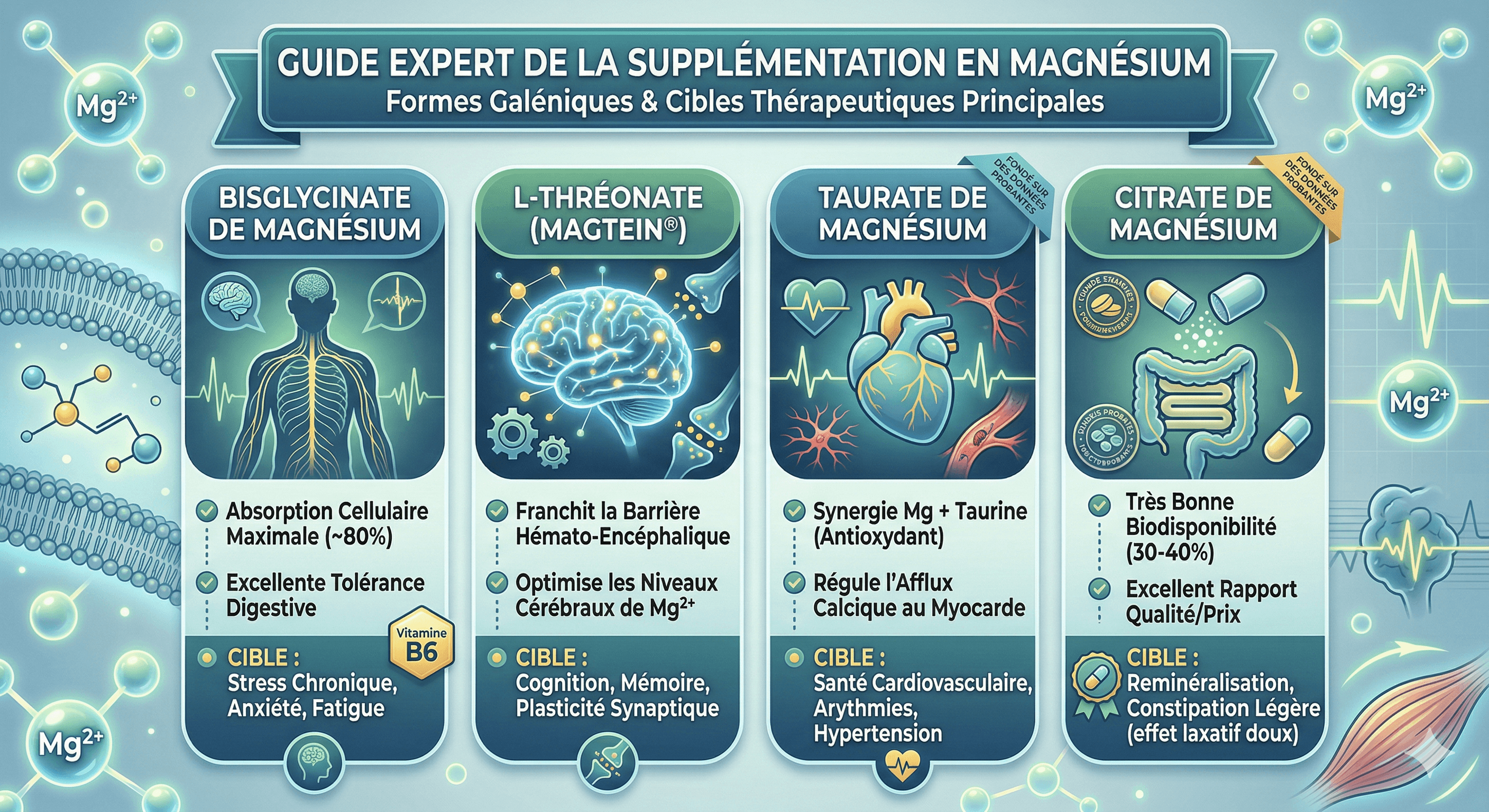
Magnesium Bisglycinate — All-Round Excellence
📊 Key Data
- Bioavailability: ~80% (excellent)
- Digestive tolerance: Excellent — no osmotic effect
- Elemental Mg: ~14%
- Indications: Chronic stress, anxiety, general fatigue, sports recovery, irritable bowel syndrome, confirmed severe deficiency
Its structure — one magnesium ion bound to two glycine molecules (inhibitory amino acid) — provides a dual calming effect on the nervous system. The absolute reference form for rapidly correcting systemic deficiency.
Magnesium Taurate — The Cardiovascular Shield
📊 Key Data
- Bioavailability: Excellent
- Digestive tolerance: Excellent
- Elemental Mg: ~9%
- Indications: Arrhythmias, hypertension, anxiety, migraine prevention, vascular protection
The chelated taurine has powerful antioxidant properties and modulates calcium reuptake in the myocardium, preventing intracellular calcium overload. Form of choice for cardiovascular health.
Magnesium L-Threonate (Magtein®) — The Nootropic Agent
📊 Key Data
- Bioavailability: Excellent — specific to the central nervous system
- Digestive tolerance: Excellent
- Elemental Mg: only ~7–8%
- Indications: Cognitive optimisation, memory, age-related cognitive decline, severe sleep disorders
The only form capable of efficiently crossing the blood-brain barrier, directly increasing magnesium levels in the cerebrospinal fluid. Randomised clinical trials have demonstrated significant improvements in working memory and an estimated 7.5-year reduction in brain "cognitive age". Not suitable for correcting systemic deficiency (elemental Mg content too low).
2. Soluble Organic Salts
Magnesium Citrate — Best Value for Money
📊 Key Data
- Bioavailability: Very good (30–40%)
- Digestive tolerance: Good (dose-dependent osmotic laxative effect)
- Elemental Mg: ~15–16%
- Indications: Overall remineralisation, associated mild constipation, prevention of calcium oxalate kidney stones
Magnesium Malate — The Energy Ally
📊 Key Data
- Bioavailability: Very good
- Digestive tolerance: Very good — no notable laxative effect
- Elemental Mg: ~15%
- Indications: Severe chronic fatigue, fibromyalgia, diffuse myalgias, mitochondrial energy metabolism support
Malic acid is a key intermediate of the Krebs cycle — it works synergistically with magnesium to restart ATP production in struggling muscle fibres.
3. Inorganic Salts (1st Generation) — Forms to Avoid for Remineralisation
⚠️ Beware of Common Supermarket Forms
Magnesium oxide (very common and cheap) displays a record elemental Mg content (~60%) but a catastrophic bioavailability of only 4–5%. It acts essentially as an osmotic laxative and is completely unsuitable for correcting a deficiency. Marine magnesium (a mixture of oxides and sulphates) has a similar profile.
Complete Comparison Table of Magnesium Forms
| Form | Bioavailability | Elemental Mg | Tolerance | Primary Indication |
|---|---|---|---|---|
| Bisglycinate | Excellent (~80%) | ~14% | Excellent | Stress, anxiety, fatigue, IBS, severe deficiency |
| Taurate | Excellent | ~9% | Excellent | Cardiovascular, arrhythmias, hypertension, migraines |
| L-Threonate (Magtein®) | Excellent (CNS) | ~7–8% | Excellent | Memory, cognition, cognitive decline, sleep |
| Malate | Very good | ~15% | Very good | Fibromyalgia, chronic fatigue, energy |
| Citrate | Very good (30–40%) | ~15–16% | Good | Remineralisation, constipation, kidney stones |
| Marine | Moderate (20–30%) | ~30–35% | Moderate | Preventive maintenance only |
| Oxide/Hydroxide | Very low (4–5%) | ~60% | Very poor (diarrhoea) | Osmotic laxative, antacid — useless for remineralisation |
Essential Synergies: Vitamins B6 and D
Vitamin B6 (and Pyridoxal 5'-Phosphate)
Vitamin B6, especially in its active P-5-P form, directly facilitates the transport of magnesium into cells. It acts synergistically with magnesium in the synthesis of stress-regulating neurotransmitters (serotonin, GABA). Quality supplements typically combine magnesium + B6 P-5-P for optimised efficacy.
Vitamin D
Vitamin D promotes renal magnesium reabsorption. But crucially, magnesium is the indispensable cofactor for the enzymatic activation of inactive vitamin D (cholecalciferol) into its active form (calcitriol). Without sufficient magnesium, vitamin D remains biologically inactive — hence the importance of supplementing both together.
The Calcium/Magnesium Balance: A Fundamental Ratio
Calcium and magnesium compete for the same intestinal transporters. An excess of calcium relative to magnesium inhibits the absorption of the latter. Epidemiological studies indicate that the optimal dietary calcium:magnesium ratio should be between 1.7 and 2.6.
Yet modern Western diets — rich in dairy products and calcium-fortified ultra-processed foods — often push this ratio above 4.0. This chronic systemic imbalance generates:
- Tissue and vascular calcification: excess calcium deposits in arteries and soft tissues, accelerating atherosclerosis
- Bone paradox: a massive calcium intake without magnesium paradoxically worsens osteoporosis, as magnesium is essential for activating the vitamin D needed for calcium bone fixation
🎯 Practical Advice
When supplementing calcium for osteoporosis, co-supplementation with magnesium + vitamin D3 + vitamin K2 is medically essential. Vitamin K2 activates osteocalcin, which directs calcium to bone and drives it out of arteries.
Important Drug Interactions
Levothyroxine (Thyroid Hormones)
⚠️ Major Interaction — Hypothyroid Patients
Magnesium chemically binds to levothyroxine in the stomach, forming an insoluble, non-absorbable complex. This drastically reduces the bioavailability of the thyroid hormone, potentially triggering a relapse into hypothyroidism (fatigue, weight gain, elevated TSH).
Absolute rule: maintain a minimum separation of 4 hours between levothyroxine intake (morning on an empty stomach) and any magnesium form (noon or evening).
Antibiotics and Bisphosphonates
The same chelation mechanism applies to tetracyclines (doxycycline), fluoroquinolones (ciprofloxacin) and bisphosphonates (alendronate). A spacing of at least 2 to 4 hours is imperative to avoid therapeutic failure.
Diuretics: Major Iatrogenic Cause of Deficiency
Thiazide and loop diuretics (furosemide, hydrochlorothiazide) block tubular renal reabsorption of magnesium, inducing massive urinary loss. Any patient on long-term treatment with these drugs should benefit from near-systematic preventive supplementation with organic magnesium.
Contraindications and Precautions
Myasthenia Gravis — Absolute Contraindication
🚫 Life-Threatening Danger
Magnesium reduces the release of acetylcholine at the neuromuscular junction by blocking presynaptic calcium influx. In a myasthenic patient whose acetylcholine receptors are already destroyed by autoimmune attack, this can precipitate an acute myasthenic crisis with respiratory paralysis requiring emergency mechanical ventilation. All supplementation is absolutely contraindicated.
Severe Renal Insufficiency
The kidney is the primary regulator of magnesaemia. In severe renal insufficiency (creatinine clearance <30 mL/min), supplementation must be strictly medically supervised with regular laboratory monitoring, under risk of toxic hypermagnesaemia (respiratory depression, cardiac arrhythmias, coma).
Conclusion: The Diaeta Approach
🌟 Our Vision of Magnesium
Optimally managing magnesium status is a central pillar of preventive medicine and daily wellbeing. It requires no frustrating dietary restrictions: the best sources of magnesium — dark chocolate, nuts, seeds, legumes, whole grains — are among the most delicious and nutritious foods available.
During a Diaeta consultation, we assess your magnesium status through a comprehensive clinical analysis (symptoms, lifestyle, medications, diet), and build with you a personalised nutrition plan that covers your needs naturally and enjoyably. If supplementation is needed, we select the form adapted to your specific needs — not the cheapest option from the supermarket shelf.
Ready to Optimise Your Magnesium Status?
Persistent fatigue, cramps, sleep disorders or anxiety? These symptoms deserve a thorough nutritional evaluation. Our evidence-based, personalised approach helps you regain energy and vitality without frustrating restrictions.