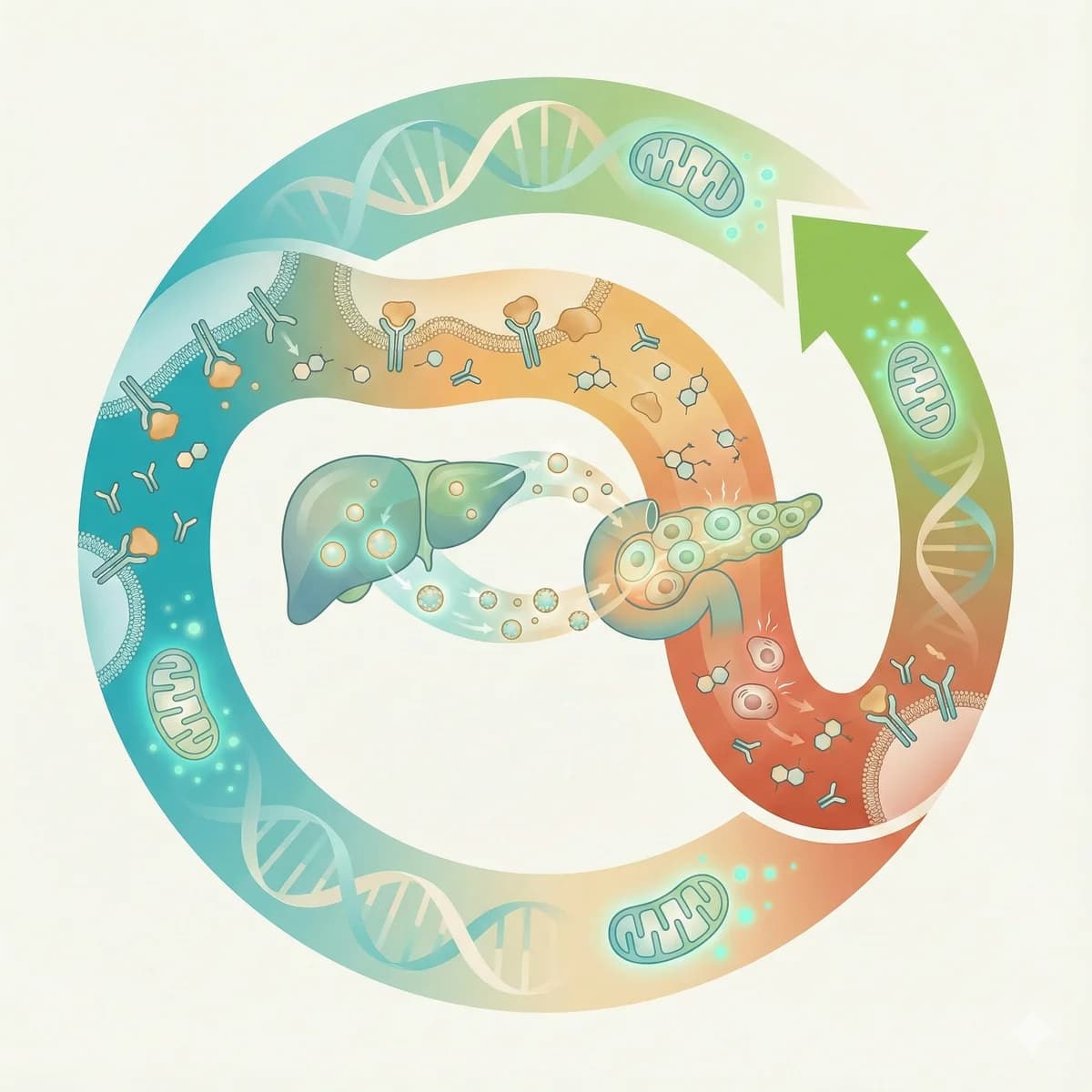

The classical nosology of metabolic disease has historically relied on binary classifications—distinguishing the "diabetic" from the "non-diabetic." However, contemporary endocrinology has irrevocably shifted this paradigm toward a nuanced appreciation of a continuous metabolic spectrum. This continuum, characterized by the progressive deterioration of glucose homeostasis, begins clinically with insulin resistance—often decades before diagnosis—progresses through intermediate hyperglycemic states collectively termed "prediabetes," and culminates in overt Type 2 Diabetes Mellitus (T2DM).
This report, grounded in the 2025 Standards of Care and the latest pathophysiological research, posits that the distinction between these states is not merely a matter of glycemic thresholds but represents distinct stages of physiological decompensation, particularly involving the interaction between peripheral insulin sensitivity and pancreatic beta-cell function.
Recent evidence underscores that the pathophysiological insults associated with this progression—including endothelial dysfunction, systemic inflammation, and microvascular atherogenesis—do not commence solely at the diagnostic threshold of diabetes (e.g., A1C ≥ 6.5%). Rather, they are actively accruing during the antecedent stages of insulin resistance and prediabetes. Consequently, the clinical entity of prediabetes is no longer viewed merely as a risk factor but as a pathogenic state in its own right, warranting early and aggressive intervention.
1. Insulin Resistance: The Pathophysiological Bedrock
Insulin resistance (IR) is the fundamental metabolic defect underlying the development of hyperglycemia in Type 2 Diabetes. It is defined as a state where a normal concentration of insulin produces a subnormal biological response in target tissues, primarily skeletal muscle, the liver, and adipose tissue. While often asymptomatic and undiagnosed in routine practice, IR drives a constellation of metabolic abnormalities—including dyslipidemia, hypertension, and inflammation—that accelerate cardiovascular disease independent of glycemic status.
1.1 Molecular Mechanisms of Resistance
The failure of insulin to exert its physiological effects occurs at the cellular level, involving complex disruptions in intracellular signaling pathways.
The Insulin Signaling Cascade and its Disruption
Under normal physiological conditions, insulin binds to the α-subunit of the insulin receptor on the cell surface, inducing autophosphorylation of the β-subunit. This recruits and phosphorylates Insulin Receptor Substrate (IRS) proteins (IRS-1 and IRS-2) on tyrosine residues. This phosphorylation event is the critical node for downstream signaling, activating the Phosphoinositide 3-kinase (PI3K) and Akt (Protein Kinase B) pathway. In skeletal muscle and adipose tissue, this pathway drives the translocation of GLUT4 glucose transporters to the cell membrane, facilitating glucose uptake. In the liver, it suppresses gluconeogenesis and glycogenolysis.
In states of insulin resistance, this signaling cascade is blunted. A primary mechanism is the aberrant serine phosphorylation of IRS-1. Pro-inflammatory cytokines (such as TNF-α and IL-6) and free fatty acids (FFAs) activate intracellular serine kinases, including c-Jun N-terminal kinase (JNK) and inhibitor of κB kinase (IKK). These kinases phosphorylate IRS-1 on serine residues rather than tyrosine residues. Serine phosphorylation sterically hinders the interaction between IRS-1 and the insulin receptor, effectively "switching off" the signal before it can activate PI3K. This molecular blockade explains why hyperinsulinemia fails to lower blood glucose effectively: the "key" (insulin) enters the lock, but the "tumblers" (IRS-1) are jammed.
Mitochondrial Dysfunction and Oxidative Stress
Recent research highlights mitochondrial dysfunction as a critical driver of IR. Mitochondria are the primary site of fatty acid β-oxidation and glucose metabolism. In the context of nutrient oversupply (excess glucose and lipids), the mitochondrial electron transport chain (ETC) becomes overwhelmed, leading to the generation of Reactive Oxygen Species (ROS).
- ROS-Induced Damage: ROS accumulation causes oxidative damage to mitochondrial DNA (mtDNA) and cellular proteins. This oxidative stress activates stress-sensitive kinases (like JNK and p38 MAPK), which further promote the serine phosphorylation of IRS-1, creating a vicious cycle of resistance.
- Metabolic Inflexibility: Dysfunctional mitochondria lose the ability to switch efficiently between oxidizing lipids (during fasting) and glucose (post-prandially), a phenomenon termed "metabolic inflexibility." This results in the accumulation of toxic lipid intermediates, such as diacylglycerol (DAG) and ceramides, which directly inhibit insulin signaling.
The Role of Adipose Tissue Inflammation
Adipose tissue is not merely an energy storage depot but a dynamic endocrine organ. In obesity, particularly visceral obesity, adipocytes undergo hypertrophy and hyperplasia. When adipocyte expansion exceeds the vascular supply, localized hypoxia ensues, triggering cell death and the infiltration of macrophages.
- Macrophage Polarization: There is a phenotypic switch in adipose tissue macrophages from an anti-inflammatory M2 state to a pro-inflammatory M1 state. These M1 macrophages secrete high levels of Tumor Necrosis Factor-alpha (TNF-α) and Interleukin-6 (IL-6).
- Paracrine and Endocrine Effects: TNF-α directly promotes insulin resistance by activating JNK and increasing IRS-1 serine phosphorylation. It also downregulates the expression of GLUT4. IL-6, while its role is complex, contributes to hepatic insulin resistance and increased gluconeogenesis. It is also a key driver of increased C-reactive protein (CRP) production by the liver, linking IR to systemic inflammation.
- Adiponectin Suppression: Obesity and inflammation suppress the secretion of adiponectin, an insulin-sensitizing adipokine that normally enhances fatty acid oxidation and glucose uptake. Low adiponectin levels are a strong independent predictor of T2DM progression.
1.2 Clinical Measurement and Diagnosis of Insulin Resistance
Unlike diabetes, which has clear glycemic thresholds, insulin resistance lacks a routine clinical diagnostic code. This ambiguity often leads to under-diagnosis until overt hyperglycemia appears.
The Hyperinsulinemic-Euglycemic Clamp
The "gold standard" for quantifying insulin sensitivity is the hyperinsulinemic-euglycemic clamp. In this procedure, insulin is infused at a constant rate to suppress hepatic glucose production, while glucose is infused at a variable rate to maintain euglycemia. The rate of glucose infusion required to maintain stable blood sugar (M-value) is directly proportional to tissue insulin sensitivity. While precise, this method is invasive, time-consuming, and expensive, rendering it unsuitable for routine clinical practice.
Surrogate Markers in Clinical Practice
For clinical utility, several surrogate markers have been validated against the clamp technique.
1. Homeostatic Model Assessment of Insulin Resistance (HOMA-IR):
Calculated from fasting glucose and insulin levels, HOMA-IR estimates hepatic insulin resistance:
HOMA-IR = [Fasting Insulin (μU/mL) × Fasting Glucose (mmol/L)] / 22.5
While population-specific, values generally range from 0.5–1.4 in healthy individuals. A cut-off of ≥ 2.5 (or approximately the top quartile of a specific population) is widely accepted as indicative of insulin resistance.
2. Triglyceride-Glucose (TyG) Index:
Emerging evidence suggests the TyG index may be superior to HOMA-IR in predicting diabetes progression because it captures elements of both glucotoxicity and lipotoxicity. It does not require insulin measurement, making it cost-effective:
TyG = ln [(Triglycerides (mg/dL) × Glucose (mg/dL)) / 2]
Studies indicate a strong correlation between elevated TyG indices and arterial stiffness, nephropathy, and incident diabetes, highlighting the central role of lipid metabolism in IR.
3. Metabolic Score for Insulin Resistance (MetS-IR):
This newer score integrates glucose, triglycerides, BMI, and HDL-cholesterol:
MetS-IR = [ln(2 × Glucose + Triglycerides) × BMI] / ln(HDL)
Longitudinal cohorts have shown MetS-IR to be a powerful predictor of the transition from prediabetes to diabetes, with specific inflection points (e.g., > 37.22) associated with significantly higher risk.
Cardiovascular Risk in Normoglycemic Insulin Resistance
A critical insight for clinicians is that cardiovascular risk accrues in insulin-resistant individuals even before hyperglycemia develops.
- Independent Risk: Meta-analyses show that in non-diabetic populations, individuals in the highest quartile of HOMA-IR or fasting insulin have a significantly elevated risk of coronary heart disease (CHD) and stroke compared to insulin-sensitive counterparts, independent of fasting glucose levels.
- Mechanisms of Atherogenesis: Hyperinsulinemia drives atherogenesis through multiple pathways: sodium retention (insulin stimulates renal sodium reabsorption, contributing to hypertension), sympathetic activation (insulin increases sympathetic nervous system tone), dyslipidemia (IR promotes the overproduction of VLDL, leading to the characteristic triad of high triglycerides, low HDL, and small, dense LDL particles), and endothelial dysfunction (loss of PI3K-Akt signaling impairs nitric oxide production, leading to vasoconstriction and endothelial inflammation).
1.3 Management of Insulin Resistance
Since IR often precedes prediabetes, early management is essentially preventative.
- Lifestyle Intervention: The primary treatment is weight loss (5-7% of body weight) and physical activity. Exercise enhances insulin sensitivity via an insulin-independent mechanism: muscle contraction stimulates GLUT4 translocation through AMP-activated protein kinase (AMPK), bypassing the defective insulin signaling pathway.
- Dietary Modification: Reducing refined carbohydrates and saturated fats helps lower the demand on the pancreas and reduces substrate for hepatic De Novo Lipogenesis (DNL).
- Pharmacotherapy: While no drug is FDA-approved specifically for "insulin resistance," Metformin and Thiazolidinediones (e.g., Pioglitazone) are insulin sensitizers used in prediabetes and T2DM. Pioglitazone, a PPAR-γ agonist, specifically targets adipose tissue insulin resistance and mitochondrial function but carries side effects like weight gain and edema.
2. The Pancreatic Beta-Cell: Adaptation, Failure, and Identity Loss
If insulin resistance is the spark, beta-cell failure is the fire. Most obese individuals have some degree of insulin resistance but do not develop diabetes because their pancreatic beta-cells compensate by increasing insulin secretion. T2DM develops only when this compensatory mechanism fails.
2.1 The Starling Curve of the Pancreas
The natural history of beta-cell function follows a trajectory known as "Starling's Curve of the Pancreas," analogous to the Starling curve of the heart.
- Phase 1: Compensation (Hyperinsulinemia): In response to peripheral resistance, beta-cells undergo hypertrophy and hyperplasia. They secrete supraphysiological amounts of insulin to maintain normal glucose tolerance (NGT). This phase can last for years or decades.
- Phase 2: Adaptation Limit (Prediabetes): As resistance persists or worsens, the beta-cells reach their maximal secretory capacity. Postprandial glucose levels begin to rise (IGT), followed by fasting glucose (IFG).
- Phase 3: Decompensation (Type 2 Diabetes): The beta-cells fail. Insulin secretion drops precipitously, no longer matching the demand. By the time a diagnosis of diabetes is made (FPG ≥ 126 mg/dL), it is estimated that patients have lost approximately 50–80% of their functional beta-cell mass.
2.2 Mechanisms of Beta-Cell Failure
Why do beta-cells fail? The traditional view ascribed this to beta-cell death (apoptosis) due to exhaustion. However, emerging evidence points to a more complex interplay of toxicity and identity loss.
Glucotoxicity and Lipotoxicity
- Glucotoxicity: Chronic hyperglycemia itself is toxic to beta-cells. High intracellular glucose leads to oxidative stress and ER stress, impairing insulin synthesis and secretion. This creates a feed-forward loop where high sugar begets higher sugar.
- Lipotoxicity: Elevated Free Fatty Acids (FFAs), particularly palmitate, accumulate in the pancreas. When not oxidized, they are esterified into toxic intermediates (ceramides) that induce beta-cell apoptosis and inhibit function.
The Twin Cycle Hypothesis
Proposed by Roy Taylor, this hypothesis unifies the liver and pancreas defects. It posits that excess calories lead to liver fat accumulation (Step 1), causing hepatic insulin resistance and increased export of VLDL-triglycerides. These triglycerides are then deposited ectopically in the pancreas (Step 2). This "fatty pancreas" (steatosis) causes metabolic inhibition of the beta-cells, suppressing the acute insulin response. Crucially, this implies that the beta-cells are not dead, but "stunned" or quiescent, and can be revived by removing the fat.
Beta-Cell Dedifferentiation: A Paradigm Shift
A groundbreaking shift in our understanding of T2DM pathophysiology is the concept of beta-cell dedifferentiation. Lineage-tracing studies in animal models and analysis of human islets suggest that beta-cells in T2DM do not primarily undergo apoptosis; rather, they lose their molecular identity.
- Mechanism of Identity Loss: To function as an insulin factory, a beta-cell must express specific transcription factors (e.g., FoxO1, Pdx1, MafA, Nkx6.1) that maintain its phenotype. Under metabolic stress (glucotoxicity), these factors are downregulated.
- The Role of FoxO1: The transcription factor FoxO1 acts as a metabolic sensor. In healthy cells, it protects beta-cell function. However, chronic hyperglycemia causes nuclear exclusion and degradation of FoxO1. Without FoxO1, the cell loses its "beta-cell" instructions.
- Regression and Transdifferentiation: Dedifferentiated cells regress to a progenitor-like state (expressing markers like Ngn3) or transdifferentiate into alpha-like cells that secrete glucagon. This explains the "double whammy" in T2DM: low insulin and high glucagon.
Clinical Implication: If cells are dedifferentiated rather than dead, they are potentially recoverable. This provides the biological plausibility for diabetes remission—removing the metabolic stress allows the cells to re-differentiate and resume insulin production.
3. Prediabetes: The Intermediate State and Diagnostic Discordance
Prediabetes is the clinical manifestation of the "Adaptation Limit" phase of beta-cell dysfunction. It serves as a critical warning system, identifying individuals at high risk for T2DM and cardiovascular complications. However, its definition is subject to significant debate and variability between major health organizations.
3.1 Diagnostic Criteria and Discordance
The 2025 ADA Standards of Care and the World Health Organization (WHO) utilize different thresholds, leading to discordance in who is diagnosed.
| Diagnostic Test | 2025 ADA Criteria | WHO/IEC Criteria | Pathophysiological Insight |
|---|---|---|---|
| Fasting Plasma Glucose (FPG) | 100-125 mg/dL (5.6-6.9 mmol/L) | 110-125 mg/dL (6.1-6.9 mmol/L) | Primarily reflects Hepatic Insulin Resistance (unsuppressed gluconeogenesis) |
| 2-hour Plasma Glucose (OGTT) | 140-199 mg/dL (7.8-11.0 mmol/L) | 140-199 mg/dL (7.8-11.0 mmol/L) | Reflects Peripheral (Muscle) Insulin Resistance and loss of first-phase insulin secretion |
| Hemoglobin A1C | 5.7-6.4% (39-47 mmol/mol) | 6.0-6.4% (42-47 mmol/mol)* | Reflects chronic glycemic exposure (~3 months). Influenced by RBC turnover |
*WHO suggests A1C 6.0-6.4% as the high-risk category. The ADA's lower threshold (5.7%) captures a significantly larger population, estimated to be nearly 50% of the US adult population, whereas the WHO criteria capture roughly half that number.
Clinical Implications of Discordance
These tests do not identify the same people:
- Isolated IFG: These patients have normal postprandial glucose but elevated fasting levels. They typically have stationary hepatic insulin resistance but may have preserved peripheral sensitivity.
- Isolated IGT: These patients have normal fasting glucose but spike after meals. They have significant muscle insulin resistance and are at higher risk for cardiovascular disease and progression to diabetes than those with isolated IFG.
- A1C Limitations: A1C can be misleading in conditions affecting red blood cell turnover (e.g., anemia, kidney disease, pregnancy, sickle cell trait). It has lower sensitivity than OGTT; relying solely on A1C misses approximately 40-50% of people who have prediabetes based on glucose tolerance testing.
3.2 The "Toxic" Nature of Prediabetes: Microvascular and Macrovascular Risks
Is prediabetes a disease? Evidence suggests that the complications associated with diabetes do not wait for the A1C to hit 6.5%.
Microvascular Complications
A systematic review indicates that approximately 37% of individuals already have some form of microvascular disease at the time of T2DM diagnosis, implying the damage occurred during the prediabetic phase.
- Retinopathy: Found in 4–8% of prediabetic individuals. The prevalence is significantly higher when diagnosed by ADA criteria (A1C ≥ 5.7%) compared to the stricter IEC criteria.
- Neuropathy: "Idiopathic" small fiber neuropathy is frequently attributable to undiagnosed prediabetes. Patients may present with burning pain or autonomic dysfunction even with A1C levels in the 5.7–6.4% range. Glucose fluctuations (spikes) may drive this nerve damage more than fasting glucose.
- Nephropathy: Early albuminuria (Microalbuminuria) is detectable in prediabetes and is linked to endothelial dysfunction. A meta-analysis showed prediabetes is associated with a 14% increased odds of nephropathy.
Macrovascular Risk
The risk of cardiovascular disease (CVD) is continuous. Individuals with prediabetes have a significantly increased risk of coronary artery disease, stroke, and all-cause mortality compared to those with normoglycemia.
This risk is largely driven by the co-occurrence of the Metabolic Syndrome (hypertension, dyslipidemia, obesity). However, even after adjusting for these factors, postprandial hyperglycemia (IGT) remains an independent predictor of cardiovascular events.
3.3 Progression Risk Stratification
Not all prediabetes is created equal. Understanding the "phenotype" of prediabetes helps in risk stratification:
- Highest Risk: Combined IFG + IGT. These individuals have both hepatic and muscle resistance and severe beta-cell strain. Annual progression rates to diabetes are 5–10%.
- Intermediate Risk: Isolated IGT.
- Lowest Risk: Isolated IFG (especially by ADA 100-125 mg/dL criteria).
- Lifetime Risk: The lifetime risk of progression is higher in women than men, and higher in those diagnosed at a younger age.
4. Overt Type 2 Diabetes: Diagnosis and Classification
The diagnosis of T2DM is established when hyperglycemia reaches a threshold associated with a sharp inflection in the risk of diabetic retinopathy. Historical data from the Pima Indian studies showed that retinopathy prevalence remains low below an FPG of ~120 mg/dL or A1C of 6.0%, but rises steeply above FPG 126 mg/dL and A1C 6.5%.
4.1 2025 ADA Diagnostic Criteria
Diagnosis requires two abnormal test results (either from the same sample or two separate samples) unless there is unequivocal hyperglycemia with symptoms.
- A1C ≥ 6.5% (≥ 48 mmol/mol): Must be performed in an NGSP-certified laboratory.
- FPG ≥ 126 mg/dL (≥ 7.0 mmol/L): Fasting for at least 8 hours.
- 2-h PG ≥ 200 mg/dL (≥ 11.1 mmol/L): During a 75-g OGTT.
- Random Plasma Glucose ≥ 200 mg/dL (≥ 11.1 mmol/L): In a patient with classic symptoms (polyuria, polydipsia, weight loss) or hyperglycemic crisis.
4.2 Heterogeneity of Type 2 Diabetes
T2DM is highly heterogeneous:
- LADA (Latent Autoimmune Diabetes in Adults): Often misdiagnosed as T2DM. These patients are positive for autoantibodies (GAD65) but may not require insulin initially. Screening for antibodies is recommended in adults with phenotypic risk factors (e.g., normal BMI, personal history of autoimmune disease).
- Ketosis-Prone Diabetes: A subtype, often seen in African American or Hispanic populations, presenting with DKA but subsequently regaining beta-cell function and potentially managing without insulin.
5. Screening and Management Strategies
5.1 Screening Guidelines (2025 Updates)
The ADA has lowered the screening age to address the rising incidence in younger adults.
- Universal Screening: Begins at age 35 (previously 45) for all adults.
- Risk-Based Screening: Adults of any age with BMI ≥ 25 kg/m² (≥ 23 kg/m² for Asian Americans) AND one or more risk factors:
- First-degree relative with diabetes
- High-risk race/ethnicity (African American, Latino, Native American, Asian American, Pacific Islander)
- History of CVD or Hypertension (≥ 130/80 mmHg)
- Low HDL (< 35 mg/dL) or High Triglycerides (> 250 mg/dL)
- Polycystic Ovary Syndrome (PCOS)
- Physical inactivity
- Conditions associated with insulin resistance (e.g., severe obesity, acanthosis nigricans)
- Frequency: Repeat every 3 years if normal; annually if prediabetic.
5.2 Management Strategies across the Continuum
| Stage | Primary Goal | Intervention Strategy |
|---|---|---|
| Insulin Resistance / Metabolic Syndrome | CVD Risk Reduction | Lifestyle: 5-7% weight loss, 150 min/week exercise. Diet: Mediterranean or DASH diet. Lipids/BP: Aggressive management of cholesterol and hypertension. |
| Prediabetes | T2DM Prevention | Intensive Lifestyle: Modeled on DPP (7% weight loss). Pharmacotherapy: Consider Metformin for high-risk groups (BMI ≥ 35, age < 60, prior GDM). Monitoring: Annual A1C, monitor for microvascular complications. |
| Type 2 Diabetes | Glycemic Control & Complication Prevention | First-line: Metformin + Lifestyle. Comorbidities: Use GLP-1 RAs or SGLT2i if ASCVD, HF, or CKD exists (independent of A1C). Weight Loss: Prioritize high-efficacy agents (Semaglutide, Tirzepatide) to target remission. |
6. Reversibility and Remission: A New Therapeutic Goal
The traditional teaching that T2DM is inevitably progressive has been overturned. High-quality evidence now supports remission as a realistic clinical goal, particularly in the early years after diagnosis.
6.1 Defining Remission
In 2021, an international consensus group (ADA/EASD/Diabetes UK) standardized the definition:
"Remission is defined as a return of HbA1c to < 6.5% (< 48 mmol/mol) that persists for at least 3 months in the absence of usual glucose-lowering pharmacotherapy."
The terms "partial" and "complete" remission have been retired in favor of simply "remission." Testing for maintenance of remission should occur at least yearly.
6.2 The Evidence: DiRECT Trial and Beyond
The Diabetes Remission Clinical Trial (DiRECT) challenged the permanence of T2DM in primary care.
- Methodology: Primary care-led weight management using a low-calorie total diet replacement (825–853 kcal/day) for 3–5 months, followed by food reintroduction.
- Outcomes (1 Year): 46% of the intervention group achieved remission. Remission was strongly correlated with weight loss:
- 86% remission in those losing ≥ 15 kg
- 57% remission in those losing 10–15 kg
- 34% remission in those losing 5–10 kg
- Outcomes (2 Years): Remission is durable if weight loss is maintained. At 2 years, 64% of those who maintained >10 kg loss remained in remission.
- Clinical Benefits: Remission was associated with fewer cardiovascular events and improved quality of life.
6.3 The Mechanism: Reversing the Twin Cycle
Remission is mechanistically explained by the reversal of the Twin Cycle:
- Rapid Liver Fat Loss: Caloric restriction causes a rapid fall in liver fat (within days), normalizing hepatic insulin sensitivity and fasting glucose.
- Pancreatic Fat Loss: Sustained weight loss leads to a slower reduction in pancreatic fat (over weeks). This allows the "stunned" beta-cells to recover from lipotoxicity, re-differentiate to a mature phenotype, and restore the first-phase insulin response.
6.4 The "Personal Fat Threshold"
Why do some lean people get T2DM while some obese people do not? The "Personal Fat Threshold" hypothesis posits that every individual has a genetically determined capacity for subcutaneous fat storage. Once this threshold is exceeded—whether at a BMI of 24 or 40—fat spills over into visceral organs (liver/pancreas), causing metabolic dysfunction. This explains why weight loss induces remission even in non-obese individuals with T2DM: they simply need to fall back below their personal threshold.
6.5 Predictors of Remission Success
Remission is most likely when:
- Short Duration: Diagnosis < 6 years (DiRECT criteria). Beta-cells are more likely to be recoverable (dedifferentiated) rather than permanently lost.
- Preserved C-peptide: Indicating residual beta-cell mass.
- Magnitude of Weight Loss: The single strongest predictor.
7. Emerging Frontiers in Diagnosis and Therapy
As our understanding deepens, new biomarkers and therapeutic targets are emerging to detect risk earlier and treat it more precisely.
7.1 Novel Biomarkers Beyond A1C
- 1-Hour Plasma Glucose: A 1-hour OGTT glucose ≥ 155 mg/dL is a strong predictor of progression to diabetes, often identifying risk before the 2-hour value becomes abnormal. It may become a future standard for "early" prediabetes.
- TyG Index: As discussed, the Triglyceride-Glucose index is gaining traction as a cost-effective surrogate for insulin resistance that outperforms HOMA-IR in some predictive models.
- Adiponectin/Leptin Ratio: Reflects adipose tissue dysfunction directly. A low ratio indicates high cardiovascular risk and insulin resistance.
7.2 Future Therapeutic Directions
- Redifferentiation Therapy: Research is exploring agents that can specifically inhibit FoxO1 degradation or promote its nuclear retention, potentially reversing beta-cell dedifferentiation pharmacologically, rather than just through weight loss.
- Dual and Triple Agonists: The new class of "twincretins" (GLP-1/GIP agonists like Tirzepatide) and triple agonists (GLP-1/GIP/Glucagon) are achieving weight loss results comparable to bariatric surgery (>15-20%), potentially normalizing remission as a standard of care outcome.
8. Conclusion
The metabolic transition from insulin resistance to prediabetes and Type 2 diabetes is a continuous, dynamic process driven by the toxic interplay of excess nutrition, inflammation, and beta-cell decompensation. The "thresholds" we use for diagnosis (A1C 5.7%, 6.5%) are clinically useful but biologically arbitrary; the pathophysiological damage begins far earlier on the continuum.
This comprehensive analysis leads to several critical conclusions:
- Insulin Resistance is the "Silent" Killer: Cardiovascular risk accrues during the "silent" phase of insulin resistance, necessitating aggressive risk factor management (lipids, BP) even in normoglycemic individuals.
- Prediabetes is a "State of Toxicity": It is not benign. Significant microvascular and macrovascular damage occurs during this phase. The lower ADA threshold (5.7%) is crucial for capturing the at-risk population early.
- T2DM is Reversible: The beta-cell failure in early T2DM is largely functional (dedifferentiation) rather than structural (death). Through the mechanism of the Twin Cycle, substantial weight loss (>15 kg) can reverse this failure and induce durable remission.
- Time is Tissue: The window for reversibility is finite. Interventions are most effective in the first few years of diagnosis before beta-cell dedifferentiation becomes permanent.
The clinical imperative, therefore, must shift from "managing hyperglycemia" to "metabolic normalization"—targeting the root cause (adiposity and insulin resistance) early and aggressively to alter the natural history of the disease.
Diaeta's Key Message: With our patients, we aim for remission and metabolic normalization, not merely glycemic control. Through a personalized approach where our patients have no hunger and only eat foods they find delicious, we help achieve sustainable weight loss that can reverse the trajectory of type 2 diabetes.
9. Scientific References
- American Diabetes Association. Standards of Care in Diabetes—2025. Diabetes Care. 2025;48(Suppl. 1).
- Tabák AG, et al. Prediabetes: a high-risk state for diabetes development. Lancet. 2012;379:2279-2290.
- Emerging Risk Factors Collaboration. Diabetes mellitus, fasting blood glucose concentration, and risk of vascular disease. Lancet. 2010;375:2215-2222.
- Taylor R. Pathogenesis of type 2 diabetes: tracing the reverse route from cure to cause. Diabetologia. 2008;51:1781-1789.
- Riddle MC, et al. Consensus report: definition and interpretation of remission in type 2 diabetes. Diabetes Care. 2021;44:2438-2444.
- Lean MEJ, et al. Primary care-led weight management for remission of type 2 diabetes (DiRECT): an open-label, cluster-randomised trial. Lancet. 2018;391:541-551.
- DeFronzo RA. From the triumvirate to the ominous octet: a new paradigm for the treatment of type 2 diabetes mellitus. Diabetes. 2009;58:773-795.
- Szendroedi J, et al. The role of mitochondria in insulin resistance and type 2 diabetes mellitus. Nat Rev Endocrinol. 2012;8:92-103.
- Hotamisligil GS. Inflammation, metaflammation and immunometabolic disorders. Nature. 2017;542:177-185.
- Accili D, et al. When β-cells fail: lessons from dedifferentiation. Diabetes Obes Metab. 2016;18(Suppl 1):117-122.