
What if you could reduce your glucose spikes by 20 to 40% without removing a single food from your plate? The "Carbs-Last" protocol, or food sequencing, is one of the most elegant discoveries in modern nutrition: simply changing the order in which you eat your foods produces a metabolic effect comparable to certain medications. Same ingredients, same quantity, same pleasure; only the sequence changes.
The clinical data are unambiguous. The founding Weill Cornell study (2015) showed substantial reductions at each time point when carbohydrates are eaten last, and a follow-up analysis from the same research group reported an iAUC reduction of around 53% over the full glucose response. A 2025 study confirms a 44% reduction even without a time interval between the meal components. These results, reproduced in diabetic, prediabetic and healthy populations, position food sequencing as a leading strategy: accessible, free and remarkably effective.
Our approach at Diaeta: food sequencing embodies our philosophy perfectly. No elimination, no frustration, no hunger. You eat exactly the same foods you love, in an order optimised for your metabolism. We integrate this strategy into a personalised, tasty nutrition plan adapted to YOUR preferences, because the best strategy is the one you apply with pleasure, over the long term.
Contents
- 1. Understanding food sequencing: the "Carbs-Last" protocol
- 2. The physiological mechanisms
- 3. Clinical evidence: type 2 diabetes
- 4. Clinical evidence: prediabetes and healthy individuals
- 5. Long-term results: HbA1c and Time in Range
- 6. Satiety and weight management
- 7. Putting it into practice every day
- 8. Comparison with other strategies
- 9. A flexible approach, not a rigid one
- 10. Our personalised approach at Diaeta
- Scientific references
1. Understanding food sequencing: the "Carbs-Last" protocol
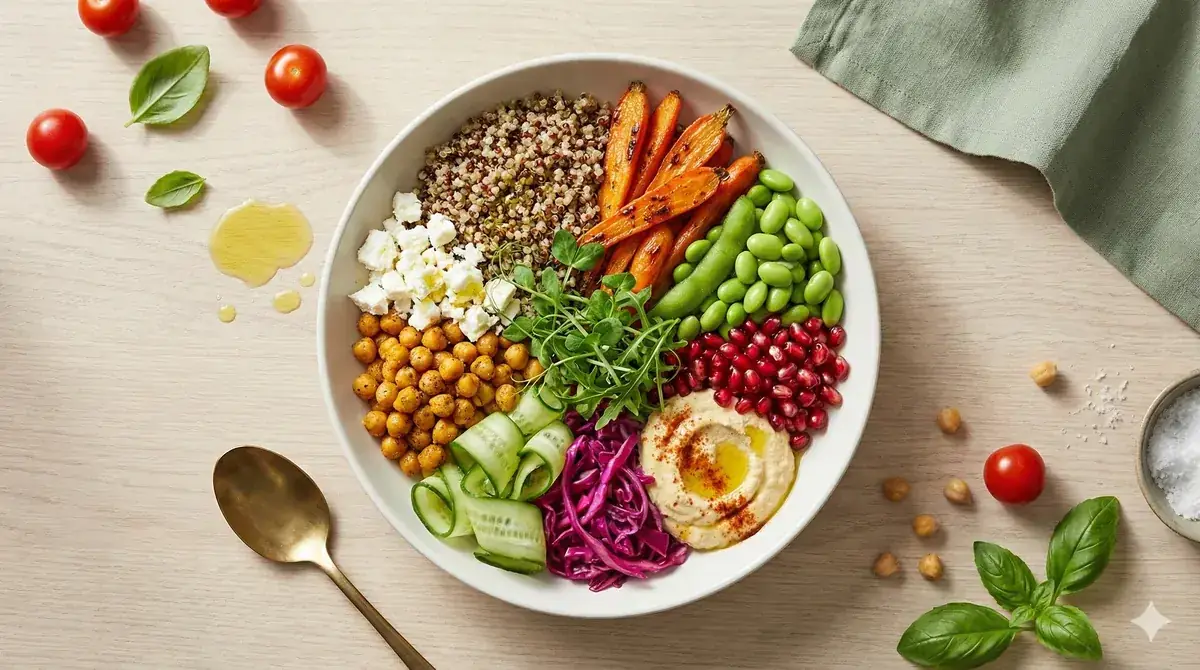
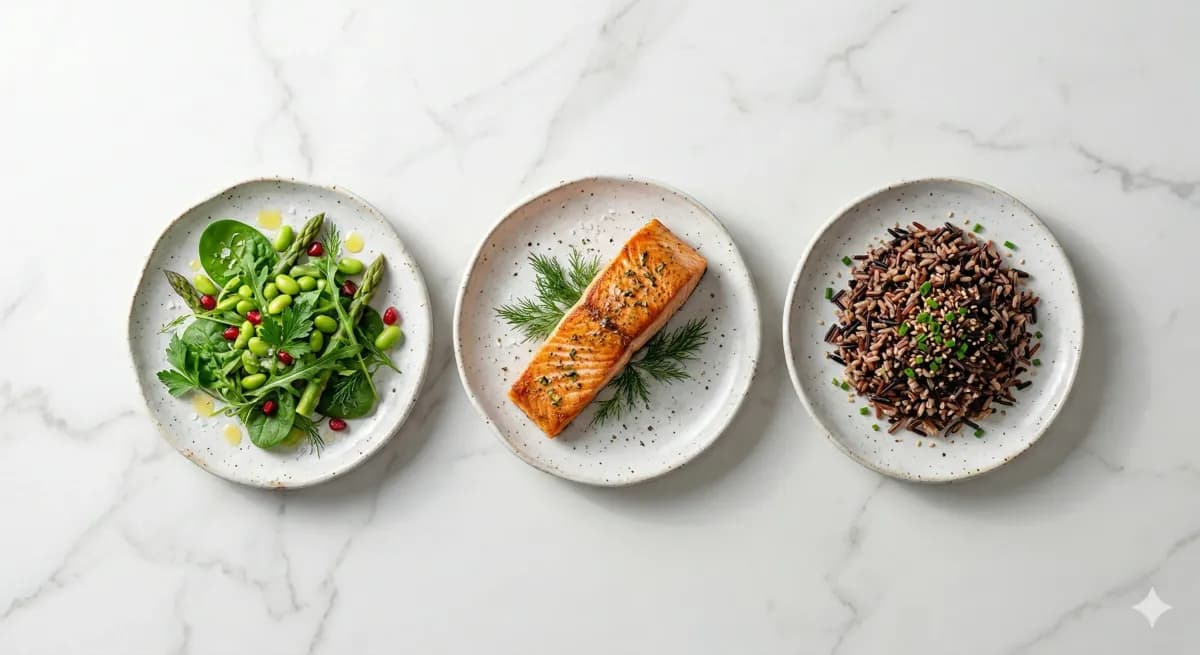
Food sequencing, also called meal sequencing or food order, refers to a strategy in which the components of a meal are eaten in a specific order to optimise the glycaemic response. The most studied and most effective protocol is the "Carbs-Last" approach: vegetables and fibre first, then proteins and fats, and finally carbohydrates last.
1.1 The core principle
The idea is elegant in its simplicity: by changing the order in which nutrients arrive in the digestive system, you change the speed and amplitude of glucose absorption. Fibre and protein, eaten first, create a physical and hormonal barrier that slows the arrival of carbohydrates in the blood.
This is not about eating less, nor about removing anything. It is the same meal, the same flavours, the same quantity, in a different order.
1.2 The three phases of the protocol
- Phase 1 - Fibre and vegetables (5-10 minutes): Salad, raw or cooked vegetables, vegetable soups. Fibre creates a viscous gel in the gut that physically slows glucose absorption.
- Phase 2 - Proteins and fats (5-10 minutes): Meat, fish, eggs, cheese, legumes, tofu. Proteins stimulate the secretion of satiety hormones (GLP-1, PYY) and slow gastric emptying.
- Phase 3 - Carbohydrates: Bread, rice, pasta, potatoes, starches. Arriving last, carbohydrates meet a fibre barrier in the gut and a gastric emptying already slowed by the proteins.
Key insight: Food sequencing is the only nutritional strategy that significantly improves blood sugar without changing either the quantity or the nature of the foods eaten. This is why it shows better adherence than any approach requiring eliminations.
2. The physiological mechanisms
The effectiveness of the "Carbs-Last" protocol rests on three synergistic mechanisms that act simultaneously to dampen the postprandial glucose spike.
2.1 Mechanism 1: The fibre matrix, a physical barrier
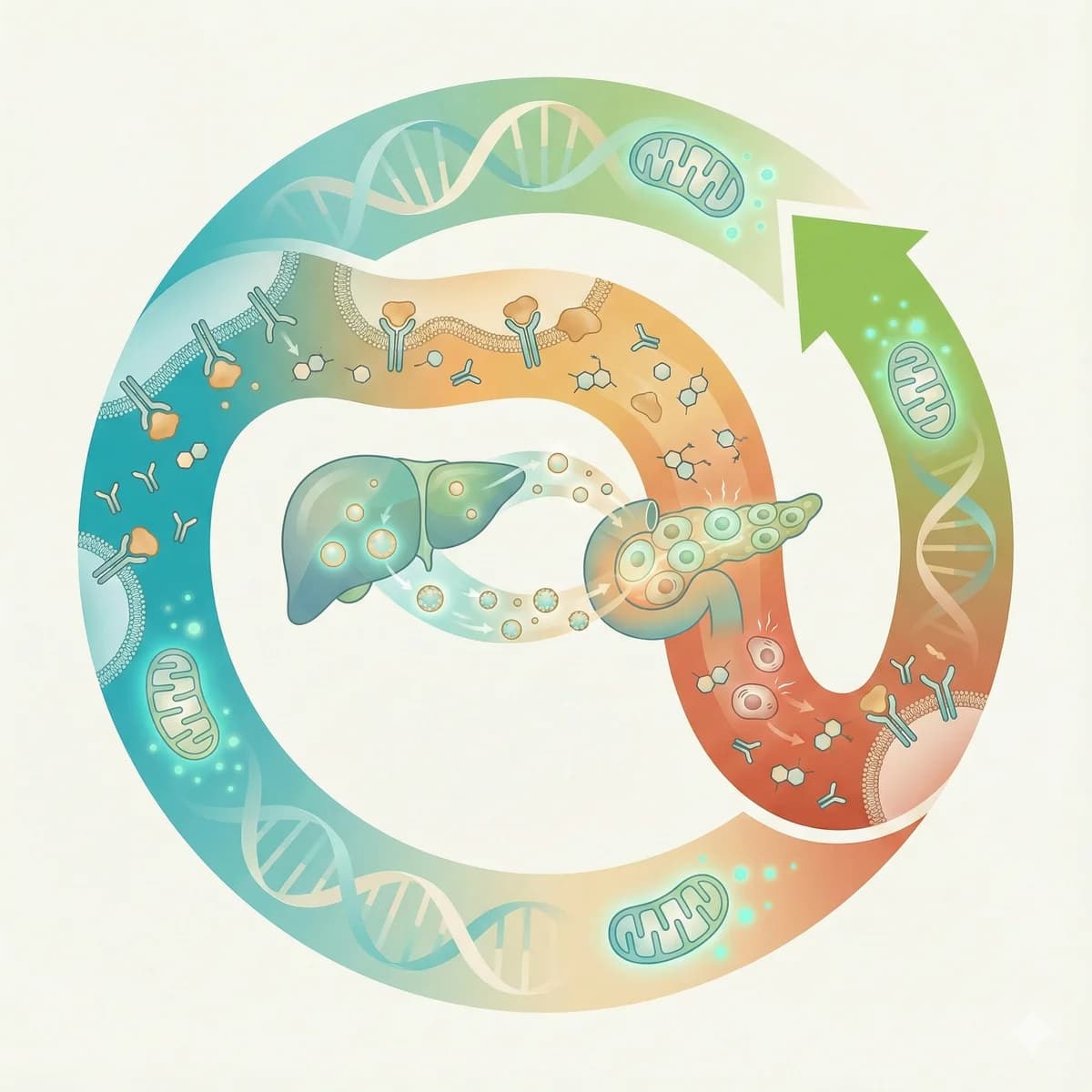
When soluble fibres (pectin, beta-glucan, psyllium) and insoluble fibres (cellulose) are eaten first, they form a viscous gel in the intestinal lumen. This gel lines the wall of the small intestine and creates a physical barrier between glucose and the absorption transporters.
The transporters concerned are mainly:
- SGLT1 (Sodium-Glucose Linked Transporter 1): An active transporter located in the apical membrane of the enterocytes, responsible for glucose absorption against its concentration gradient. The fibre matrix limits glucose access to this transporter.
- GLUT2 (Glucose Transporter 2): A facilitated transporter that, during high carbohydrate loads, temporarily migrates to the apical membrane to increase absorption capacity. The fibre barrier reduces this migration and therefore the capacity for rapid absorption.
In practical terms, glucose must diffuse through the fibre gel before reaching the intestinal wall. This process takes time, spreading absorption over a longer period and producing a lower, more prolonged glucose spike.
2.2 Mechanism 2: The incretin axis, GLP-1 and the ileal brake
The proteins and fats eaten in second position powerfully stimulate the secretion of incretins, notably GLP-1 (Glucagon-Like Peptide-1) and GIP (Glucose-dependent Insulinotropic Polypeptide).
GLP-1, secreted by the L cells of the ileum and colon, has several major metabolic effects:
- Slowing of gastric emptying: GLP-1 delays the passage of food from the stomach to the small intestine, reducing the flow of glucose arriving in the blood.
- Potentiation of insulin secretion: GLP-1 stimulates insulin secretion in a glucose-dependent way (only when blood glucose is high), avoiding the risk of hypoglycaemia.
- Glucagon suppression: GLP-1 inhibits glucagon secretion by the alpha cells of the pancreas, reducing hepatic glucose production.
- Satiety effect: Through central receptors, GLP-1 reduces appetite and prolongs the feeling of fullness.
The ileal brake is a complementary mechanism: when undigested nutrients (fibre, fats) reach the distal ileum, a neurohormonal signal slows the transit of the entire upper digestive tract. By eating fibre first, this brake is activated before the carbohydrates arrive.
2.3 Mechanism 3: The slowing of gastric emptying
The proteins and fats eaten before the carbohydrates slow gastric emptying, the rate at which the stomach empties into the small intestine. This slowing means that the carbohydrates, arriving last in the stomach, are released more slowly into the intestine, where they are absorbed more gradually.
| Mechanism | Triggering nutrient | Effect on blood sugar | Main mediator |
|---|---|---|---|
| Fibre matrix | Soluble and insoluble fibre | Physical barrier slowing glucose absorption | Viscous intestinal gel (SGLT1/GLUT2) |
| Incretin axis | Proteins and fats | Slower gastric emptying + insulin potentiation | GLP-1, GIP, PYY |
| Ileal brake | Undigested fibre and fats | Slowing of overall digestive transit | Ileal neurohormonal signal |
Key insight: It is the combination of these three mechanisms that explains the scale of the observed results. The fibre barrier acts within 10-15 minutes, the incretin axis within 15-30 minutes, and the ileal brake prolongs the effect over 1 to 2 hours. Together, they radically transform the glycaemic profile of the meal.
3. Clinical evidence: type 2 diabetes
The most robust data on food sequencing come from studies in patients with type 2 diabetes, where the benefits are most striking.
3.1 The founding Weill Cornell study (2015)
The team of Shukla et al. at Weill Cornell Medical College published the reference study in Diabetes Care. Protocol: the same patients, the same meal (vegetable salad, chicken breast, rice, orange juice), eaten either in the carbohydrates-first order or the carbohydrates-last order (vegetables and protein first).
The results are striking:
| Parameter | Carbohydrates first | Carbohydrates last | Reduction |
|---|---|---|---|
| Glucose at 30 min | Reference | Significantly reduced | -28.6% |
| Glucose at 60 min | Reference | Significantly reduced | -36.7% |
| Glucose at 120 min | Reference | Significantly reduced | -16.8% |
| Overall glucose iAUC | Reference | Markedly reduced | ~-53% |
| Postprandial insulin | Reference | Significantly reduced | Significant reduction |
The 2015 paper reported per-timepoint reductions of 28.6%, 36.7% and 16.8% at 30, 60 and 120 minutes. A follow-up analysis from the same group (Shukla 2017, iAUC over 0-180 min) found an iAUC reduction of around 53%. For context, some oral antidiabetic medications produce reductions in the range of 20 to 40%. Simply eating your vegetables and proteins before your carbohydrates produces a marked effect, with no side effects, no cost and no constraint.
3.2 The 2025 study: no time interval needed
A frequent concern was practicality: do you have to wait between courses? The study published in 2025 (PMC11770160) answered this question definitively. The researchers showed a 44% reduction in the glucose spike when carbohydrates are eaten last, even without a time interval between the meal components.
This result is decisive for everyday feasibility: you do not need to turn every meal into a three-course service. It is enough to start with the vegetables, continue with the proteins, and finish with the starches, even if everything follows on naturally.
3.3 Impact on insulin
Beyond blood sugar, food sequencing significantly reduces postprandial insulin. This means the pancreas is less called upon to manage glucose, a major benefit for people whose pancreatic beta cells are already under pressure (prediabetes, type 2 diabetes).
Key insight: An iAUC reduction of around 53% is a clinically notable result for an intervention that requires neither medication nor food elimination. This strategy is particularly relevant for patients with type 2 diabetes who want to improve their glucose control while keeping the pleasure of eating.
4. Clinical evidence: prediabetes and healthy individuals
Food sequencing is not only for people with diabetes. The data in prediabetic and metabolically healthy individuals are just as convincing.
4.1 Prediabetes: an attenuation greater than 40%
In people with prediabetes, an often undiagnosed state affecting a considerable share of the population, the "Carbs-Last" protocol shows an attenuation of postprandial glucose spikes greater than 40%.
This result is particularly important because prediabetes is a window of therapeutic opportunity: it is at this stage that lifestyle interventions are most effective at preventing progression to type 2 diabetes. Food sequencing, as a simple, constraint-free strategy, is a first-choice tool in this population.
An additional benefit observed is the prevention of reactive hypoglycaemia. By spreading out glucose absorption, sequencing avoids the abrupt glucose spike that triggers an excessive insulin response, followed by a drop in blood sugar below baseline, a frequent cause of fatigue, irritability and cravings 2 to 3 hours after the meal.
4.2 Healthy individuals: the hidden spikes revealed by CGM
Studies using continuous glucose monitors (CGM) revealed a surprising finding: even individuals considered metabolically healthy (normal fasting glucose and HbA1c) regularly show glucose spikes above 140 mg/dL after certain meals.
These spikes, invisible to classic blood tests (which measure fasting glucose), silently contribute to oxidative stress, vascular inflammation and progression towards insulin resistance. Food sequencing reduces these hidden spikes significantly.
4.3 Cognitive and energy benefits
Beyond the biological markers, individuals practising food sequencing report:
- More stable energy after meals: The absence of an abrupt glucose spike followed by a rapid drop eliminates the well-known postprandial "slump".
- Improved concentration: The brain, sensitive to glucose fluctuations, works better when blood sugar stays in a stable range.
- Fewer cravings: The absence of reactive hypoglycaemia removes the sugar cravings 2 to 3 hours after the meal.
- Better sleep: Sequencing at dinner reduces overnight glucose fluctuations, promoting more restorative sleep.
| Population | Reduction in glucose spike | Main benefit | Level of evidence |
|---|---|---|---|
| Type 2 diabetes | 28-53% (iAUC) | Major glucose control, lower insulin | High (randomised trials) |
| Prediabetes | >40% | Prevention of progression to diabetes, prevention of reactive hypoglycaemia | High |
| Healthy individuals | 20-40% | Removal of hidden spikes, stable energy, cognition | Moderate (CGM studies) |
Key insight: Food sequencing benefits every population, not only people with diabetes. In healthy individuals, it removes the hidden glucose spikes revealed by CGM and improves energy, concentration and sleep quality.
5. Long-term results: HbA1c and Time in Range
If the acute effects of food sequencing are impressive, what about the long-term results? The available data offer a nuanced but encouraging picture.
5.1 The BMJ meta-analysis: a signal to interpret
The meta-analysis published in the BMJ reported an average HbA1c reduction of -0.21% with food sequencing, a result judged not statistically significant. This figure has sometimes been used to play down the value of this strategy, but that interpretation is too simplistic.
Several factors explain this modest result:
- Heterogeneous protocols: The included studies used variable definitions of sequencing (some did not include fibre first).
- Short durations: Several trials lasted only 4 to 8 weeks, too short to observe a full impact on HbA1c (which reflects average blood glucose over 3 months).
- Variable adherence: The degree to which the protocol was applied varied considerably between studies.
5.2 The Japanese 5-year cohort: striking results
The most convincing long-term study is the Japanese 5-year cohort (PMC9322906), in which dietary follow-up including food sequencing was maintained consistently. The results are striking:
| Parameter | Baseline | After 5 years | Improvement |
|---|---|---|---|
| HbA1c | 8.5% | 7.6% | -0.9% |
| Body weight | Reference | Significant reduction | Maintained over 5 years |
| Overall glucose control | Suboptimal | Improved | Durable |
A 0.9% HbA1c reduction maintained over 5 years is a clinically very significant result. For context, each 1% reduction in HbA1c is associated with a 21% lower risk of diabetes-related death, a 14% reduction in the risk of heart attack and a 37% reduction in the risk of microvascular complications (UKPDS).
5.3 Time in Range (TIR): a modern marker
Time in Range (TIR) measures the percentage of time blood glucose stays within the optimal range of 70-180 mg/dL. It is a finer marker than HbA1c, because it captures the glucose fluctuations that HbA1c does not detect.
Data from the PMC11770160 study show:
- TIR with sequencing: 84.8% of time in range
- TIR without sequencing: 78.6% of time in range
- Improvement: +6.2 percentage points
This 6.2-point improvement in TIR is clinically relevant. Each 10% increase in TIR is associated with a significant reduction in the risk of retinopathy and microalbuminuria.
5.4 Reduction in glucose variability
The glucose coefficient of variation (CV), which measures the instability of blood glucose, is reduced by 3.8% with food sequencing. A glucose CV below 36% is considered stable; each point of reduction represents less oxidative stress, less inflammation and a better metabolic outlook.
Key insight: The BMJ meta-analysis shows a modest short-term effect (-0.21% HbA1c), but the Japanese 5-year cohort shows that sustained dietary follow-up including sequencing produces a striking improvement of -0.9% HbA1c. The key is professional support and the duration of application.
6. Satiety and weight management
Food sequencing does not act only on blood sugar; it deeply influences satiety and weight regulation, through converging hormonal and metabolic mechanisms.
6.1 The 20-minute rule and the gut-brain axis
It takes about 20 minutes for satiety signals from the digestive tract to reach the brain and produce the feeling of fullness. By starting with fibre and protein, the most satiating nutrients, you activate these signals from the start of the meal, before even beginning the carbohydrates.
The result: by the time you reach the starches, you are already less hungry. Many people who practise sequencing spontaneously report eating fewer carbohydrates, not through deliberate restriction, but simply because they feel full sooner.
6.2 Early release of GLP-1 and PYY
The proteins and fats eaten before the carbohydrates stimulate the early release of two major satiety hormones:
- GLP-1 (Glucagon-Like Peptide-1): A powerful satiety signal that acts on hypothalamic receptors to reduce appetite. It is the same hormone targeted by GLP-1 medications (semaglutide, tirzepatide).
- PYY (Peptide YY): Secreted by the intestinal L cells in response to proteins and fats, PYY reduces food intake and prolongs the feeling of fullness.
By activating these hormones before the carbohydrates arrive, sequencing creates a hormonal satiety environment that naturally reduces total food intake.
6.3 Fat oxidation: when insulin stays low
When postprandial insulin is low, which food sequencing promotes, the body keeps its capacity to oxidise fat. Conversely, a high insulin spike after a meal completely blocks lipolysis (the breakdown of stored fat) and promotes fat storage (lipogenesis).
By reducing the glucose and insulin spike, food sequencing:
- Maintains fat oxidation during the postprandial period
- Reduces the storage of new fat
- Lowers the cravings linked to glucose drops
- Contributes to a more favourable energy balance over 24 hours
Key insight: Food sequencing produces a double effect on weight: it increases satiety (you naturally eat less without forcing yourself) and it maintains fat oxidation by avoiding insulin spikes. It is a weight-management strategy that relies on no deprivation.
7. Putting it into practice every day
The strength of food sequencing lies in how simple it is to apply. Here is how to integrate it into your daily meals, including mixed meals where a strict separation of components is not possible.
7.1 The "fibre buffer" strategy
The simplest and most effective method is to start each meal with a portion of vegetables, raw or cooked. This "fibre starter" creates the protective intestinal barrier before the carbohydrates arrive:
- Green salad as a starter: A classic that works. Add a cider-vinegar dressing to combine the benefits of acetic acid and fibre.
- Vegetable soup: Particularly effective in winter. Blended vegetables keep their fibre and the extra water promotes satiety.
- Crudités: Carrots, cucumbers, tomatoes, radishes, a Belgian classic that works perfectly as a starter.
7.2 "Partial deconstruction" for mixed dishes
For dishes where all the ingredients are mixed (stir-fry, curry, stew), a strict separation is impossible. The strategy: start by preferentially picking out the vegetables and proteins from the dish, then finish with the carbohydrate component (rice, pasta, side bread).
7.3 The order at restaurants or in company
Sequencing is particularly easy to apply at restaurants, where serving in several courses is the norm:
- Starter: Salad, vegetable soup, carpaccio (fibre + protein)
- Main course: Start with the vegetables and the meat/fish, then the starches
- No bread at the start of the meal: If possible, save the bread to accompany the main course rather than eating it while waiting for the starter
7.4 Practical examples by meal type
| Meal type | Before (classic order) | After (Carbs-Last protocol) | Practical adaptation |
|---|---|---|---|
| Classic dinner | Bread, then meat + vegetables + starches together | Green salad as a starter, then meat + vegetables, then starches, bread last | Easy: simply add a salad as a starter |
| Sushi | Sushi (rice + fish) from the start | Edamame or seaweed salad first, sashimi (fish alone), then sushi (fish + rice) | Order edamame and sashimi first |
| Sandwich / open sandwich | Bite into the sandwich directly | Salad or crudités on the side first, then the sandwich | Or: eat the fillings (salad, meat) then the bread |
| Breakfast | Toast with jam, orange juice | Greek yoghurt or eggs first, then fruit, then toast | Protein first, carbohydrates after |
| Pizza | Pizza directly | Green salad as a starter, then pizza | The fibre buffer before the pizza significantly dampens the spike |
| Pasta | Pasta directly | Salad or grilled vegetables as a starter, protein (parmesan, meat), then pasta | A vegetable and protein sauce helps if mixed into the dish |
7.5 For festive meals and special occasions
Sequencing is particularly valuable at large, festive meals, where the carbohydrate load is often high. A single gesture, starting with the crudités, the salad or the protein from the aperitif, is enough to substantially dampen the glucose spike of the meal that follows.
Key insight: You do not need to turn your meals into complicated exercises. The simplest and most effective gesture: start each meal with a portion of vegetables (salad, soup, crudités). This single adjustment is enough to activate the fibre barrier and significantly reduce the glucose spike.
8. Comparison with other strategies
Food sequencing is not the only strategy available to reduce postprandial glucose spikes. How does it compare with the other approaches, and how can they be combined?
8.1 Sequencing vs glycaemic load
The glycaemic load (GL) approach consists of favouring low-glycaemic-index foods and controlling the amount of carbohydrate per meal. It is an effective strategy but more complex to apply, because it requires knowing the glycaemic index of foods and calculating portions.
Food sequencing offers a major advantage in simplicity: it requires no prior nutritional knowledge. The instruction "vegetables first, starches last" is universal, easy to remember and applicable immediately.
8.2 Synergy with the post-meal walk
The post-meal walk and food sequencing act through complementary mechanisms: sequencing reduces glucose absorption, while walking increases its muscular uptake. Combined, they produce a remarkable additive effect.
The data suggest that by combining food sequencing (a 20 to 40% reduction in the spike) and a 10- to 15-minute post-meal walk (a further reduction of 15 to 25 mg/dL), the total reduction in the glucose spike can reach 50 to 60% compared with a "carbohydrates-first" meal followed by inactivity.
8.3 Synergy with pre-meal vinegar
Pre-meal vinegar also acts through the slowing of gastric emptying and enzyme inhibition. Combined with sequencing, the effect is potentially additive on the mechanisms that slow absorption.
8.4 Comparative table of strategies
| Strategy | Estimated reduction in glucose spike | Ease of application | Cost | Main mechanism |
|---|---|---|---|---|
| Food sequencing (Carbs-Last) | 20-40% (up to ~53% iAUC) | Very easy | Free | Fibre barrier + incretin axis |
| Post-meal walk (10-15 min) | 15-30% (15-25 mg/dL) | Very easy | Free | Muscular uptake GLUT4/AMPK |
| Pre-meal vinegar | 20-30% | Easy | Negligible | Gastric emptying + enzyme inhibition + AMPK |
| Low-glycaemic-load eating | 10-25% | Moderate (requires knowledge) | Variable | Reduction of total carbohydrate load |
| Cinnamon (1-6g/day) | Modest (5-10%) | Easy | Negligible | Sensitisation of insulin receptors |
| Sequencing + walk + vinegar combined | 50-70% | Moderate | Almost free | Triple synergistic mechanism |
8.5 The power of combination
The most effective approach is to combine these strategies in a simple protocol:
- Before the meal: A glass of water with 1 tablespoon of vinegar (10-20 min before)
- During the meal: Vegetables first, proteins next, carbohydrates last
- After the meal: 10 to 15 minutes of gentle walking
Each of these three interventions is simple, free and pleasant. Together, they can reduce your glucose spikes by 50 to 70%, a result comparable to some pharmacological treatments, with no side effects.
Key insight: Food sequencing is a powerful strategy on its own, but its strength is greatest when combined with other simple habits: vinegar before the meal and a walk after. These three free strategies, combined, radically transform the glycaemic profile of your meals.
9. A flexible approach, not a rigid one
Food sequencing is a powerful tool, but it must remain a tool in the service of your wellbeing, not an extra source of stress.
9.1 The orthorexia spectrum: a real risk
Any nutritional strategy, however beneficial, carries a risk of going too far when applied obsessively. Orthorexia, an excessive preoccupation with food "purity", can turn a healthy habit into a source of anxiety:
- Refusing to eat if the food order is not "perfect"
- Intense anxiety when you cannot control the sequence (meals with friends, buffets)
- Disproportionate guilt after a "poorly sequenced" meal
- Social isolation to avoid situations where control is impossible
These behaviours are warning signs. Food sequencing should remain a natural and relaxed habit, not an obsession.
9.2 The trap of CGM gamification
The use of continuous glucose monitors (CGM) by non-diabetic people to "optimise" their blood sugar carries psychological risks. Real-time visualisation of blood glucose can create an obsessive gamification: each meal becomes a "score" to optimise, each spike a "defeat". This dynamic can:
- Generate food anxiety
- Encourage disproportionate avoidance behaviours
- Divert attention from what really matters: the pleasure of eating and overall quality of life
9.3 Our recommendation: the 80/20 rule
Apply food sequencing when it is easy and natural, that is, about 80% of the time:
- Day to day: Yes, start with your vegetables. It is simple and natural.
- At restaurants: Yes, order a salad as a starter. It is elegant and enjoyable.
- In company: Adapt. If the buffet does not allow perfect sequencing, enjoy the meal without guilt.
- On special occasions: Forget sequencing and savour. One "poorly sequenced" festive meal does not undo weeks of good habits.
The pleasure of eating is non-negotiable. No nutritional strategy is worth applying if it turns meals into a source of stress.
Key insight: Food sequencing is a tool, not an absolute rule. Apply it naturally when it is easy (80% of the time) and let it go calmly when the context does not allow it. Flexibility and pleasure are the pillars of a sustainable approach.
10. Our personalised approach at Diaeta
At Diaeta, food sequencing is one of many evidence-based strategies we integrate into a comprehensive, personalised nutritional approach.
What we offer you
- A complete assessment of your metabolic profile: We analyse your blood glucose, your HbA1c, your insulin sensitivity and your eating habits to understand your individual glycaemic response and identify the strategies most relevant to you.
- A personalised, tasty nutrition plan: We integrate food sequencing naturally into your meals, respecting your tastes, your culinary culture and your lifestyle. No rigid menus, just simple principles adapted to YOUR favourite meals.
- An intelligent combination of strategies: Food sequencing, pre-meal vinegar, post-meal walking, optimised meal composition; each tool is dosed and combined according to your profile and your goals, for maximum synergy.
- Gradual support: We introduce changes gradually, one at a time, so that each new habit becomes natural and lasting before adding another.
- Medical coordination: For people on antidiabetic treatment, we work in coordination with your treating doctor to adapt the nutritional strategies to your treatment.
Observed results
By combining food sequencing with other personalised strategies, our patients report:
- A measurable improvement in their glucose control, confirmed by blood tests (HbA1c, fasting glucose)
- More stable energy throughout the day, without the post-meal slumps or the mid-afternoon cravings
- A sense of food freedom: "I eat the same things as before, but in a different order, and it changes everything"
- Lasting adherence: because nothing is removed from the menu, the strategy is maintained over the long term without frustration
- The pleasure of eating tasty meals that support their health, without any sense of deprivation or constraint
Would you like to optimise your blood sugar, your energy and your satiety without removing a single food from your plate? Book a consultation and discover how food sequencing, combined with other simple, personalised strategies, can transform your metabolic profile while keeping the pleasure of eating what you love.
Scientific references
- Shukla AP, et al. Food Order Has a Significant Impact on Postprandial Glucose and Insulin Levels. Diabetes Care. 2015;38(7):e98-e99.
- Shukla AP, et al. Carbohydrate-last meal pattern lowers postprandial glucose and insulin excursions in type 2 diabetes. BMJ Open Diabetes Research & Care. 2017;5(1):e000440.
- Tricò D, et al. Manipulating the sequence of food ingestion improves glycemic control in type 2 diabetic patients under free-living conditions. Nutrition & Diabetes. 2016;6(8):e226.
- Imai S, et al. Impact of Dietitian-Led Nutrition Therapy of Food Order on 5-Year Glycemic Control in Outpatients with Type 2 Diabetes at Primary Care Clinic. Nutrients. 2022;14(17):3507. (PMC9322906)
- Sun L, et al. Impact of food order on postprandial glycaemic excursions in healthy subjects. Nutrients. 2020;12(8):2502. (PMC7551485)
- Nishino K, et al. Carbohydrates-Last Food Order Improves Time in Range in Type 2 Diabetes: A Randomized Crossover Trial. Diabetes Care. 2025. (PMC11770160)
- Kubota S, et al. Efficacy of meal sequence in patients with type 2 diabetes: a systematic review and meta-analysis. BMJ Open Diabetes Research & Care. 2022;10(3):e002708. (PMC8883221)
- Everlab. The Science of Meal Sequencing: How Food Order Impacts Blood Sugar. 2026.
- Nesti L, et al. Review of Recent Findings on Meal Sequence: Importance of Eating Vegetables First, Carbohydrate Last. Journal of Diabetes Investigation. 2019;10(6):1411-1413. (PMC7398578)
- NOVI Health. Does the Order of Food You Eat Matter for Blood Glucose Control? 2024.
- National Geographic. Eating food in a certain order is better for your health. 2024.
- Nauck MA, Meier JJ. Incretin hormones: their role in health and disease. Diabetes, Obesity and Metabolism. 2018;20(Suppl 1):5-21.
- Holst JJ. The physiology of glucagon-like peptide 1. Physiological Reviews. 2007;87(4):1409-1439.