

What if a simple tablespoon of vinegar, diluted in a glass of water and consumed before a meal, could reduce your blood sugar spikes by approximately 30%? Far from being a passing trend, this claim rests on a solid body of scientific evidence: meta-analyses, randomized clinical trials, and mechanistic studies converge to confirm that acetic acid -- the active component in all vinegars -- exerts significant and reproducible effects on postprandial blood sugar.
Managing blood sugar spikes after meals represents a major metabolic health challenge. These excessive fluctuations contribute to oxidative stress, vascular inflammation, and the progression towards insulin resistance, well beyond the context of diabetes alone. Meta-analyses combining 11 clinical trials reveal an average reduction in glycaemic area under the curve (AUC) with an SMD of -0.60 (p=0.01) and insulin AUC of -1.30 (p<0.001).
Our approach at Diaeta: we integrate evidence-based strategies such as pre-meal vinegar into a personalized, enjoyable nutrition plan tailored to your needs. Not an additional burden, but a simple tool that fits naturally into your meals -- alongside food you enjoy that never leaves you hungry.
1. Acetic acid: what is it and why does it work?
Acetic acid (CH3COOH) is the primary active component of all vinegars, present at a concentration of 4 to 8% in food-grade vinegars. It is this molecule -- not the polyphenols, minerals, or "mother cultures" -- that is responsible for the metabolic effects documented in the scientific literature.
1.1 One molecule, four mechanisms of action
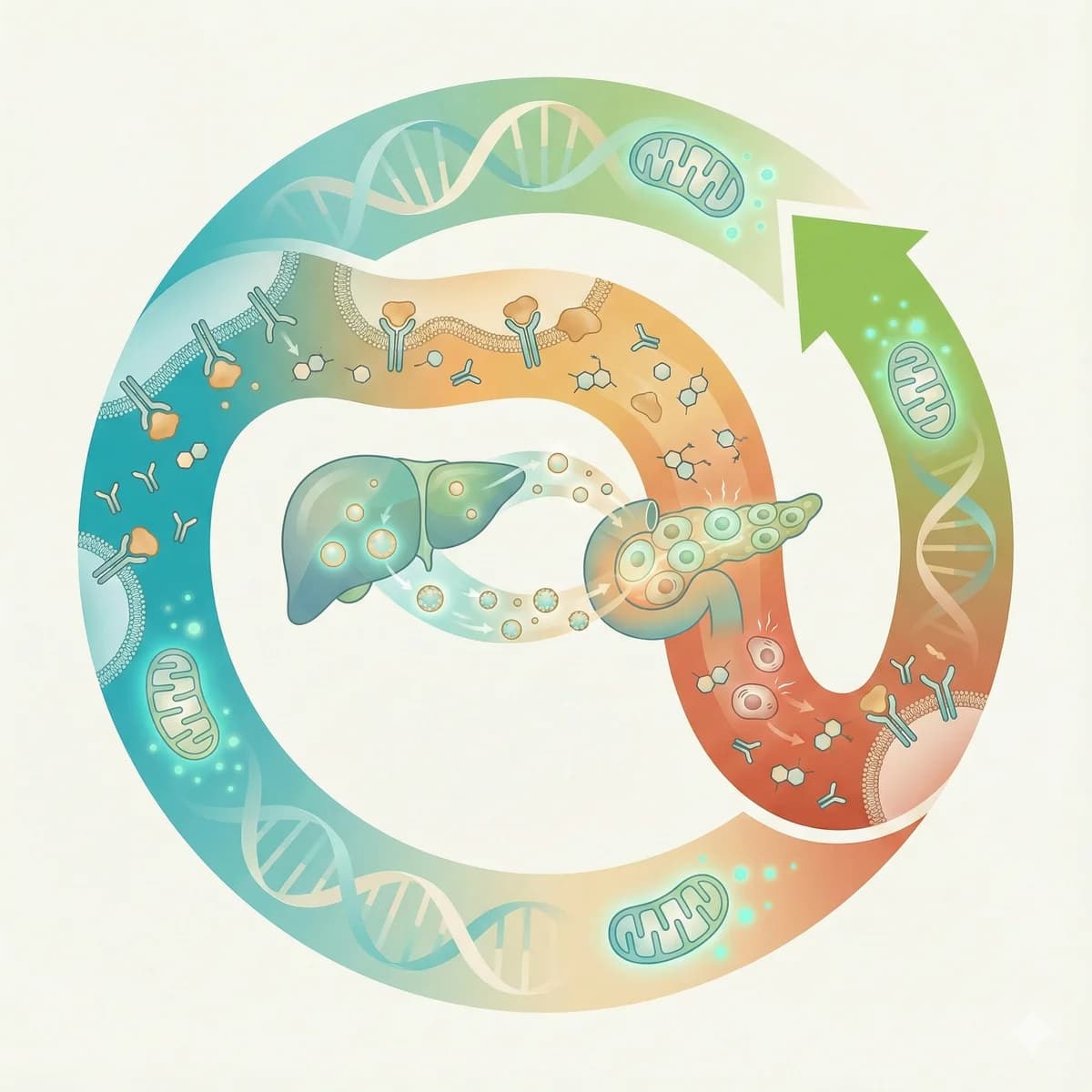
The strength of acetic acid lies in its ability to act simultaneously on four distinct metabolic pathways involved in postprandial blood sugar regulation:
- Delayed gastric emptying: Vinegar slows the passage of food from the stomach to the small intestine, thereby modulating the influx of glucose into the bloodstream.
- Enzyme inhibition: Acetic acid inhibits intestinal disaccharidases (sucrase, maltase, isomaltase), slowing the breakdown of complex carbohydrates into absorbable glucose.
- Muscle glucose uptake: Through AMPK pathway activation, acetic acid increases GLUT4 transporter translocation, facilitating glucose entry into muscle cells.
- Hepatic regulation: Acetic acid reduces endogenous glucose production by the liver (gluconeogenesis) and promotes glycogen storage.
Key insight: The multi-target effect of acetic acid explains why results are so reproducible across studies. Unlike a molecule acting on a single mechanism, acetic acid addresses the problem from four angles simultaneously.
2. Mechanism 1: Delayed gastric emptying
The first mechanism by which vinegar influences blood sugar is the slowing of gastric emptying -- the rate at which food leaves the stomach to enter the small intestine, where glucose is absorbed into the bloodstream.
2.1 Clinical data
Studies using gastric scintigraphy (an imaging technique measuring food movement through the stomach) have demonstrated that vinegar consumption before a meal:
| Parameter | Without vinegar | With vinegar | Significance |
|---|---|---|---|
| Gastric emptying rate | 27% | 17% | p < 0.05 |
| Glycaemic excursion | Reference | -31% | p = 0.040 |
By slowing food passage into the small intestine, vinegar spreads glucose absorption over time. Instead of a massive glucose influx over 30-45 minutes, absorption occurs more gradually, producing a lower and more prolonged peak -- a much more favourable glycaemic profile.
2.2 Practical implications
This mechanism explains why vinegar is particularly effective with meals containing high glycaemic load foods (white bread, white rice, potatoes): the faster the glucose influx would be, the greater the impact of slowed gastric emptying. For meals already rich in fibre and protein, which naturally slow gastric emptying, the additional effect of vinegar is more modest.
3. Mechanism 2: Digestive enzyme inhibition
The second mechanism of action of acetic acid involves the inhibition of intestinal disaccharidases -- enzymes that break down complex carbohydrates into absorbable simple sugars.
3.1 Which enzymes are affected?
Acetic acid specifically inhibits three key enzymes of the intestinal brush border:
- Sucrase: Breaks down sucrose (table sugar) into glucose + fructose
- Maltase: Breaks down maltose (a product of starch digestion) into two glucose molecules
- Isomaltase: Breaks down alpha-1,6 bonds in limit dextrins derived from amylopectin
3.2 The critical nuance: complex carbohydrates vs simple sugars
Here is a fundamental point that many popular sources omit: this mechanism only works with complex carbohydrates that require enzymatic breakdown (starch, sucrose, maltose). It is completely ineffective with simple sugars such as dextrose (pure glucose) or free fructose, which are absorbed directly without enzymatic intervention.
| Carbohydrate type | Examples | Requires enzymatic digestion? | Vinegar effective on this mechanism? |
|---|---|---|---|
| Starch | Bread, rice, pasta, potatoes | Yes (amylase + maltase) | Yes |
| Sucrose | Table sugar, pastries | Yes (sucrase) | Yes |
| Dextrose/Pure glucose | Sports drinks, sweets | No (direct absorption) | No |
| Free fructose | Honey, fruits | No (GLUT5 transporter) | No |
Key insight: Vinegar is most effective before a meal containing starchy foods (bread, rice, pasta, potatoes). If your meal is primarily composed of simple sugars (pure glucose, sweets), this specific mechanism will not be activated -- though the other mechanisms (gastric emptying, muscle uptake) remain operational.
4. Mechanism 3: Muscle glucose uptake
The third mechanism is perhaps the most fascinating: acetic acid directly increases glucose uptake by skeletal muscles, independently of insulin.
4.1 The AMPK and GLUT4 pathway
Acetic acid activates AMPK (AMP-activated protein kinase), the same cellular energy sensor that is activated by physical exercise. This activation triggers the translocation of GLUT4 transporters to the muscle cell membrane, literally opening additional doors for glucose to enter the muscles.
The experimental data are compelling:
| Parameter | Without acetic acid | With acetic acid | Significance |
|---|---|---|---|
| Muscle glucose uptake | 579 +/- 63 micromol/100mL | 765 +/- 87 micromol/100mL | p = 0.0357 |
This represents an increase of approximately 32% in muscle glucose uptake -- a remarkable effect for a simple dietary molecule.
4.2 Parallel with physical exercise
This mechanism is analogous to that activated by post-meal walking: muscle contraction also activates AMPK and GLUT4 translocation. Vinegar and walking use the same molecular pathway, suggesting a potential additive effect when combining both strategies.
Key insight: Like post-meal walking, acetic acid bypasses the insulin-dependent pathway that is dysfunctional in people with insulin resistance. It uses the AMPK pathway -- independent of insulin -- to facilitate glucose entry into muscles. This is why this strategy is particularly relevant for insulin-resistant individuals.
5. Mechanism 4: Hepatic regulation
The fourth mechanism involves the liver, the central organ of blood sugar regulation.
5.1 Reduction of gluconeogenesis
Gluconeogenesis is the process by which the liver produces glucose from non-carbohydrate substrates (amino acids, glycerol, lactate). This mechanism, normally suppressed after a meal by insulin, remains abnormally active in insulin-resistant individuals, contributing to fasting and postprandial hyperglycaemia.
Acetic acid reduces hepatic gluconeogenesis by modulating the expression of key enzymes in this pathway (phosphoenolpyruvate carboxykinase, glucose-6-phosphatase). In parallel, it increases glycogen synthesis, promoting glucose storage as a reserve rather than its release into the bloodstream.
5.2 The effect on fasting blood sugar
A clinically relevant finding: consuming vinegar at bedtime reduces fasting blood sugar the following morning. Studies report an average reduction of 8 mg/dL in fasting glucose. This result is explained by the suppression of nocturnal hepatic gluconeogenesis, with the liver producing less glucose during the night.
Key insight: For individuals whose fasting blood sugar is slightly elevated (prediabetes or type 2 diabetes), consuming 1 tablespoon of vinegar diluted in water before bedtime may help improve morning values. This is a complement, not a substitute for medical treatment.
6. What do the meta-analyses say?
Beyond individual studies, meta-analyses -- which statistically combine results from multiple clinical trials -- provide the most robust evidence.
6.1 Overall results
| Parameter | Number of trials | Result (SMD or variation) | Significance |
|---|---|---|---|
| Glycaemic AUC (glucose) | 11 trials | SMD: -0.60 | p = 0.01 |
| Insulin AUC | 11 trials | SMD: -1.30 | p < 0.001 |
| HbA1c | Trials over 8-12 weeks | -0.39% | Clinically significant |
| Fasting blood sugar | Several trials | -8 mg/dL average | Significant |
6.2 Interpretation of results
An SMD (Standardized Mean Difference) of -0.60 for glycaemic AUC is considered a medium effect size in biomedical sciences. For context, this is comparable to the effect of some first-line pharmacological interventions. The SMD of -1.30 for insulin represents a large effect, suggesting that vinegar significantly reduces postprandial insulin demand.
The reduction of -0.39% in HbA1c over 8 to 12 weeks is clinically relevant. For reference, a 0.5% reduction in HbA1c is associated with a significant decrease in the risk of microvascular diabetes complications. Acetic acid alone approaches this threshold.
Key insight: The benefits of vinegar on blood sugar are not anecdotal. They are confirmed by meta-analyses with high levels of statistical significance. However, these results do not replace medical treatment for diabetes -- they complement it.
7. Which vinegar to choose? Liquid vs tablets
Not all vinegars are equal, and the form of consumption is critically important.
7.1 Comparison of vinegar types
| Vinegar type | Acetic acid content | Characteristics | Glycaemic effectiveness |
|---|---|---|---|
| Apple cider vinegar | 5-6% | Additional polyphenols (chlorogenic acid) | High + antioxidant benefits |
| White/red wine vinegar | 6-7% | Grape polyphenols (resveratrol) | High |
| Distilled white vinegar | 5-8% | Pure acetic acid, no polyphenols | High (the effect comes from acetic acid) |
| Balsamic vinegar | 6% | Significant residual sugars | Reduced (sugars counterbalance the effect) |
| Vinegar tablets/capsules | Variable, often low | Uncertain release, insufficient acidity | None (no demonstrated effect) |
7.2 The verdict: liquid only
This is a critical point that studies have clearly established: only liquid vinegar is effective. Vinegar tablets, capsules, and gummies have shown no significant effect on blood sugar in clinical trials, compared to a 31% reduction with the liquid form.
The reasons are multiple:
- Direct contact with gastric mucosa: Liquid vinegar comes into immediate contact with the stomach, activating the slowing of gastric emptying.
- Local acidity: The enzymatic effect requires local acidification of the intestinal lumen, which tablets do not adequately provide.
- Uncertain dosing: Tablets often contain highly variable amounts of acetic acid, and their dissolution is unpredictable.
Key insight: Save your money on apple cider vinegar tablets. A bottle of organic unfiltered apple cider vinegar costs a few euros and lasts weeks. It is the liquid form, diluted in water, that has demonstrated its effectiveness in clinical studies.
8. Timing and optimal protocol
The timing of consumption and the protocol are determining factors in effectiveness.
8.1 The 10 to 20-minute window before the meal
Studies converge on an optimal timing of 10 to 20 minutes before the start of the meal. This delay allows acetic acid to reach the stomach and proximal intestine, where it can exert its effects on gastric emptying and digestive enzymes before the meal's carbohydrates arrive.
- 10-20 minutes before the meal: Optimal effectiveness. Acetic acid is in place when food arrives.
- During the meal (as a dressing): Also effective. Vinegar mixes with food and exerts its effects concurrently.
- 5 hours before the meal: No effect. Acetic acid has been metabolized and is no longer present in the digestive tract at mealtime.
- After the meal: Reduced effect. Carbohydrates are already being absorbed.
8.2 The recommended protocol
- Dosage: 1 tablespoon (15 mL) of vinegar
- Dilution: In a large glass of water (200-250 mL) -- NEVER undiluted
- Timing: 10 to 20 minutes before the meal, or incorporated into the meal (as a dressing)
- Frequency: Before main meals (1 to 3 times per day)
- Consumption: Through a straw to protect dental enamel
8.3 The delicious alternative: dressings
If drinking diluted vinegar does not appeal to you, the good news is that vinegar incorporated into a dressing on your salad at the start of the meal is equally effective. This approach combines the effect of acetic acid with the benefits of vegetable fibre and olive oil, while being naturally enjoyable.
9. Interaction with meal composition
The effectiveness of vinegar is not uniform: it depends strongly on the nature of the meal consumed.
9.1 Meals where vinegar is most effective
| Meal type | Examples | Vinegar effectiveness | Explanation |
|---|---|---|---|
| High-GI starches | White bread, white rice, potatoes | Maximum (~30%) | All mechanisms activated (enzymes, emptying, uptake) |
| Balanced mixed meal | Protein + vegetables + starches | Moderate (15-20%) | Fibre and protein already slow absorption |
| High-fibre meal | Legumes, whole grains | Low to moderate (10-15%) | Fibre already exerts a similar effect on gastric emptying |
| Pure simple sugars | Pure glucose, dextrose, sugary drinks | Limited | Enzyme inhibition does not work on monosaccharides |
9.2 Combination with other strategies
The effect of vinegar is additive with other blood sugar management strategies:
- Vinegar + food order (vegetables/protein first, starches last): potential spike reduction of 40 to 60%
- Vinegar + post-meal walking (10-15 min after the meal): both activate the AMPK/GLUT4 pathway
- Vinegar + fibre with the meal: double slowing of gastric emptying
Key insight: Vinegar is not an isolated strategy. Its maximum effectiveness is achieved when combined with a structured meal (vegetables first), sufficient fibre, and light post-meal physical activity. It is the combination of these habits that produces a significant transformation in your glycaemic profile.
10. Benefits by metabolic profile
The impact of vinegar varies considerably depending on the individual's metabolic profile.
10.1 Metabolically healthy individuals
Benefit: Moderate. In individuals with normal insulin sensitivity, the body already manages blood sugar spikes efficiently. Vinegar provides an additional modest but measurable benefit, primarily by smoothing glycaemic fluctuations and reducing insulin demand. Particularly valuable for long-term prevention.
10.2 Insulin-resistant individuals
Benefit: High. This is the population that benefits most from acetic acid. In these individuals, the insulin pathway is dysfunctional: insulin is produced but cells respond poorly. Vinegar bypasses this dysfunction by activating the AMPK pathway (insulin-independent) and reducing overall glycaemic load. The reduction in blood sugar spikes also helps decrease compensatory hyperinsulinaemia, which is an aggravating factor of insulin resistance.
10.3 Type 2 diabetes
Benefit: Significant, with caution. Studies show a notable improvement in HbA1c (-0.39% over 8-12 weeks) and fasting blood sugar (-8 mg/dL) in type 2 diabetic patients. However, integration must be coordinated with the treating physician, as vinegar may potentiate the hypoglycaemic effect of certain medications (insulin, metformin), with a risk of hypoglycaemia.
10.4 Type 1 diabetes
Benefit: Variable, high risk. The gastric emptying slowing effect poses a specific problem: it creates a mismatch between the peak action of injected insulin and the arrival of glucose in the blood, increasing the risk of early hypoglycaemia followed by late hyperglycaemia. Using vinegar in type 1 diabetes requires strict medical supervision and adjustment of insulin doses and timing.
| Metabolic profile | Benefit level | Specific risks | Recommendation |
|---|---|---|---|
| Healthy | Moderate | Minimal | Valuable preventive strategy |
| Insulin resistant | High | Low | Strongly recommended as complement |
| Type 2 diabetes | Significant | Drug interaction | In coordination with physician |
| Type 1 diabetes | Variable | Hypo/hyperglycaemia risk | Medical supervision essential |
11. Safety and precautions
Although vinegar is a common and generally safe food, its regular use for metabolic purposes requires some important precautions.
11.1 Dental enamel protection
Acetic acid, like any acid, can erode dental enamel with repeated contact. Essential precautions:
- Always dilute: Never consume undiluted vinegar
- Use a straw: To minimize contact with teeth
- Rinse your mouth with water after consumption
- Wait at least 1 hour before brushing teeth (immediate brushing would worsen erosion of acid-softened enamel)
11.2 Oesophageal and gastric precautions
- Never undiluted vinegar: Undiluted vinegar can cause oesophageal burns
- Gastro-oesophageal reflux (GERD): Vinegar may worsen symptoms in people with GERD. Start with small doses and observe tolerance.
- Contraindicated in gastroparesis: Additional slowing of gastric emptying is harmful when it is already pathologically slowed.
- Contraindicated with active gastric ulcers: The acidity may irritate the damaged mucosa.
11.3 Drug interactions
| Medication | Interaction | Risk | Course of action |
|---|---|---|---|
| Insulin | Potentiation of hypoglycaemic effect | Hypoglycaemia | Medical supervision, dose adjustment |
| Metformin | Additive effect on blood sugar reduction | Hypoglycaemia | Enhanced blood sugar monitoring |
| Diuretics | Additive potassium depletion | Hypokalaemia | Serum potassium monitoring |
| Digoxin | Hypokalaemia increases digoxin sensitivity | Digitalis toxicity | Relative contraindication; close monitoring |
11.4 Long-term effects with excessive use
Excessive and prolonged vinegar consumption (well beyond recommended doses) has been associated with:
- Hypokalaemia: Decreased blood potassium, potentially causing cramps, muscle weakness, arrhythmias
- Reduced bone density: Reported in cases of chronic excessive consumption
At recommended doses (1 tablespoon diluted, 1 to 3 times per day), these risks are negligible for the vast majority of people.
Key insight: Vinegar is a powerful nutritional tool, but like any tool, it must be used correctly. Systematic dilution, dental protection, and coordination with your physician if you take diabetes medication -- these are the essential safety rules.
12. Practical recommendations
12.1 The simple daily protocol
- Choose your vinegar: Unfiltered apple cider vinegar or wine vinegar -- all work. Avoid balsamic (residual sugars).
- Prepare your glass: 1 tablespoon (15 mL) in 200-250 mL of cool water.
- Drink with a straw: 10 to 20 minutes before the meal.
- Rinse your mouth: A glass of water after consumption.
- Wait 1 hour: Before brushing your teeth.
12.2 Delicious alternatives
Diluted vinegar not to your taste? Several alternatives are equally effective:
- Dressing as a starter: Green salad with apple cider vinegar and extra virgin olive oil dressing. You combine acetic acid, plant fibre, and healthy fats -- triple glycaemic benefit.
- Pickled cucumbers: Slice cucumbers in a mixture of vinegar + water + fresh herbs. A delicious and metabolically optimal accompaniment.
- Pickles: Vinegar-pickled gherkins (not brine-cured) make a practical and effective snack.
- Vegetable seasoning: A drizzle of vinegar on cooked vegetables adds flavour while providing metabolic benefits.
12.3 When to prioritize this strategy
- Before starch-heavy meals: This is where the effect is maximal
- In the evening before bedtime: To reduce the next morning's fasting blood sugar (if fasting glucose is elevated)
- On days when your meal is less balanced: A celebration meal or quick meal on the go can particularly benefit from this strategy
12.4 When not to use this strategy
- Gastroparesis or diagnosed delayed gastric emptying
- Active gastric ulcer or severe oesophagitis
- Uncontrolled GERD
- Taking digoxin without medical supervision
- Type 1 diabetes without specialized supervision
13. Our personalized approach at Diaeta
At Diaeta, we integrate evidence-based strategies such as pre-meal vinegar into a comprehensive, personalized approach to blood sugar management.
What we offer
- Complete assessment of your metabolic profile: We analyse your blood sugar, HbA1c, insulin levels, and eating habits to understand your individual glycaemic response and identify the most relevant strategies for you.
- Personalized strategy integration: Pre-meal vinegar, food ordering, post-meal walking -- each tool is integrated coherently into your nutrition plan, based on your preferences, lifestyle, and goals.
- Enjoyable, tailored nutrition plan: We create an eating plan you enjoy that naturally optimizes your blood sugar -- without leaving you hungry and while respecting your tastes. Vinegar in dressings, vegetables as a starter, starches at the end of the meal: everything integrates naturally into delicious meals.
- Medical coordination: For individuals on antidiabetic treatment, we work in coordination with your treating physician to adapt nutritional strategies to your treatment.
Observed results
By combining personalized nutrition with simple, evidence-based strategies, our patients report:
- Measurable improvement in glycaemic markers (fasting blood sugar, HbA1c) confirmed by blood tests
- Reduced energy fluctuations throughout the day, with less post-meal fatigue and fewer cravings
- A sense of mastery and autonomy over their metabolic health, through concrete and accessible tools
- The enjoyment of eating delicious meals that support their health, without feeling deprived
Want to optimize your blood sugar with a personalized, enjoyable, evidence-based approach? Book a consultation and discover how simple adjustments -- a splash of vinegar, a rethought food order, a walk after the meal -- can transform your metabolic profile.
Scientific references
- Ostman E, et al. Vinegar supplementation lowers glucose and insulin responses and increases satiety after a bread meal in healthy subjects. European Journal of Clinical Nutrition. 2005;59(9):983-988.
- Johnston CS, et al. Vinegar improves insulin sensitivity to a high-carbohydrate meal in subjects with insulin resistance or type 2 diabetes. Diabetes Care. 2004;27(1):281-282.
- Liljeberg H, Bjorck I. Delayed gastric emptying rate may explain improved glycaemia in healthy subjects to a starchy meal with added vinegar. European Journal of Clinical Nutrition. 1998;52(5):368-371.
- Brighenti F, et al. Effect of neutralized and native vinegar on blood glucose and acetate responses to a mixed meal in healthy subjects. European Journal of Clinical Nutrition. 1995;49(4):242-247.
- Shishehbor F, et al. Apple cider vinegar attenuates lipid profile in normal and diabetic rats. Pakistan Journal of Biological Sciences. 2008;11(23):2634-2638.
- White AM, Johnston CS. Vinegar ingestion at bedtime moderates waking glucose concentrations in adults with well-controlled type 2 diabetes. Diabetes Care. 2007;30(11):2814-2815.
- Hlebowicz J, et al. Effect of apple cider vinegar on delayed gastric emptying in patients with type 1 diabetes mellitus: a pilot study. BMC Gastroenterology. 2007;7:46.
- Mitrou P, et al. Vinegar consumption increases insulin-stimulated glucose uptake by the forearm muscle in humans with type 2 diabetes. Journal of Diabetes Research. 2015;2015:175204.
- Shmerling RH. Apple cider vinegar for diabetes: A review. Harvard Health Publishing. 2020.
- Gheflati A, et al. The effect of apple cider vinegar on glycemic control in type 2 diabetes: a systematic review and meta-analysis. Nutrition, Metabolism and Cardiovascular Diseases. 2019;29(10):1019-1030.
- Salbe AD, et al. Vinegar lacks antiglycemic action on enteral carbohydrate absorption in human subjects. Nutrition Research. 2009;29(12):846-849.
- Petsiou EI, et al. Effect and mechanisms of action of vinegar on glucose metabolism, lipid profile, and body weight. Nutrition Reviews. 2014;72(10):651-661.