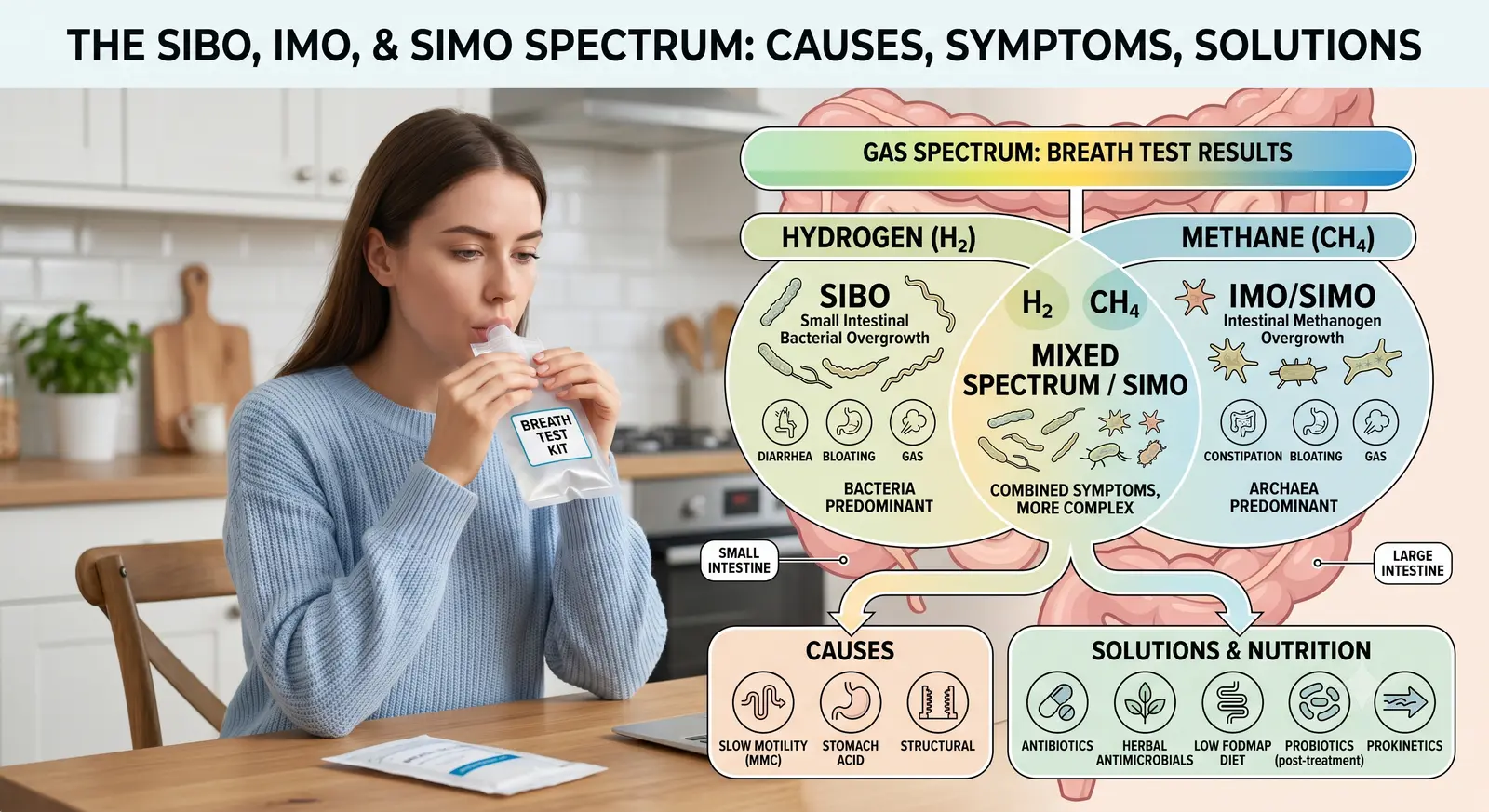

Microbial imbalance in the small intestine is not simply an excess of bacteria. For decades, medicine spoke of "blind loop syndrome" or "contaminated small bowel syndrome", anatomical terms that poorly described a far broader reality. Recent research has redrawn this landscape: alongside bacteria, methanogenic archaea and yeasts can also proliferate and disturb your digestion.
In 2023, Hey and colleagues introduced an umbrella term, SIMO (Small Intestinal Microbial Overgrowth), to gather these different forms of overgrowth. SIMO encompasses SIBO (bacteria), IMO (methane-producing archaea) and SIFO (Candida-type yeasts). In 2026, Deschamps and colleagues took a further step with an ecosystem model: SIMO arises from a breakdown in the balance between the chemical environment of the intestinal lumen, digestive motility and microbial ecology.
Our promise at Diaeta: personalised nutritional support, grounded in the latest scientific evidence, that restores your digestive comfort without ever leaving you hungry and while keeping foods you find delicious. Every gut is unique, and the precise type of overgrowth guides a tailored plan.
1. The Evolution of the Small Bowel Dysbiosis Concept
The clinical understanding of small bowel dysbiosis has changed greatly in a century. It moved from a local, secondary complication to a complex spectrum of disorders with multi-systemic consequences.
1.1 From early observations to the ecosystem model
In 1933, Otto and colleagues identified a pathological bacillary flora throughout the digestive tract in patients with pernicious anaemia. In 1939, Barker and Hummel documented that surgical correction of intestinal stagnation resolved macrocytic anaemia in six patients. For decades, the condition went by anatomical terms such as "blind loop syndrome". The term "SIBO" appeared regularly only from the 1980s, first in veterinary medicine.
| Year | Authors | Advance |
|---|---|---|
| 1933 | Otto et al. | Pathological bacillary flora in pernicious anaemia |
| 1939 | Barker & Hummel | Correcting stasis resolves macrocytic anaemia |
| 1980s | Westermarck et al. | Introduction of the term "SIBO" |
| 2020 | Berg et al. | Redefinition of the "microbiome" (microorganisms, genes, metabolites) |
| 2023 | Hey et al. | Introduction of the umbrella term "SIMO" |
| 2026 | Deschamps et al. | First integrative synthesis, ecosystem model |
1.2 The ecosystem vicious cycle
Deschamps's 2026 work shows that SIMO results from a breakdown in the balance between three pillars: the chemical environment of the intestinal lumen (pH, pancreatic and biliary secretions), digestive motility and microbial ecology. Slowed transit, altered pH or impaired mucosal absorption reshape the microbial load. The metabolites produced in turn slow motility, alter pH and damage the mucosa. A vicious cycle sets in and sustains itself.
Key insight: SIMO is not a simple "infection" to eliminate. It is an ecosystem imbalance. This distinction changes everything: lasting treatment means acting on motility, luminal chemistry and microbial ecology, not only on the microorganisms.
2. The Four Forms of the Spectrum and Their Gases
The clinical picture depends mainly on the metabolic activity of the organisms colonising the small intestine. Fermentation of unabsorbed carbohydrates produces gases and metabolites that cause distension, bloating, flatulence, cramps and pain. Each form has its signature.
| Form | Organisms | Gas | Bowel profile |
|---|---|---|---|
| Hydrogen SIBO | E. coli, Klebsiella (Gram-negative facultative anaerobes) | Hydrogen (H2) | Diarrhoea-predominant (IBS-D) |
| IMO (methanogens) | Methanobrevibacter smithii (archaea) | Methane (CH4) | Constipation-predominant (IBS-C) |
| Hydrogen sulphide SIBO | Sulphate-reducing bacteria (Desulfovibrio) | Hydrogen sulphide (H2S) | Severe watery diarrhoea |
| SIFO (fungal) | Candida albicans, Saccharomyces cerevisiae | No detectable gas | Alternating diarrhoea and constipation |
2.1 Hydrogen SIBO: the classic form
Gram-negative facultative anaerobes such as E. coli and Klebsiella produce hydrogen. They deconjugate bile salts, release enterotoxic metabolites, increase intestinal permeability and sustain low-grade mucosal inflammation. This form often accompanies vitamin B12 deficiency, anaemia and weight loss.
2.2 IMO: when methane paralyses transit
The archaeon Methanobrevibacter smithii converts hydrogen and CO2 into methane (4H2 + CO2 → CH4). Methane blocks acetylcholine binding on smooth muscle and slows transit, hence the constipation. Because these archaea are not confined to the small intestine, the term is IMO rather than SIBO.
2.3 Hydrogen sulphide: the systemic disruptor
Sulphate-reducing bacteria such as Desulfovibrio use hydrogen to reduce sulphur into hydrogen sulphide. Diarrhoea severity tracks the H2S concentration. This form comes with marked systemic symptoms: brain fog, chronic fatigue, rotten-egg odour, and a histamine intolerance (through reduced DAO enzyme) that causes flushing, hives and headaches. Sensitivity to sulphur-rich foods and NAC supplements is common.
2.4 SIFO: the stealthy fungal overgrowth
The yeasts Candida albicans, C. parapsilosis and Saccharomyces cerevisiae produce no diagnostic gas. They generate ethanol and other metabolites locally. SIFO presents with alternating diarrhoea and constipation, oral or vaginal thrush, itching, joint pain, cognitive fatigue and strong reactivity to simple sugars. These yeasts form biofilms with surrounding bacteria, which shields them from antibiotics and immune defences.
Key insight: Short-chain fatty acids (SCFAs) benefit the colon, but their excess in the small intestine slows nutrient absorption and jejunal motility through the "ileal brake" (release of PYY, neurotensin, GLP-1). The colonic benefit becomes an upstream problem.
3. The Migrating Motor Complex and the Autoimmune Cascade
Your gut has an internal cleaning system. When it weakens, overgrowth sets in.
3.1 The migrating motor complex (MMC), your "gut broom"
The MMC fires during fasting, every 90 to 120 minutes. This "housekeeping wave" sweeps bacteria and debris towards the colon. When it falters, stagnation favours bacterial proliferation.
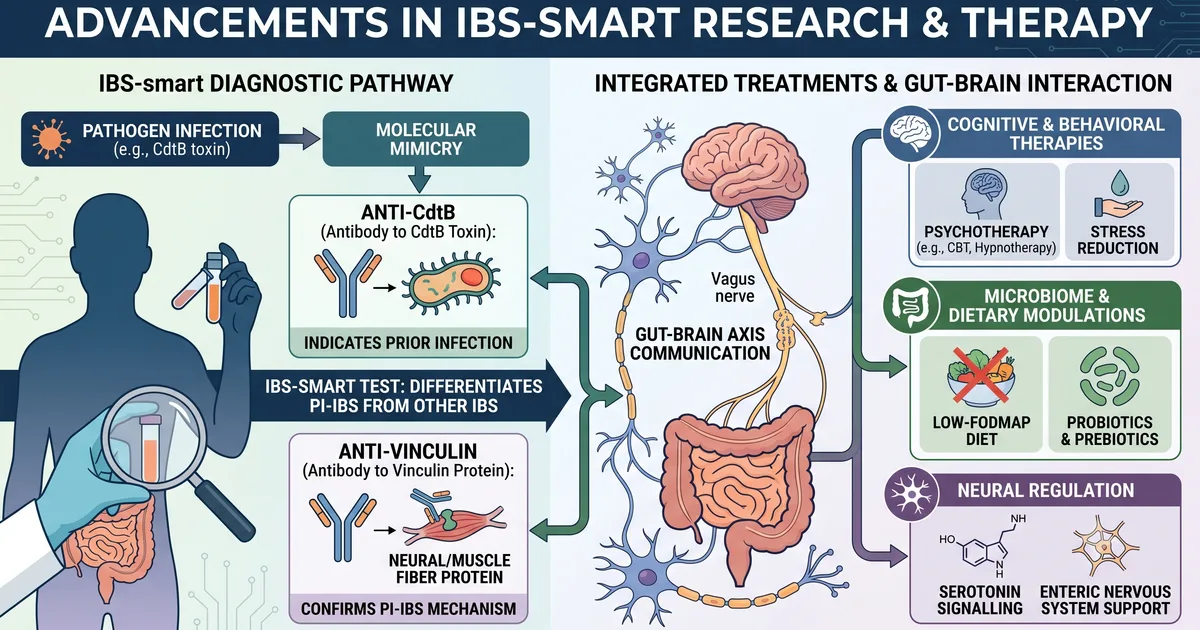
3.2 Post-infectious autoimmunity, step by step
Food poisoning can trigger a cascade that durably damages the MMC.
- 1. Acute gastroenteritis: Campylobacter jejuni, Salmonella, Shigella or E. coli
- 2. Toxin release: bacteria produce CdtB (Cytolethal Distending Toxin B)
- 3. Immune response: the body makes anti-CdtB antibodies
- 4. Molecular mimicry: CdtB resembles vinculin, a protein of the enteric nervous system
- 5. Cross-reaction: in about 1 person in 9, the antibodies attack vinculin
- 6. Target: the interstitial cells of Cajal (ICC), the pacemaker cells of the MMC
- 7. Consequence: impaired MMC, chronic motility problems, persistent SIBO
This mechanism explains why up to two-thirds of patients relapse within 2.5 months of finishing antibiotics. Risk factors include female sex, younger age, prolonged or severe initial diarrhoea, and bloody stools.
Key insight: If your problems began after food poisoning and you relapse repeatedly, anti-vinculin autoimmunity is probably at play. This pathway justifies a long-term prokinetic strategy, not just a repeated course of antibiotics.
4. The Factors that Weaken Your Defences
Several conditions and medications suppress the MMC or remove the natural barriers against overgrowth.
- Hypochlorhydria: proton pump inhibitors, antacids, autoimmune gastritis. Losing the gastric acid barrier lets microorganisms through
- Ileocaecal valve dysfunction: chronic constipation, Crohn's disease, appendectomy, fascial tension. It allows reflux of colonic flora
- Systemic sclerosis (scleroderma): gastrointestinal fibrosis and anti-muscarinic autoantibodies; SIBO prevalence of 43 to 56%
- Autonomic neuropathy: diabetes, amyloidosis, multiple sclerosis
- Untreated hypothyroidism: aim to keep free T3 in the upper third of the range
- Medications: opioids, immunosuppressants, anticholinergics
- Pancreatic or biliary insufficiency: loss of antimicrobial properties and undigested fuel available
- Mast Cell Activation Syndrome (MCAS): LPS triggers mast cell degranulation, releases histamine, damages the mucosa and worsens dysbiosis in a bidirectional cycle
5. Diagnosis: Aspirate and Trio-Gas Breath Test
Diagnosis combines, depending on the situation, a direct sample and a non-invasive breath test.
5.1 Small bowel aspirate: the gold standard
Jejunal or duodenal aspirate with culture remains the reference. It requires endoscopy, stays invasive and costly, and risks contamination by oral or oesophageal flora. It cannot culture the strict anaerobes of the distal small intestine. The modern threshold is ≥ 103 CFU/mL (revised from the old 105 threshold), and ≥ 103 CFU/mL of fungal organisms for SIFO.
5.2 The carbohydrate breath test: the clinical standard
Preparation determines the reliability of the result. It means stopping antibiotics, prokinetics and laxatives 7 to 14 days before the test. The day before, a plain meal (plain meat, tofu, eggs, white potato and white rice, water, black coffee, unsweetened tea) precedes an 8 to 12 hour fast. After a baseline sample, you ingest the substrate then samples are taken every 15 to 22 minutes over 2 to 3 hours.
- Glucose (75 g): a monosaccharide rapidly absorbed in the proximal duodenum. High specificity, but it misses distal overgrowths (jejunum, ileum)
- Lactulose (10 g): a non-absorbable synthetic disaccharide that travels the entire small intestine. It detects proximal and distal overgrowth, with a higher false-positive rate in rapid transit. A 3-hour test is recommended for CH4 and H2S
5.3 The trio-gas test: the decisive advance
Modern tests measure hydrogen, methane and hydrogen sulphide simultaneously. Dual-gas tests missed H2S-dominant cases: sulphate-reducing bacteria consume hydrogen and produce a false-negative "flat line" (H2 < 6 ppm, CH4 < 3 ppm). The trio-gas test removes this blind spot.
6. Diagnostic Thresholds and Differential Diagnoses
6.1 The thresholds to know
| Marker | Threshold | Interpretation |
|---|---|---|
| Hydrogen (H2) | Rise ≥ 20 ppm within 90 min | A rise at 90–120 min is borderline; correlate with transit speed |
| Methane (CH4) | ≥ 10 ppm at any point | 3–9 ppm remains relevant in severe constipation |
| Hydrogen sulphide (H2S) | ≥ 3 ppm at any point | ≥ 2 ppm highly specific for distinguishing IBS-D from IBS-C |
| Anti-CdtB antibody | Elevated (blood) | Post-infectious SIBO/IBS; distinguishes IBS from IBD |
| Anti-vinculin antibody | Elevated (blood) | Autoimmune motility damage, relapsing course |
A baseline H2 above 20 ppm that decreases signals inadequate preparation.
6.2 When to consider it and what to exclude
The test is warranted for unexplained gas, chronic bloating, alternating bowel habits, suspected motility disorders, but also rosacea, restless legs syndrome, interstitial cystitis, rheumatoid arthritis or lupus. Before concluding, your doctor excludes several differential diagnoses: mechanical obstruction, exocrine pancreatic insufficiency, bile acid malabsorption, disaccharidase deficiencies (SIBO can cause a secondary deficiency that resolves after eradication), histamine intolerance and MCAS.
Key insight: A "normal" dual-gas breath test rules out neither hydrogen sulphide nor SIFO. If your symptoms persist, a trio-gas test and a search for fungal overgrowth remain warranted.
7. Subtype-Targeted Eradication Strategies
Antimicrobial treatment falls within your doctor's remit. Understanding the logic of each protocol helps you coordinate your nutrition with treatment. Each subtype calls for a different approach.
| Subtype | Reference protocol | Rationale |
|---|---|---|
| Hydrogen SIBO | Rifaximin 550 mg three times daily, 14 days (up to 6 weeks if severe) | Non-systemic (< 0.4% absorbed), eubiotic, bile-soluble |
| IMO | Rifaximin + Neomycin 500 mg twice daily (or Metronidazole), 14 days | Archaea lack a peptidoglycan wall; the combination targets archaea and cuts the H2 substrate |
| H2S | Rifaximin + Bismuth subsalicylate 524 mg four times daily, 14 days | Bismuth scavenges H2S and disrupts the iron metabolism of sulphate-reducing bacteria |
| SIFO | Fluconazole 100 mg/day (14–30 days) or Nystatin 500,000–1,000,000 U twice daily | Antibacterials are contraindicated: they worsen SIFO |
For IMO, the combination reaches up to 85% success, versus 50 to 70% for rifaximin alone. As fluconazole is systemic, your doctor monitors liver function.
7.1 Botanical protocols
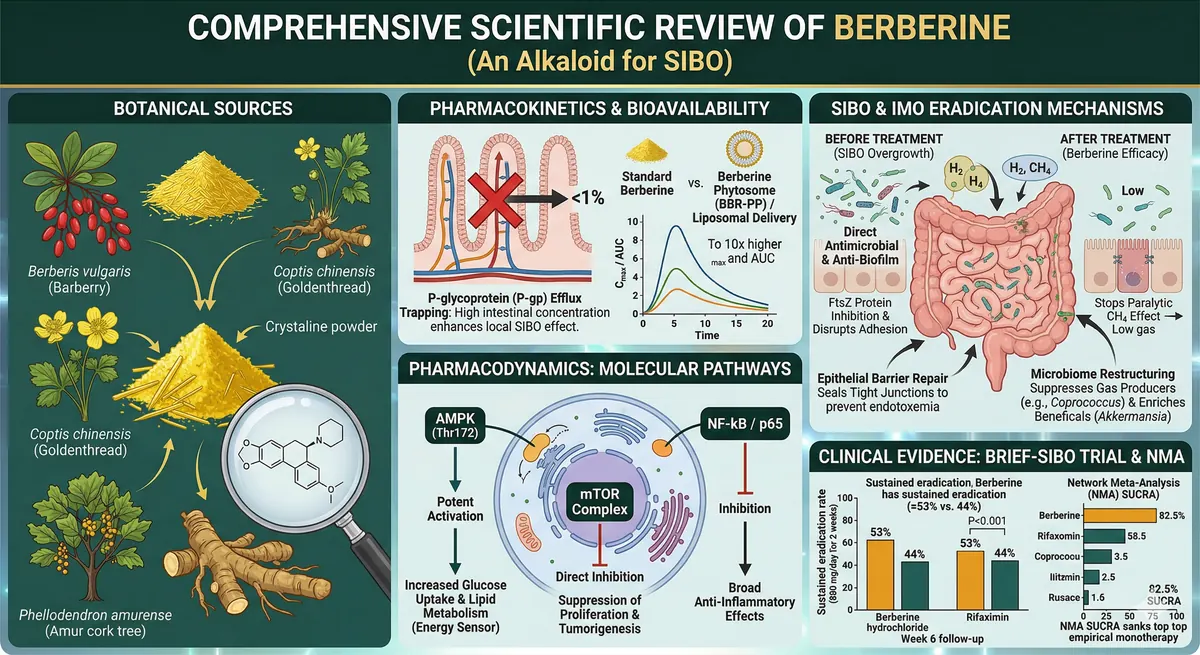
According to Chedid and colleagues (2014), botanical protocols of 4 to 6 weeks show efficacy comparable to antibiotics. Two combinations recur often: FC Cidal with Dysbiocide (French tarragon, thyme, wormwood, yarrow) and Candibactin-AR with Candibactin-BR (oregano, thyme, sage oils; berberine and Oregon grape). For IMO, stabilised Allicin 450 mg three times daily is added as a natural methanogen inhibitor. Atrantil combines quebracho (which binds free hydrogen), horse chestnut (saponins that disrupt the archaeal membrane) and peppermint oil (a smooth muscle relaxant).
7.2 Biofilm disruption and digestive support
Thirty minutes before antimicrobials, agents disrupt biofilms: N-acetylcysteine (NAC), proteolytic enzymes (nattokinase, serrapeptase) and bismuth-thiol complexes. In parallel, digestive support restores natural barriers: Betaine HCl with pepsin (350 to 750 mg, up to 1500 mg) with protein-rich meals, bile salts (ox bile, 125 to 375 mg), pancreatic enzymes, and DAO supplements 15 minutes before histamine-rich meals for H2S-related intolerances.
8. Phased Nutrition: Food as a Tool
Diet manages symptoms by reducing fermentable substrates, but it does not eradicate overgrowth, except the elemental diet. A prolonged eliminative approach beyond 4 to 6 weeks risks malnutrition, weight loss and depletion of the colonic microbiome. The goal is never to deprive, but to soothe then reintroduce.
8.1 The low-FODMAP approach
Developed by Monash University, it temporarily reduces fermentable oligosaccharides, disaccharides, monosaccharides and polyols. Permitted: eggs, poultry, fish, beef, carrots, spinach, courgettes, peppers, blueberries, strawberries, lactose-free dairy. Temporarily limited: wheat, rye, onion, garlic, legumes, lentils, asparagus, watermelon, apples, cashews, lactose-containing dairy and artificial sweeteners. The elimination phase lasts 2 to 6 weeks, followed by methodical reintroduction, one FODMAP group at a time, over 2 to 4 days each.
8.2 The SIBO Bi-Phasic diet and the SCD
Dr Nirala Jacobi's Bi-Phasic diet combines the low-FODMAP approach and the Specific Carbohydrate Diet. Its phase 1 (4 to 6 weeks, "reduce and repair") favours animal proteins, healthy fats and low-fermentation vegetables, with a semi-restricted version that allows small portions of white rice or quinoa to limit the risk of weight loss. Phase 2 ("remove and restore") gradually reintroduces moderately fermentable carbohydrates alongside antimicrobial treatment. The Specific Carbohydrate Diet (SCD), which permits only monosaccharides, serves as a relay when the FODMAP approach alone is not enough.
8.3 The elemental diet and culinary adjustments
The elemental diet provides pre-digested nutrients (free-form amino acids, simple monosaccharides, medium-chain triglycerides, vitamins, minerals), absorbed entirely in the proximal duodenum. Followed exclusively for 14 to 21 days, it reaches 80 to 84% success, at the cost of a difficult taste, a high price and blood sugar fluctuations that call for slow consumption across the day. In the kitchen, garlic-infused oils are safe (fructans are water-soluble, not oil-soluble), the green parts of spring onions and chives are tolerated, and sprouted legumes suit vegetarian patients.
Key insight: Garlic-infused oil gives you the taste of garlic without the fructans that ferment. Cooking smartly beats giving up enjoyment. SIMO nutrition is about finding tasty alternatives, not drawing up a list of prohibited foods.
9. Preventing Relapse: Prokinetics and Chronobiology
Relapse prevention begins as soon as antimicrobials end. A prokinetic starts immediately and continues for at least 3 months. Prokinetics stimulate the enteric nervous system to restore coordinated peristalsis; they differ from laxatives.
9.1 Pharmaceutical prokinetics
- Prucalopride: a 5-HT4 agonist, 0.5 to 2.0 mg at bedtime. Delays relapse by 5 to 8.5 months. The most effective for SIMO relapse prevention
- Low-dose Erythromycin: 50 to 62.5 mg at bedtime, a motilin agonist. Delays relapse by about 5 months. Contraindicated in cardiac arrhythmia
- Low-dose Naltrexone: 1.5 to 4.5 mg at bedtime, gradually titrated. Effective in 62% for relapse prevention
9.2 Botanical prokinetics and chronobiological habits
Ginger (gingerols and shogaols, natural cholinesterase inhibitors) and artichoke leaf extract (choleretic) support motility. Prodigest combines 100 mg of artichoke and 20 mg of ginger; Iberogast, a multi-botanical preparation, reduces recurrence. On lifestyle rhythm, three levers matter: space meals 4 to 5 hours apart with no snacking (any caloric intake suspends the MMC), keep a 12-hour overnight fast with a last meal at least 3 hours before bed, and support vagal tone through mindful eating and stress management.
Key insight: Snacking is the enemy of the MMC. Every snack suspends your "gut broom". Three satisfying meals spaced apart and a 12-hour overnight fast often do more than any supplement.
10. Rebuilding the Gut Ecosystem
Probiotics are avoided during the active phase and eradication, as they add to the microbial load and worsen symptoms. They are introduced once overgrowth is controlled.
- Saccharomyces boulardii: 250 to 500 mg twice daily. Competes with bacteria and yeasts, secretes anti-inflammatory compounds, curbs sulphate-reducing bacteria and Candida
- Spore-forming strains: Bacillus clausii, B. coagulans transit to the colon and support butyrate-producing bacteria without colonising the small intestine
- Lactobacillus / Bifidobacterium: introduce gradually, discontinue if gas or bloating worsens
Prebiotic reintroduction (legumes, lentils, whole grains, varied vegetables) proceeds slowly and under monitoring. To repair the mucosa, three nutrients help: bovine immunoglobulins or colostrum (which bind LPS), zinc carnosine (which supports tight junctions) and butyrate (which strengthens the barrier and curbs sulphate-reducing bacteria).
11. The Five-Stage Decision Algorithm
- Diagnose: trio-gas breath test (H2, CH4, H2S), search for SIFO, exclude obstruction, pancreatic insufficiency and bile acid malabsorption, anti-CdtB and anti-vinculin serology
- Eradicate: subtype-targeted antimicrobial (pharmaceutical or botanical), biofilm disruption 30 minutes before
- Support digestion: low-FODMAP or Bi-Phasic nutrition over 2 to 6 weeks, Betaine HCl and digestive enzymes
- Restore motility: immediate prokinetics (prucalopride, low-dose naltrexone, ginger/artichoke), chronobiological habits (meals 4 to 5 hours apart, 12-hour overnight fast)
- Rebuild the ecosystem: gradual reintroduction of fibre and prebiotics, support with immunoglobulins, zinc carnosine and targeted probiotics
12. Our Personalised Approach at Diaeta
At Diaeta, we treat the SIMO spectrum for what it is: an ecosystem imbalance that responds to a tailored strategy. Identifying the precise type of overgrowth changes the management, and that is where our nutritional support makes the difference.
What We Promise You
- Never hungry: even during the reduction phase, your meals satisfy. We build complete menus, not lists of prohibited foods
- No unnecessary elimination: every adaptation is targeted and temporary, and we reintroduce foods as soon as possible to protect your microbiome
- Evidence-based guidance: our approach draws on the latest data on SIMO, SIBO, IMO and SIFO
- Personalised strategies: your subtype, your triggers and your microbial profile guide every recommendation
How We Support You
- Comprehensive assessment: analysis of your symptoms, your infectious history, your eating habits and your test results
- Phased nutrition: reduction, methodical reintroduction and personalisation, led by a Monash-certified specialist
- MMC optimisation: setting up an eating rhythm that supports your natural motility
- Medical coordination: aligning nutrition with your doctor's antimicrobial treatment and prokinetics
Outcomes Observed
With our personalised approach, patients typically report:
- A lasting reduction in bloating through identification of their real triggers
- Regulated bowel habits through a strategy matched to their overgrowth subtype
- Better energy and mental clarity through correction of nutritional deficiencies
- Lasting relapse prevention through motility support and chronobiological habits
You are living with chronic digestive symptoms and want to explore the SIMO spectrum? Book a personalised consultation in Brussels. Together, we will build your tailored nutritional plan.
Scientific References
- Hey P, et al. Small intestinal microbial overgrowth (SIMO): an umbrella concept for small bowel dysbiosis. Therap Adv Gastroenterol. 2023;16:1-15.
- Berg G, Rybakova D, Fischer D, et al. Microbiome definition re-visited: old concepts and new challenges. Microbiome. 2020;8:103.
- Pimentel M, Saad RJ, Long MD, Rao SSC. ACG Clinical Guideline: Small Intestinal Bacterial Overgrowth. Am J Gastroenterol. 2020;115(2):165-178.
- Rezaie A, Buresi M, Lembo A, et al. Hydrogen and Methane-Based Breath Testing in Gastrointestinal Disorders: The North American Consensus. Am J Gastroenterol. 2017;112(5):775-784.
- Pimentel M, Morales W, Pokkunuri V, et al. Autoimmunity Links Vinculin to the Pathophysiology of Chronic Functional Bowel Changes Following Campylobacter jejuni Infection. Dig Dis Sci. 2015;60(5):1195-1205.
- Singer-Englar T, Rezaie A, Pimentel M. Competitive hydrogen and hydrogen sulfide utilization by gut microorganisms. Dig Dis Sci. 2023;68:263-272.
- Chedid V, Dhalla S, Clarke JO, et al. Herbal therapy is equivalent to rifaximin for the treatment of small intestinal bacterial overgrowth. Glob Adv Health Med. 2014;3(3):16-24.
- Pimentel M, Chang C, Chua KS, et al. Antibiotic treatment of constipation-predominant IBS with methane on breath testing. Dig Dis Sci. 2014;59(6):1278-1285.
- Erdogan A, Rao SSC. Small intestinal fungal overgrowth. Curr Gastroenterol Rep. 2015;17(4):16.
- Quigley EMM. The Spectrum of Small Intestinal Bacterial Overgrowth (SIBO). Curr Gastroenterol Rep. 2019;21(1):3.
- Pimentel M, Lembo A. Microbiome and Its Role in Irritable Bowel Syndrome. Dig Dis Sci. 2020;65(3):829-839.
- Deschamps F, et al. Integrative synthesis of mechanical, chemical, and microbial parameters in small intestinal microbial overgrowth. Gut Microbes. 2026;18(1):1-22.