

Introduction: The Holobiont Paradigm
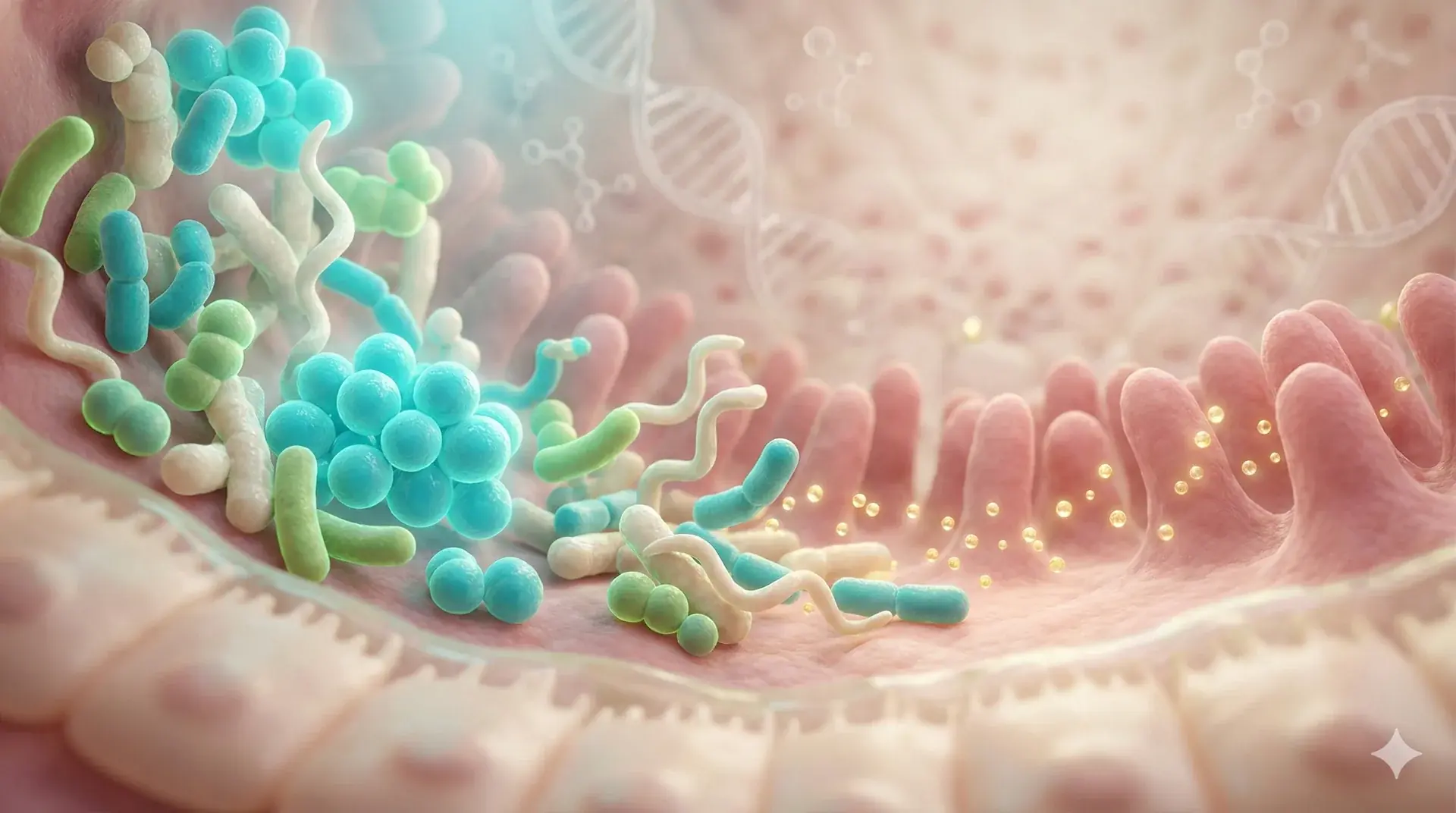
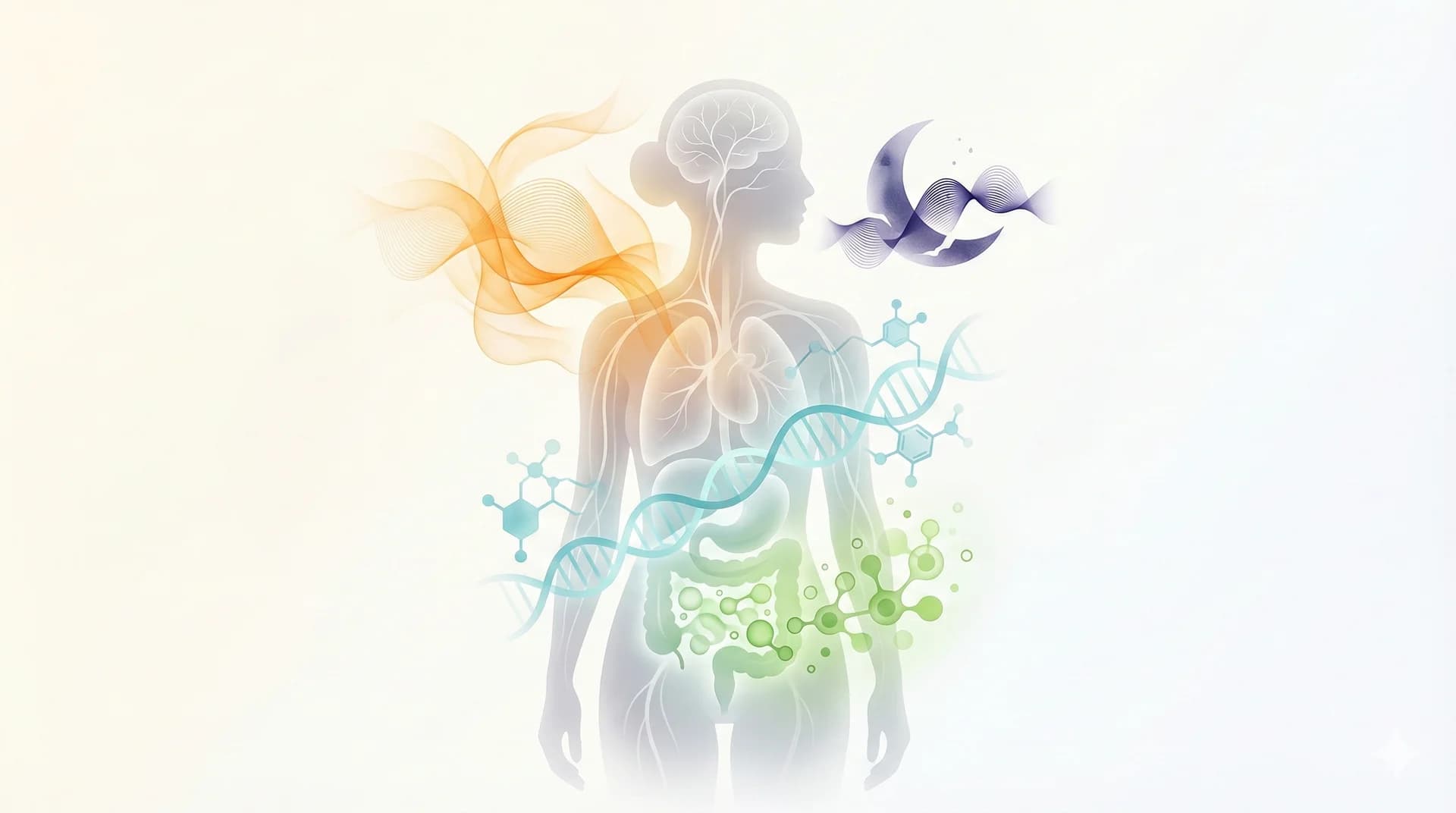
We are not simply humans - we are "holobionts," complex ecosystems where trillions of microorganisms coexist with our own cells. This scientific revolution is transforming our understanding of nutrition and health. In this comprehensive guide, we explore the four pillars of modulating this internal ecosystem: probiotics, prebiotics, synbiotics, and postbiotics.
Beyond simple supplementation, understanding these concepts allows us to make informed choices to nurture our microbiome - this bacterial garden that influences our digestion, immunity, and even our mood.
1. Probiotics: Living Allies of Your Gut
Scientific Definition
According to the International Scientific Association for Probiotics and Prebiotics (ISAPP), probiotics are "live microorganisms that, when administered in adequate amounts, confer a health benefit on the host." This definition implies three essential criteria: the microorganisms must be alive, taken in sufficient quantity, and demonstrate clinically proven benefits.
The Fundamental Importance of Strain Specificity
Not all probiotics are created equal. Strain specificity is perhaps the most crucial concept to understand. A probiotic is identified by three levels:
- Genus (e.g., Lactobacillus)
- Species (e.g., rhamnosus)
- Strain (e.g., GG)
Thus, Lactobacillus rhamnosus GG has specific properties distinct from Lactobacillus rhamnosus GR-1. Benefits demonstrated for one strain cannot be automatically attributed to another, even from the same species. It's like comparing two apple varieties: a Granny Smith and a Pink Lady are both apples, but have very different characteristics.
Mechanisms of Action
Probiotics act through multiple complementary mechanisms:
- Competitive exclusion: They occupy ecological niches and compete with pathogens for nutrients and adhesion sites.
- Antimicrobial production: Many strains produce bacteriocins, organic acids, and other compounds that inhibit pathogen growth.
- Immune modulation: They interact with intestinal immune cells to modulate inflammatory response.
- Barrier reinforcement: They promote mucus production and tight junction integrity between intestinal cells.
The Transient Tourist Phenomenon
Unlike what advertisements sometimes suggest, most probiotics don't permanently colonize our gut. They act as "transient tourists" - they pass through, exert their beneficial effects, then are eliminated. This explains why regular consumption is often necessary to maintain benefits. This isn't a flaw, but a normal characteristic of how these microorganisms function in our ecosystem.
2. Prebiotics: Nourishing Your Bacterial Garden
Definition and Concept
Prebiotics are defined as "substrates that are selectively utilized by host microorganisms conferring a health benefit." In other words, these are substances that specifically nourish beneficial bacteria already present in our gut, promoting their growth and activity.
Classification of Main Prebiotics
Inulin
Extracted mainly from chicory, inulin is a long-chain fructan (DP 10-60). It's fermented slowly throughout the colon, producing short-chain fatty acids (SCFAs). Inulin particularly promotes the growth of Bifidobacteria. However, in sensitive individuals (IBS), high quantities can cause bloating due to its fermentation.
Fructo-oligosaccharides (FOS)
FOS are shorter fructans (DP 2-10) that ferment faster, mainly in the proximal colon. They are found naturally in garlic, onion, asparagus, and banana. Their rapid fermentation can cause more immediate gas symptoms in some people.
Galacto-oligosaccharides (GOS)
GOS are structurally similar to human milk oligosaccharides (HMOs). They are generally better tolerated than FOS/inulin, making them an interesting option for sensitive individuals. They particularly promote the growth of Bifidobacteria and Lactobacilli.
Resistant Starch
Resistant starch is a fascinating form of prebiotic that escapes digestion in the small intestine to reach the colon. There are several types:
- RS1: Physically inaccessible (whole grains)
- RS2: Ungelatinized granules (green banana, raw potato)
- RS3: Retrograded (cooked and cooled pasta/rice/potatoes)
- RS4: Chemically modified
Practical tip: Cooking your pasta or rice, then cooling it before reheating, increases the resistant starch content - an easy way to feed your microbiome!
Fermentation and SCFA Production
When our gut bacteria ferment prebiotics, they produce short-chain fatty acids (SCFAs), mainly:
- Acetate (60%): Energy substrate, lipid synthesis
- Propionate (25%): Gluconeogenesis, cholesterol regulation
- Butyrate (15%): Primary energy for colonocytes, anti-inflammatory
Butyrate is particularly important: it's the main fuel for cells lining our colon and plays a crucial role in maintaining the intestinal barrier.
3. Synbiotics: Strategic Combination
Definition
Synbiotics combine probiotics and prebiotics in a single product. But there are two fundamentally different approaches:
Complementary Synbiotics
In this approach, the probiotic and prebiotic are selected independently for their individual benefits. For example, Lactobacillus acidophilus (probiotic) combined with inulin (prebiotic) - each works separately to improve gut health. It's a "team" approach where each player has their own role.
Synergistic Synbiotics
This more sophisticated approach specifically selects the prebiotic to nourish the associated probiotic strain. For example, Bifidobacterium adolescentis IVS-1 combined with its preferred substrate. The prebiotic is chosen for its ability to enhance the survival and activity of the specific probiotic strain. This represents the future of personalized synbiotics.
4. Postbiotics: The New Frontier
Definition and Concept
The ISAPP defines postbiotics as "preparation of inanimate microorganisms and/or their components that confers a health benefit on the host." Unlike probiotics, postbiotics don't contain live microorganisms - they are metabolic products or inactivated bacterial components.
Advantages Over Probiotics
Postbiotics offer several distinct advantages:
- Superior stability: No need to maintain viability during storage
- Increased safety: No risk of bacterial translocation in immunocompromised individuals
- Easier standardization: More precise dosing
- Longer shelf life: No cold chain required
Concrete Example: Urolithin A
Urolithin A perfectly illustrates the concept of postbiotic. It's produced by gut bacteria from ellagitannins found in pomegranate, walnuts, and certain berries. This postbiotic has demonstrated benefits on mitochondrial function and longevity in preclinical studies. However, only about 40% of the population possesses the bacteria capable of producing Urolithin A - a striking example of inter-individual microbiome variability.
5. Clinical Applications
Gastrointestinal Disorders
Antibiotic-Associated Diarrhea (AAD)
Prevention of AAD is one of the best-documented indications for probiotics. Saccharomyces boulardii and Lactobacillus rhamnosus GG have shown significant efficacy in clinical studies. The ideal timing is to start supplementation at the beginning of antibiotic treatment.
Irritable Bowel Syndrome (IBS)
IBS represents a complex application where response is highly individual. Certain strains show promise:
- Bifidobacterium infantis 35624 for global symptoms
- Lactobacillus plantarum 299v for abdominal pain
- Multi-strain combinations for different IBS subtypes
It's important to note that low-FODMAP prebiotics (like certain GOS) may be better tolerated in this population.
Metabolic Health
Research shows benefits for weight management and metabolic parameters:
- Modulation of hunger/satiety hormones
- Reduction of metabolic endotoxemia
- Improvement of insulin sensitivity
- Influence on energy extraction from food
Specific strains like Akkermansia muciniphila (often as postbiotic) show promise for metabolic health.
Women's Health
Lactobacillus crispatus and Lactobacillus rhamnosus GR-1 have shown benefits for maintaining healthy vaginal flora. Gut-vaginal axis communication highlights the importance of gut health for gynecological well-being.
Gut-Brain Axis: Psychobiotics
The emerging concept of "psychobiotics" refers to probiotics that influence mood and cognition through the gut-brain axis. Mechanisms include:
- Neurotransmitter modulation (GABA, serotonin)
- Regulation of the HPA axis (stress response)
- Reduction of systemic inflammation
Promising strains include Lactobacillus helveticus R0052 and Bifidobacterium longum R0175.
6. Fermented Foods: Complementary But Different
Distinction from Probiotics
It's important to distinguish fermented foods from probiotic supplements. To be called "probiotic," a fermented food must:
- Contain live microorganisms
- In defined and sufficient quantities
- With clinically demonstrated benefits for specific strains
Most commercial fermented foods don't meet these strict criteria, although they can still be beneficial to health.
Beneficial Fermented Foods
- Yogurt: Contains Lactobacillus bulgaricus and Streptococcus thermophilus, improving lactose digestion
- Kefir: More diverse and numerous strains than yogurt, plus yeasts
- Sauerkraut and kimchi: Rich in Lactobacillus plantarum (unpasteurized)
- Kombucha: Contains SCOBY (symbiotic culture of bacteria and yeast)
- Miso and tempeh: Asian fermented foods with interesting probiotics
Practical Tips
For maximum benefits from fermented foods:
- Choose "live" or "active cultures" products
- Avoid pasteurized versions (except yogurt which retains some benefits)
- Integrate gradually to avoid digestive discomfort
- Vary sources for microbial diversity
7. Safety and Precautions
Vulnerable Populations
While probiotics are generally safe, caution is required for:
- Immunocompromised individuals: Risk of bacteremia (bacteria in the blood) with live strains
- ICU patients: Reported cases of Lactobacillus sepsis
- Short bowel syndrome: Risk of D-lactic acidosis with certain strains
- Infants and premature babies: Use only clinically tested strains
For these populations, postbiotics may offer a safer alternative.
Potential Side Effects
The most common side effects include:
- Temporary bloating (usually first few days)
- Increased gas (especially with prebiotics)
- Minor changes in bowel habits
These effects usually subside within 1-2 weeks. Starting with low doses and gradually increasing can minimize them.
8. Practical Guide: How to Choose?
Reading Labels
When choosing a probiotic supplement, check:
- Complete strain identification: Genus + species + strain (e.g., Lactobacillus rhamnosus GG)
- CFU count: Colony forming units at end of shelf life, not manufacture date
- Storage conditions: Refrigerated or stable at room temperature?
- Clinical evidence: Ideally specific studies for the contained strain
Doses and Duration
Recommendations vary by indication:
- General maintenance: 1-10 billion CFU/day
- Specific therapeutic: 10-100 billion CFU/day
- Duration: Minimum 4 weeks to evaluate effects
For prebiotics, 3-5g/day is often sufficient, gradually increasing to minimize digestive discomfort.
Timing
The ideal time to take probiotics is debated:
- Some strains survive better with food (protection against stomach acid)
- Others work better on an empty stomach
- Consistency is probably more important than precise timing
9. Diaeta's Approach: Personalized Nutrition for Your Microbiome
At Diaeta, we believe in an individualized, science-based approach to microbiome health. Rather than recommending generic products, we:
- Assess your unique situation: Medical history, current symptoms, lifestyle
- Identify your specific needs: Digestive issues, immune support, metabolic health
- Recommend evidence-based solutions: Strains and products with clinical research for your condition
- Monitor and adjust: Regular follow-up to evaluate response and optimize protocol
Our philosophy of "no hunger, eating only what's enjoyable" extends to microbiome nutrition: we integrate fermented foods and prebiotic fibers into satisfying, delicious meal plans that you'll actually want to follow.
Whether you're managing IBS, optimizing digestion, or simply investing in your long-term health, understanding these four pillars - probiotics, prebiotics, synbiotics, and postbiotics - empowers you to make informed choices for your bacterial garden.
Conclusion
The science of our microbiome is evolving rapidly, but the fundamentals are clear: nurturing our internal ecosystem through informed food choices and targeted supplementation can profoundly impact our health. From strain-specific probiotics to the emerging field of postbiotics, we now have unprecedented tools to cultivate our gut garden.
Remember: there's no one-size-fits-all approach. What works for one person may not work for another, given the unique composition of each individual's microbiome. Working with a qualified dietitian can help you navigate this complex landscape and develop a personalized strategy for optimal gut health.